





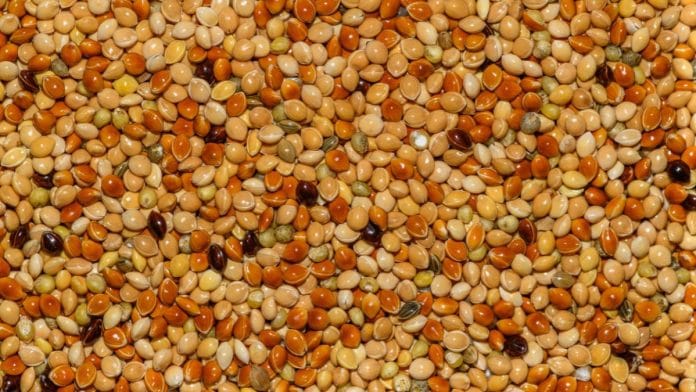


New Delhi: The Indian Council of Agricultural Research has developed India’s first genome map of the pigeonpea, also known as arhar or tur dal. Pigeonpea is one of the country’s most widely consumed pulse crops, and an important source of protein, especially for vegetarians.
The genome map, scientifically known as the reference genome, is an instruction manual of the plant’s DNA. Chromosomes of a DNA are structured in a way that they have protected caps also known as telomeres at their two ends. The recent genome map looks at the pigeonpea from telomere-to-telomere (T2T) — mapping it from one end of the chromosome to the other.
“The development is expected to accelerate the breeding of climate-resilient, high-yielding and nutritionally enriched pigeonpea varieties, thereby strengthening the country’s pulse improvement programme. The achievement will provide a major impetus to research and innovation, benefit scientists, breeders and farmers, and contribute to enhanced productivity, improved farmer livelihoods, and India’s food and nutritional security,” reads a press release by the ministry of agriculture and farmer’s welfare.
Also read: Madagascar’s diamond frogs are elusive. But scientists have found seven new species
15 years of research
This is not the first time the Indian Council of Agricultural Research (ICAR) is studying the pigeonpea genome. The ICAR National Institute for Plant Biotechnology began studying pigeonpea in 2011 and produced the world’s first draft genome of a pulse crop, a variety known as “Asha”. They released an improved version in 2017, and now, 15 years later, the T2T genome map has been created too.
Although genetically modified varieties of seeds lead to polarising debates, this detailed genome map could allow researchers to create pigeonpea varieties that are more climate-resilient, yield more crop, and even pack in more nutrition.
According to the ministry of agriculture and farmer’s welfare the newly developed genome sequence contains 752.65 million pairs of DNA which provide a representation of all the 11 chromosomes of the pigeonpea. The data was posted on the National Center for Biotechnology Information global database on 20 April.
The discovery is a part of the Indian government’s mission for “Aatmanirbharta in Pulses” which hopes to raise pulse production in the country to 35 million tonnes by 2030-2031.
Over the past decade, several high-quality genomic studies and maps have been created for major pulse crops like chickpea, common bean, and field pea. Research bodies like ICAR and the International Chickpea Genome Sequencing Consortium (ICRISAT) are mapping pulse varieties across dozens of countries to study and identify genes that might allow pulses to survive droughts, saltier soils, and even be resistant to diseases that typically attack pulses.