



New Delhi: Researchers at ETH Zurich have developed a graphite implant that burns excess blood sugar in the body, in a new move for diabetes control. The study, published in Science Journal on 22 October, showed how the wireless device helped bring down blood glucose and obesity in mice, opening up new treatment pathways.
The Biosystems Sciences and Engineering department of ETH Zurich, led by Professor Martin Fussenegger, had been working on blood sugar regulation in Type 2 diabetes for a few years.
“For decades, we have treated diabetes by telling the body how to manage glucose. We are now showing that we can take control of glucose directly, using electronics rather than drugs,” Fussenegger said in a press release. “And the catalyst only activates when glucose levels are too high.”
Unlike Type 1 diabetes, where the body cannot produce insulin, Type 2 diabetes is more complex, involving insulin resistance. The common diabetes treatment of insulin injections also works poorly for Type 2 diabetes, as it does not reduce the side effect of obesity.
For the study, Fussenegger and his team skipped insulin and other diabetes-related drugs and instead used chemical reactions to convert the patient’s excess glucose into gluconate. The new implantable device uses electrocatalysis and is connected to an external glucose monitor.
When glucose rises above the desired level, the system activates the implant, which uses electrical energy to drive the conversion reaction. Once glucose levels fall sufficiently, the system switches off.
This converts the body’s glucose to gluconate, which is then excreted through urine, eliminating calories and leading to weight loss, the mice trials showed.
The device is also easy to use and can connect wirelessly to any regular glucose sensor, which can be strapped to a person’s wrist.
How the technology works
While there have been no human trials yet, scientists have developed ways for the device to be used on humans too.
The team first demonstrated that the catalyst could convert glucose in a five-litre reservoir of glucose-containing solution, roughly the volume of blood in the human body.
In case of a glucose spike after meals or any other activity, the sensor will send a signal to a smartwatch, which then activates the catalyst. The device also has an automatic switch-off feature, so that it does not reduce blood sugar to dangerously low levels for the patient.
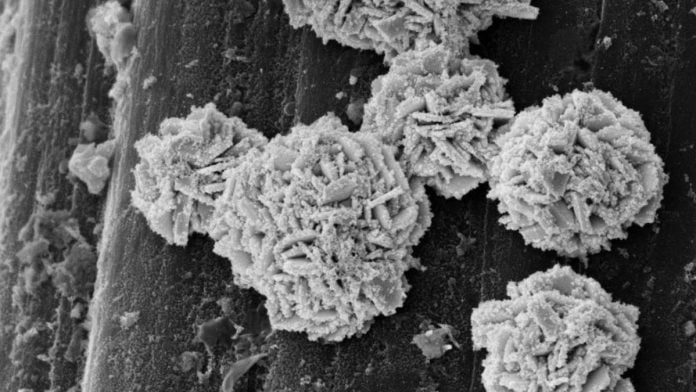
Built using graphite with gold nanoclusters and platinum particles, each of the materials in the device has been selected for maximum conductivity and biocompatibility.
In a press release, Fussenegger said that this approach could lead to electronically-controlled diabetes treatments, however the device is yet to be tested on humans and pass regulatory board reviews before it can be used medically.
(Edited by Stela Dey)