



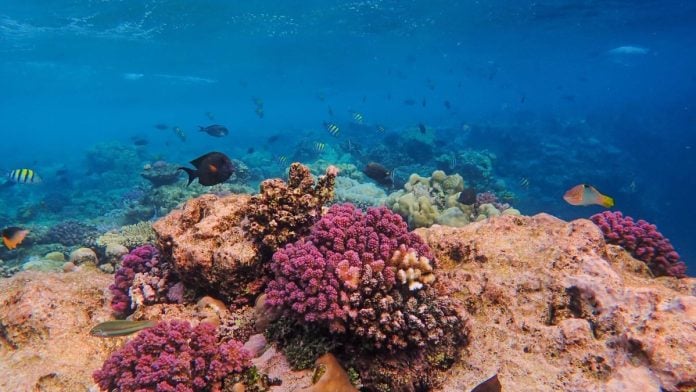
New Delhi: Nearly 44 per cent of the world’s reef-building coral species have been endangered by climate change and rising ocean temperatures, found a new study.
The study, published in Nature on 15 October, was conducted by the International Union for Conservation of Nature Species Survival Commission (IUCN SSC) Coral Specialist Group. Researchers analysed 892 species of reef-building corals to update a 2008 assessment of threats to the creatures.
Among the 774 species for which there was enough information, 340 had been classified as threatened under the IUCN’s Red List criteria. From the threatened species, 33 were classified as critically endangered, 251 as endangered, and 56 as vulnerable, with each category indicating a different level or risk.
“This assessment provides the most comprehensive evaluation to date of global extinction risk among reef-building corals, and a stark warning of the accelerating increase in global threats to coral reefs. It also highlights the challenges we face in addressing major data and knowledge gaps on the status of species at global scales, at the same time as having to take urgent decisions to reduce the drivers of global declines in critical species and ecosystems,” David Obura, Co-Chair of the IUCN SSC Coral Specialist Group and director of CORDIO East Africa, said in a statement.
Also read: Walking before cancer surgery can cut risk of postoperative delirium by 50%, finds study
Building a reef
Reef building corals are small marine creatures that form hard skeletons. Over time, these skeletons build structures called coral reefs which provide shelter and food for smaller marine life.
These corals have a codependent relationship with tiny algae within their tissues. The algae supplies them with food and gives them their colour. However, when ocean temperatures rise, corals expel the algae, leading to “coral bleaching”. These bleached corals turn white and grow vulnerable to diseases and death.
“Coral reefs are experiencing rapid environmental change, but responses vary greatly among species and regions. Improving data on regional to local variation in coral and reef responses to threats, in particular global warming, and in coral species and population traits and responses will improve future reassessments of extinction risk and help managers take action to protect and restore corals around the world,” said Francoise Cabada-Blanco, Co-Chair of the IUCN Coral Specialist Group and Professor at the University of Portsmouth, in a statement.
Researchers have warned that the latest assessment does not encapsulate the impact of extreme ocean warming. Their findings are based on data gathered up till 2020, before 2023-2025, the three hottest years on record.
The importance of coral reefs goes far beyond just protecting marine life. They also support fishing, tourism, and protect coasts from waves and storms.