





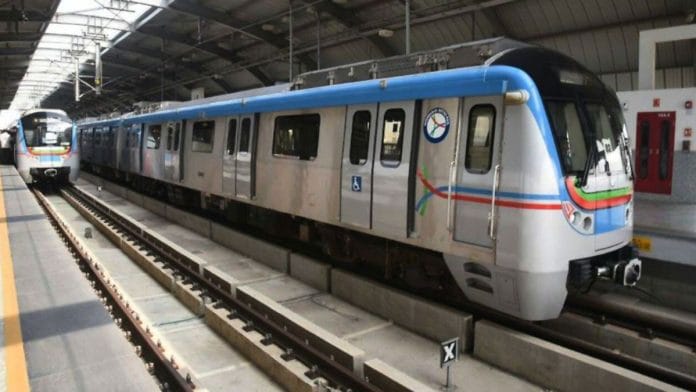

New Delhi: Rajya Sabha member Surendra Singh Nagar Thursday made a pitch to the Centre to develop a single digital metro card valid across the entire country. Speaking during Zero Hour, the Bharatiya Janata Party MP said the existing practice of separate plastic smart cards for every city creates unnecessary hardship for commuters and adds to environmental damage.
Placing the issue in the context of India’s expanding metro network, Nagar said that India ranks third in the world in terms of metro track length, with nearly 1,090 km already operational in about 24 cities and a comparable length under construction. He also mentioned the 2026-27 budget allocation of ₹28,740 crore for metro projects, calling it the highest so far.
Despite this growth, Nagar observed that passengers still face a fragmented ticketing system. A card bought in Delhi cannot be used in Bengaluru, just as a Bengaluru card is useless in Bhopal. Every city requires its own card, a separate balance and a different set of rules, causing inconvenience and generating plastic waste.
To resolve this, Mr. Nagar suggested a “One Nation, One Digital Metro Card”. The card, he explained, should be digital and account-based, linked to a passenger’s mobile number rather than being just a plastic card, so that one balance works on every metro network.
He listed three grounds for the proposal. On the environmental side, he noted that a metro smart card contains about five grams of polyvinyl chloride (PVC) along with a chip and antenna, making recycling extremely difficult. The material remains in the environment for as long as 500 years. Nearly six billion such cards are manufactured globally each year, and each contributes around 150 grams of carbon emissions. With digital options already available, Nagar questioned the wisdom of continuing large-scale plastic card distribution.
Turning to passenger rights, Nagar said that money stored in a physical card is often lost forever if the card is misplaced, damaged or expires. Many systems offer neither a blocking facility nor a refund, he said, adding that bank cards and Unified Payments Interface (UPI) accounts, in contrast, protect a user’s funds. A digital account-based system would keep the balance with the person; even if a mobile phone is unavailable, a passenger could still collect a Quick-Response (QR) ticket at a counter using a registered number, Nagar elaborated.
The MP ended his submission with three clear requests to the Ministry of Housing and Urban Affairs: creation of a national interoperable digital metro card; gradual shift of all metro systems to QR and account-based ticketing; and a guarantee that balances remain fully secure, transferable and recoverable. He noted India’s leadership in digital payments through UPI and urged that the same spirit now be applied to public transport, so that travel becomes less dependent on plastic, less expensive to operate, more convenient and safer for every citizen.
(Edited by Nardeep Singh Dahiya)
Also Read: Several Nirbhaya Fund projects yet to spend a rupee; Rs 1,288 crore corpus unutilised since 2013-14
I think this is a great idea, but I believe we can take it a step further. Instead of introducing a “One Nation, One Metro Card” in the form of another plastic card, India should adopt a “One Nation, One Metro App.”
The app would allow commuters to purchase and store metro tickets directly on their smartphones, eliminating the need for physical cards altogether. Tickets could be scanned at metro turnstiles across every metro network in India using a secure QR code or similar digital technology. as mentioned in your article.
To prevent misuse, each ticket would become active only when the journey begins. Once activated, it would automatically expire after the journey is completed or after a predefined time limit. Since every ticket would be uniquely validated at the turnstile, it could not be reused or shared after being scanned.
A unified digital ticketing platform would reduce plastic waste, simplify travel across different cities, lower infrastructure and maintenance costs associated with physical cards, and provide a seamless experience for millions of commuters. Rather than carrying yet another card in our wallets, we can carry one secure, nationwide metro pass on the device we already have with us every day—our smartphones.