





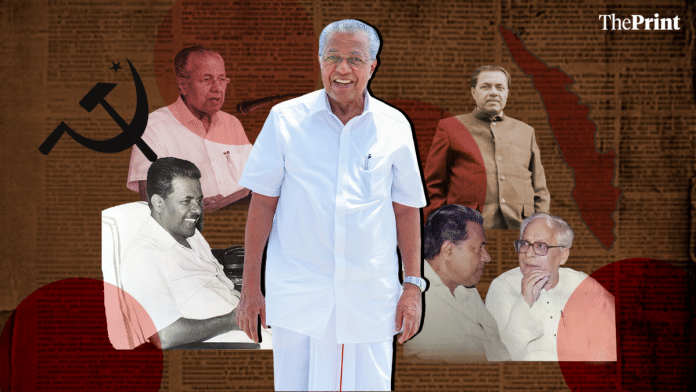



Thiruvananthapuram: In 2016, soon after assuming office as Kerala’s chief minister, Pinarayi Vijayan sat down for an interview with actor-filmmaker Sreenivasan.
“I don’t know much about party affairs, but I am interested in talking about your personal life,” Sreenivasan said at the beginning of the conversation, recalling a 2002 interview of Vijayan to a Malayalam daily, in which the CPI(M) leader had declined to answer a personal question. “It’s not a complete secret,” Vijayan responded, smiling.
Usually seen as serious and reserved, Vijayan appeared softer and more unguarded chatting with Sreenivasan, going on to speak about aspects of his personal life—something he had previously been reluctant to discuss.
Since then, Vijayan has appeared in three such interviews with Malayalam celebrities, the latest being with superstar Mohanlal just last month.
His critics call him ‘mundu Modi’ (a dhoti-clad Narendra Modi) for what they describe as his “authoritative” and “centralised” administrative style. But for the CPI(M) and its sympathisers, he is the “captain” who succeeded in implementing developmental projects, once thought impossible in the state.
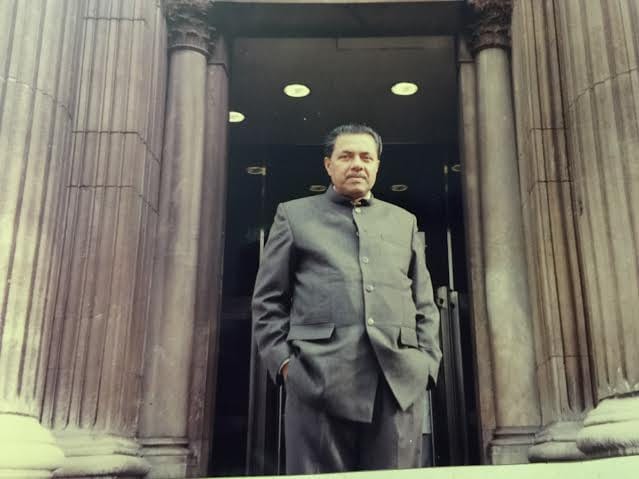
Now 80, the most powerful CPI(M) leader and India’s oldest chief minister is credited with the rare feat of winning two consecutive assembly elections in Kerala’s history, with a higher margin in the second term.
He is leading the party once again in another high-stakes assembly election, which the party and its supporters call a “survival” battle for the Left, after it lost power in all its other bastions like West Bengal and Tripura.
Locked in a battle with a confident Congress amid anti-incumbency, Vijayan is also facing criticism that the party under his leadership has moved away from communist ideologies on many occasions and even worked with the BJP behind closed doors for the party’s survival.
But Vijayan’s evolution from young cadre to “captain” also parallels the communist party’s own transformation in the state—from a collective leadership model, to one that manages a network of economic institutions through cooperatives and is comfortable with leader-centric politics.
The chief minister, who held the role of the party’s state secretary for the longest time in the state, is often labelled as “defiant”. But many also call him a “pragmatic” communist and “pro-development” leader, who never indulges in “gossip or loose talk” and who has never bothered about his public image.
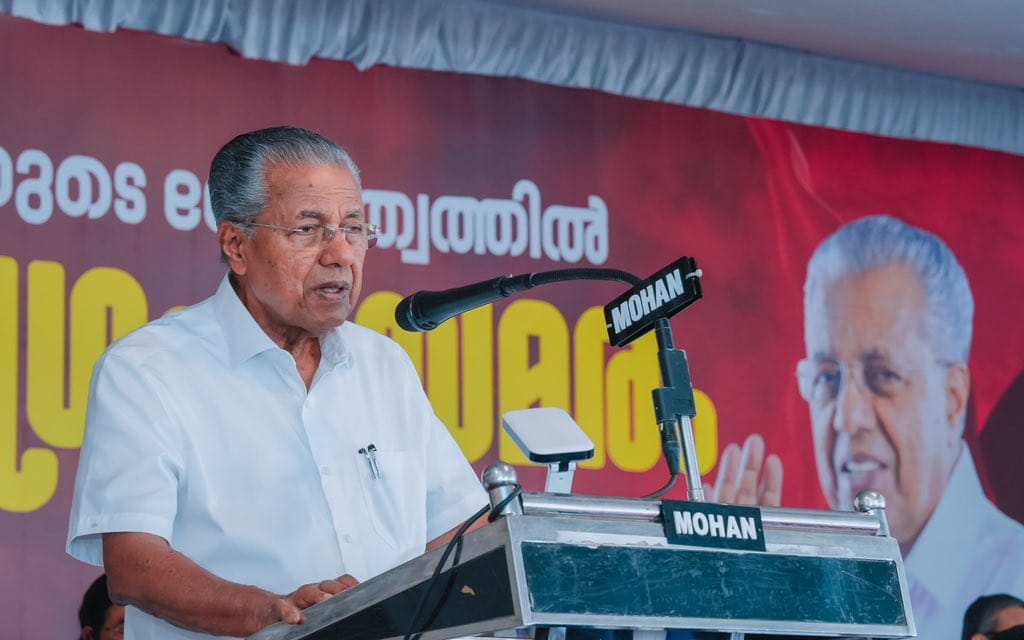
Ullekh N.P., journalist and author who has written extensively on politics, including the 2018 book Kannur: Inside India’s Bloodiest Revenge Politics, says Vijayan is perhaps the most powerful chief minister Kerala has ever seen.
Vijayan is a leader who “controlled both the government and the party at the same time”, unlike previous communist chief ministers, he tells ThePrint. “Vijayan began as a rigid Marxist cadre but evolved into a pragmatic administrator willing to adapt ideology to governance.”
But people close to him say the criticism should be viewed through a different prism: His personal journey from an oppressed socio-economic background, and the political history of Kannur, a district often characterised by violent politics.
“You can’t understand Pinarayi using communist textbooks. He is rooted; he is from North Malabar. And you need to have all that in mind,” says a close acquaintance of Vijayan, requesting anonymity.
He said the leader is extremely compassionate and aware of the lives of people who are close to him and open in his personal space, which also led to his candid interviews with personalities like Sreenivasan and, most recently, with Mohanlal.
Political analyst Joseph C. Mathew, who has worked closely with former chief minister V.S. Achuthanandan, says Vijayan, as a communist leader, has engaged with community leaders, reducing the power of secretaries. “He meets every community leader. None of the CPI(M) leaders did that. I think this is a new era altogether.”
However, he adds, this “disintegrated the party’s centralised organisation democracy to just one person, which I think has ruined the party”.
Also Read: Propped up as Kerala’s answer to CAA, ruling LDF plays a nativity card ahead of elections
Kannur to Cliff House
A politician who rose from the bottom as a student cadre, Vijayan had first come into the spotlight with a historic speech in the Kerala Assembly in March 1977.
Recounting his experience of custodial torture after being arrested under the Maintenance of Internal Security Act (MISA), 1971 during the Emergency two years before, he had held up his bloodstained shirt as he questioned the then Congress Chief Minister Karunakaran.
“To Mr Karunakaran, I say this: We have argued and spoken strongly. We will continue to do so. I wrote the same in my letter to Achutha Menon. These things cannot be suppressed. This is politics. Our party has endured worse. Comrades have died in lock-ups.
Some were shot during protests. Others were stabbed or gunned down by hired goons,” he had said. “Knowing all that, we still stand with this party. Because we expect such dangers. But if you think you can beat one of us into silence by putting us in a lock-up and unleashing four policemen and an inspector, you are wrong. That won’t silence us; it will only strengthen us.”
In last month’s interview with Mohanlal, Vijayan recalled that he had saved the shirt for a while.
While this incident had marked his launch as the politician he later became, people close to him recall a “bright student” who was shy, but good at mediation since as early as his childhood. His teacher even gave him the pet name ‘Mukhyasthan’ or mediator.
The leader was also shaped by his socio-economic background.
Born in 1945 in Kannur’s Pinarayi town as the youngest son of Shri Maroli Koran and Alakkatt Kalyani’s 14 children—11 of whom didn’t survive—Vijayan often recalled the hardships he faced as a child.
He was sent to work as a beedi roller after finishing primary school, but rejoined school after teachers insisted to his mother. He also worked as a handloom weaver for a year before joining Government Brennen College, Thalassery, for his pre-university studies and bachelor’s degree in Economics.
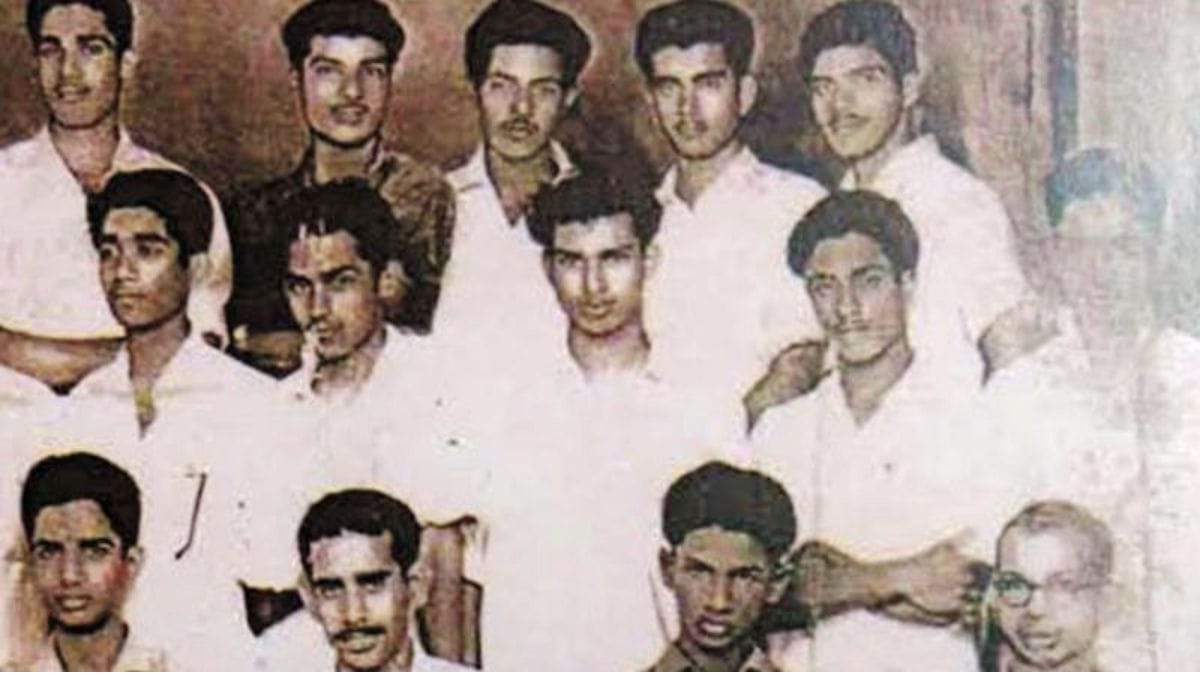
Kannur, which falls in the Malabar region of Kerala, was directly administered by the British as part of the Malabar district under the Madras Presidency. Historians and experts say the region lagged behind central and southern Kerala in social development, as the princely states of Travancore and Cochin invested more in education and social reforms. Malabar’s feudal landlord system and inequalities contributed to organised peasant and labour movements.
In 1939, the Kerala unit of the Communist Party of India was formed at Pinarayi, marking an important moment in the growth of communist politics in the region. The Left, particularly the CPI(M), continues to maintain a strong cadre-based organisational structure in the district.
However, the district’s history is also infamous for political violence among the communist party, Congress, and RSS, which saw its early expansion in the area.
Vijayan, who joined the CPI(M) shortly after the split of the Communist party into the CPI and CPI(M), was a member of the Kerala Students Federation (KSF), the precursor to the Students’ Federation of India (SFI). He later served as the president of the KSF and the Kerala State Youth Federation (KSYF).
In 1968, the politician was elected to a CPI(M) Kannur district committee, and then to the party’s Kerala state committee in 1978.
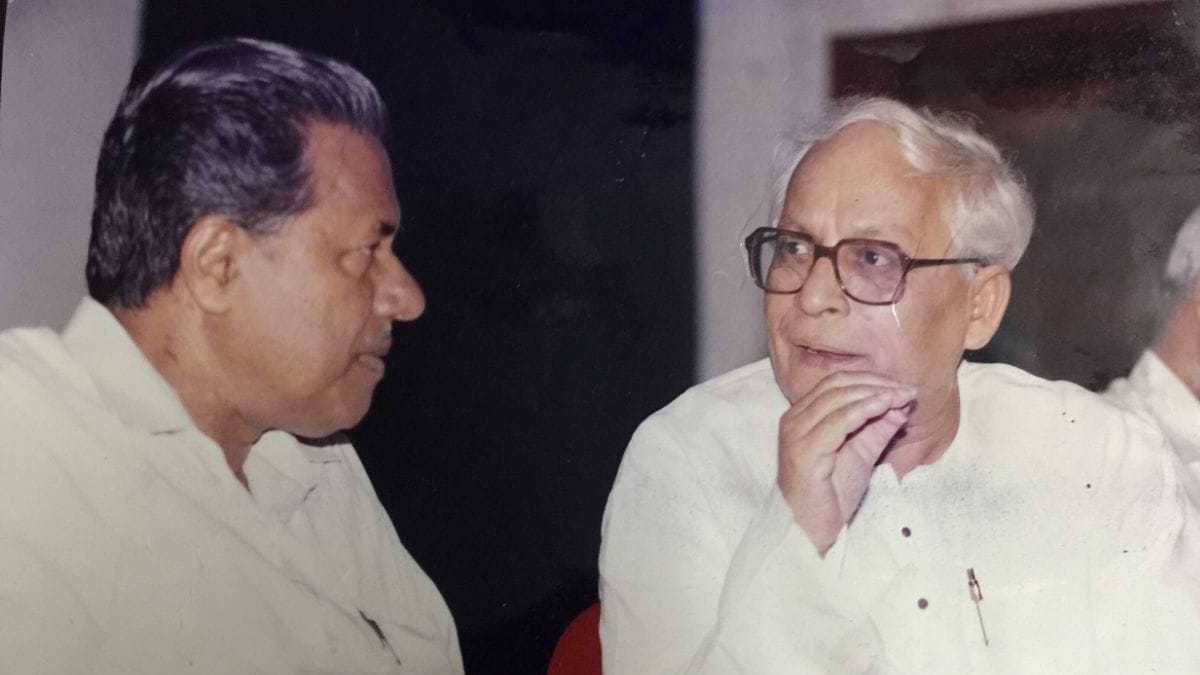
During this period, he had also held roles in district and state co-operative banks. Vijayan was elected as the CPI(M) Kannur district secretary in 1986, when senior leader M.V. Raghavan left the party over the “alternative document issue”, a role that marked a turning point in his political career.
The alternative document was released by Raghavan, criticising party general secretary E.M. Namboodiripad’s strategy to not ally with “communal” or religion-based parties in the state, such as the Indian Union Muslim League (IUML) or the Kerala Congress.
Raghavan’s document criticised this move and said the party should be strategic to oppose the Congress. A powerful leader from Kannur, Raghavan, was expelled from the party for “revisionism”.
“His fans usually portray him as a strong politician since he was an MLA in 1971. But he didn’t have that much influence or power. But as per the CPI(M) structure, just an MLA place won’t give them that much power, but organisational roles did,” says political analyst K.P. Sethunath.
Around the same time, Vijayan’s career in electoral politics was also gathering pace. He became Kerala’s youngest legislator at 25 in 1970 after winning the Kannur Kuthuparamba constituency, which he represented till 1991. In 1996, he won from Payyannur and became the minister of electricity and cooperation in the then E.K. Nayanar-led cabinet.
Vijayan is credited with playing a crucial part in strengthening Kerala cooperative societies and also improving the Malabar region’s access to electricity.
But his ministerial tenure was also marked by controversy over allegations of corruption in the SNC-Lavalin deal between the Kerala State Electricity Board and Canadian firm SNC-Lavalin to renovate three hydroelectric projects in Kerala. Vijayan was discharged in the case due to lack of evidence.
Vijayan is also remembered for his involvement in peace-keeping efforts in the 1971 Thalassery riots in Kannur. The week-long riots in December 1971 between Hindu and Muslim communities were recorded as the first communal riots in Kerala after Independence. They led to widespread destruction and looting of over 100 houses and many shops, as well as damage to over 60 mosques and three temples.
According to the Justice Joseph Vithayathil Commission’s inquiry, the riot was triggered by a rumour spread by the RSS and Jan Sangh that the Parapram temple had been desecrated by Muslims. The report had said that Vijayan, who was leading the CPI(M)’s peace efforts, was also a target of police action.
Vijayan became the party’s state secretary in 1998 after the demise of Chadayan Govindan and resigned from his ministerial role the same year. He held the position for 18 years, which transformed the party in many ways and distinguished the Kerala unit of the CPI(M) from its counterparts in other states.
One of the key changes was in its media strategy. The party launched Kairali TV in 2000, and its daily mouthpiece Deshabhimani’s offices were revamped like any other legacy media.
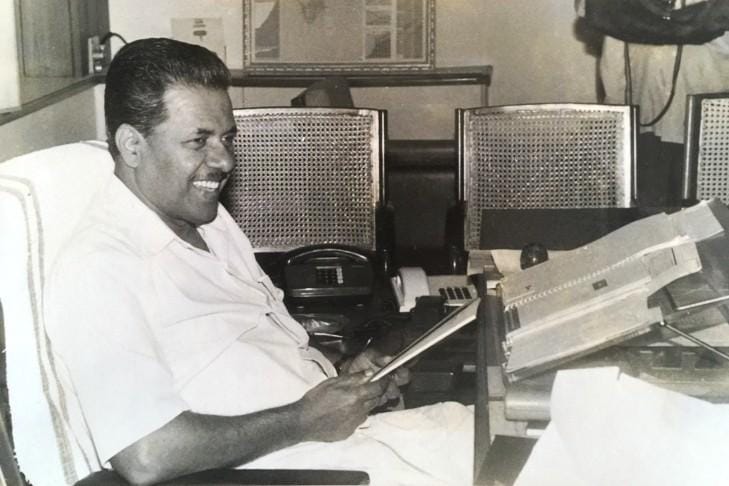
“He changed the organisation in a way for it to survive in the post-globalised era. It was during his time that the party made many organisational revamps. Kairali channel was launched, and Deshabhimani offices became big, similar to any other big media house, along with related assets and cooperative enterprises,” Sethunath says.
“The party became a big enterprise. That’s the main difference between the Communist party in Bengal and Kerala. In Kerala, party units and cadres’ accumulation of wealth is through the party. So the party’s survival is the individual’s survival,” he adds.
Under this leadership, the party won key elections such as the 2004 general elections, the 2006 Assembly election, and the 2016 and 2021 Assembly elections. The party secured a historic consecutive victory in the last state polls.
But this period is also remembered for a divide in the party into two factions led by stalwarts Vijayan and Achuthanandan, a rivalry that often played out in public and lasted over a decade.
At a time when Vijayan was slowly becoming powerful in the party, the first flashpoint in this rivalry came when Achuthanandan, popularly known as just ‘V.S.’, made remarks against Vijayan in the Lavalin deal. Tensions increased after V.S.’s unexpected defeat on his home turf in Mararikulamin in 1996 to Congress’s C.J. Francis, a loss attributed to factionalism in the party.
In 2005, V.S. also suffered a setback in the 18th state conference in Malappuram, when all his 12 nominees lost the state committee elections.
Vijayan was re-elected as the state secretary for a third term, with his panel also being endorsed by the delegates. In the same year, V.S. was removed as the editor of Deshabhimani.
V.S. was nearly denied a ticket in the 2006 assembly elections, triggering massive protests by his supporters. But eventually he ended up contesting and became the chief minister.
In 2007, the party briefly suspended both the party secretary and Chief Minister V.S. due to their public infighting.
V.S. had also supported T.P. Chandrasekharan, whom Vijayan once called a “traitor”. The rebel communist leader was murdered in 2012, and the party was blamed for his death.
Chandrasekharan, who joined the CPI(M) at the age of 18, left the party to form the Revolutionary Marxist Party (RMP). The new party went on to win in its home turf, Onchiyam Panchayat in Kozhikode district, in the 2009 local body polls.
Chandrasekharan was murdered in May 2012 by a group of assailants, who first hurled a bomb at him as he was riding a bike. He was then hacked to death and the investigation found 55 wounds on his body.
The Special Investigation Team later arrested three prime suspects, including Kodi Suni, from hideouts near areas regarded as CPI(M) strongholds. The police arrested over 50 accused, including many CPI(M) functionaries. In 2014, 12 of the accused were convicted in the case, including three CPI(M) leaders.
The rivalry between V.S. and Vijayan often played out through contrasting images: Achuthanandan was portrayed as a sidelined leader and champion of communist ideology, while Vijayan was seen as supporting corporates.
For example, when he was the chief minister, V.S. carried out a major eviction drive in Munnar in 2007 to address the alleged encroachment of government land and forest by the ‘land mafia’. However, local CPI(M) and some state leaders opposed the move, saying the drive affected the poor more than large encroachers. The party even created the Munnar Protection Committee to oppose its own government.
Similarly, in the mid-2000s, V.S. raised concerns about the SmartCity Kochi agreement between Dubai-based TECOM Investments and the Kerala government, particularly a clause that allowed freehold rights over project land to TECOM Investments to set up the IT township project. Vijayan and many CPI(M) leaders supported the project.
Ullekh says the rivalry was just a power struggle between two senior party leaders.
“It wasn’t a case of V.S. being the hero and Pinarayi being the villain; it was simply a political power struggle within the party,” Ullekh says.
However, Mathew says V.S.’s fight was against the party, not Vijayan.
“V.S. didn’t have to pick a fight between them for power. But he did because ideologically, he couldn’t get along with these people,” he says, adding that the party, once criticised for defying the party secretary, has now been solely led by Vijayan.
The rise of ‘Captain’
Vijayan’s second phase in electoral politics began in 2016, when he led the party’s campaign in the assembly polls. He led the campaign against the UDF government under Oommen Chandy, which was facing multiple scandals, including the solar scam.
The LDF under Vijayan came to power with the slogan, “LDF varum, ellam shariyakum (if the LDF comes, everything will be set right)”, winning 91 seats of the total 140 seats.
The first Vijayan cabinet initially launched schemes such as the Livelihood Inclusion and Financial Empowerment (LIFE) Mission, focused on providing houses to the homeless, the Aardram Mission to modernise the health sector, and the Haritha Keralam Mission for waste management.
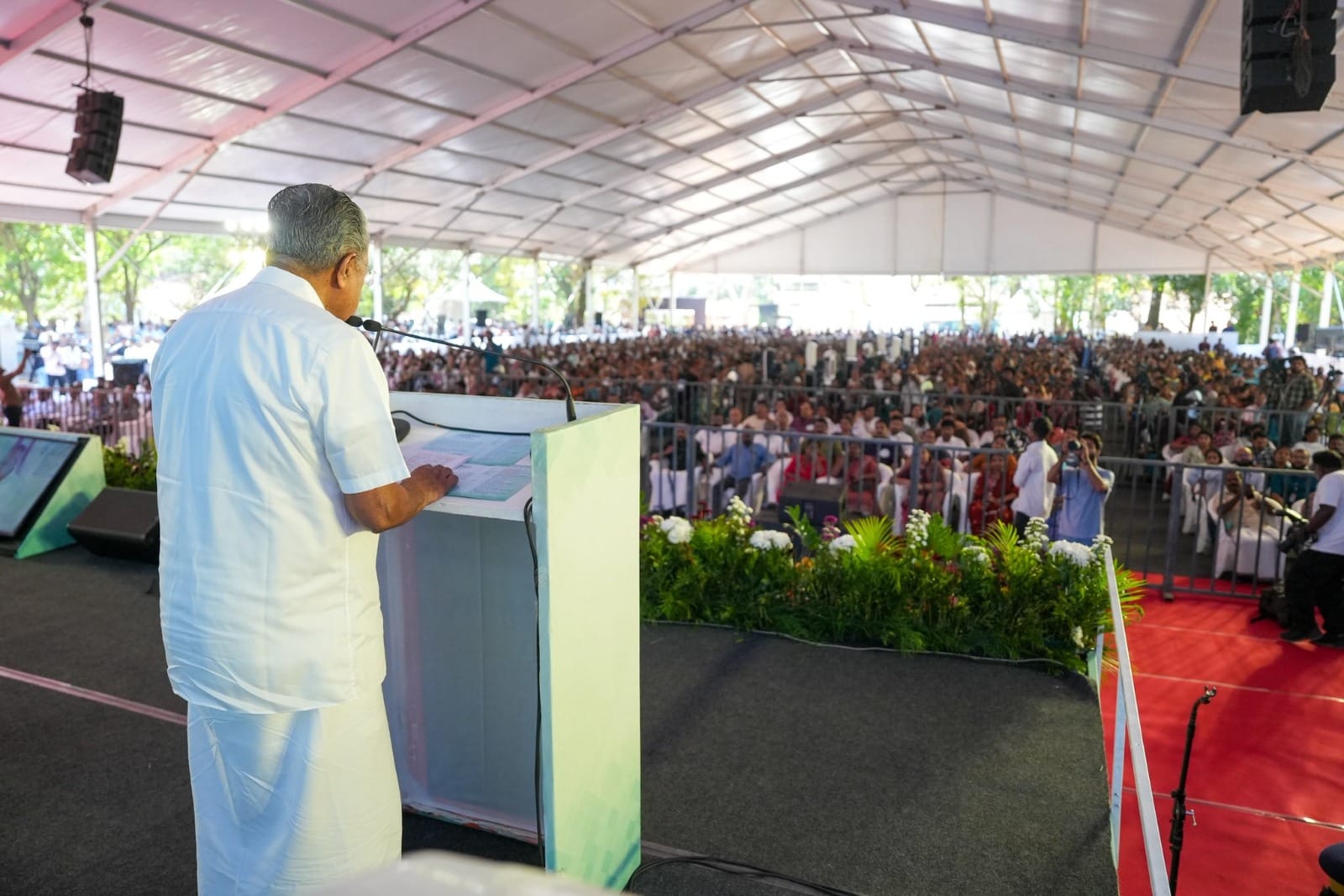
It also rolled out major digital infrastructure projects for internet access, such as the Kerala Fibre Optic Network (K-FON) and the Institute of Advanced Virology in Thiruvananthapuram.
However, what marked his tenure was the handling of a series of crises: 2018 Kerala floods, Nipah outbreak in 2018, and the COVID-19 pandemic. During the pandemic, Vijayan held daily evening press conferences summarising the data of daily cases, recoveries, and policy decisions.
The 6 pm press conference, which began in March 2020, continued daily for a month before gradually reducing in frequency. These briefings were widely watched, with TRP ratings for TV channels reportedly rising during that time.
This period led to the branding of Vijayan as “captain” in the run-up to the 2021 assembly polls.
According to Vijayan’s Additional Private Secretary, Ratheesh Kaliyadan, the chief minister constantly monitors major infrastructure projects and gives deadlines to officials. People close to him also say he is a “numbers person”, always seeking quantitative data for each project.
“Constant monitoring will be done for major projects, including monthly reviews. So there will be progress and the CM will be well-studied. He cannot be misinformed during meetings,” he said, adding that the same approach is followed during crisis situations.
The first Pinarayi cabinet received flak over its initial stand of supporting women’s entry to the Sabarimala temple, which led to protests from Congress and BJP in 2018, in the 2021 Assembly polls.
But the CPI(M) returned with a historic mandate, winning 99 seats, eight more than the previous time.
However, in the 2019 Lok Sabha polls, the LDF suffered a major setback, losing 19 of the 20 seats to the UDF.
The chief minister also faced several controversies this time, including the CMRL-Exalogic case, allegedly involving fraudulent payments to a firm owned by Vijayan’s daughter, Veena T.. The chief minister denies any wrongdoing.
According to the case that started in 2019, Kochi-based Cochin Minerals and Rutile Ltd (CMRL) entered into a contract in 2017 with Bengaluru-based Exalogic Solutions, an IT firm owned by Veena, for software updates, for which the company continued to make payments to her firm. The Income Tax Department said no services were being rendered by the company.
While the case is still pending in court, the state’s Opposition has repeatedly alleged that the slow progress of the probe reflects an alleged nexus between the ruling Left Democratic Front (LDF) and the BJP-led Centre.
The second Vijayan cabinet also decided to replace all the existing ministers to bring in younger faces, except Vijayan himself.
The new cabinet included Vijayan’s son-in-law, P.A. Muhammad Riyas, as the tourism and PWD minister. Riyas, who joined the Left through its student organisation SFI and rose through the ranks, represents Kozhikode’s Beypore constituency.
The dropped ministers also included K.K. Shailaja, one of the most popular ministers in the first Vijayan cabinet. Shailaja, who had risen to international fame as health minister for handling the Nipah virus outbreak and the Covid-19 pandemic, had won in 2021 with the highest margin of over 60,000 votes, amid popular demand for her to become chief minister.
While she maintained that she had accepted the party’s decision, the move had raised eyebrows, with the party drawing criticism for sidelining her.
While the first cabinet had focused more on welfare measures, the second one saw major infrastructural pushes, including the Kochi Water Metro, e-governance systems, such as K-SMART, the National Highway expansion, and attempts to roll out the semi-high-speed rail corridor K-Rail, which eventually stalled due to a lack of Central approval.
Many of these projects, including the Kochi-Mangaluru GAIL pipeline, were conceived in the late 2000s, but were not finished due to a lack of funds and protests.
The government also launched an extreme poverty eradication initiative aimed at uplifting the ‘extreme poor’ in the state through targeted schemes.
However, the Left party’s renewed push for private investments, including holding investment summits and engaging with Central schemes, also brought criticism that Kerala’s communist party was deviating from its core Marxist ideology.
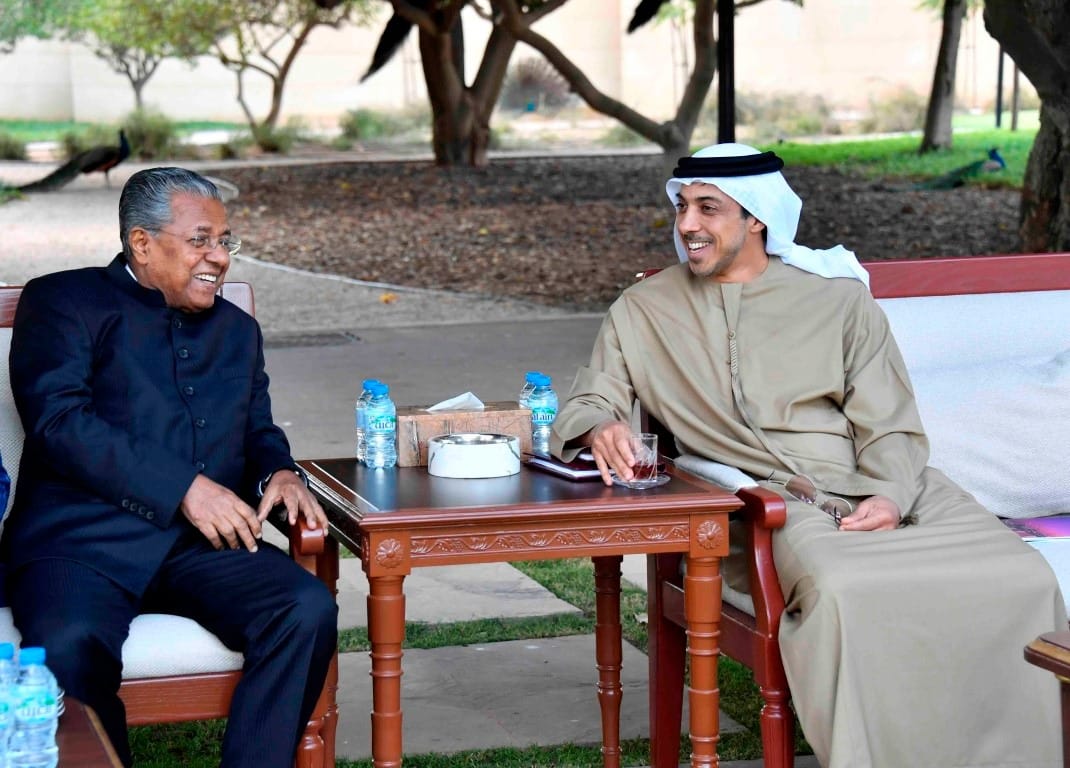
The criticism only strengthened when the state government held a Global Ayyappa Conclave in Sabarimala last year, a move considered as an attempt to retain its Hindu vote base and keep it from shifting to the BJP.
However, Vijayan’s office says it’s a practical move for the state.
“As the lone communist party-led state in India, Kerala doesn’t have the freedom to work on its own. So it has to comply with the central government and its policies for survival. But he never tried to dilute the basic ideals of communism,” Kaliyadan says.
The longtime acquaintance quoted earlier says this shift, including Vijayan’s frequent references to spiritual leader Narayana Guru, reflects both an attempt to present an alternative to the Hindutva cultural narrative and a side of Vijayan that is rarely discussed publicly.
According to him, it also hints at a more “spiritual” dimension to the leader’s personality that has always existed but is seldom highlighted in his political image.
Now, as the leader is set to lead the party in another election, the party is also facing questions about its future beyond him. “In this election, he is staying for the transition for the party’s survival. His strength also has its negatives,” he said.
Announcing that Vijayan would lead the party in the upcoming assembly polls, CPI(M) general secretary M.A. Baby said in January that the party would not announce its chief ministerial face before the elections.
Sethunath says the view of Vijayan could change based on perspective. “When you identify Pinarayi Vijayan as a model communist leader and the Communist Party of India (Marxist) as a model communist party, the assessment becomes ideological. Otherwise, he is as good, or as flawed, as any other political leader. Many tend to analyse him primarily through the question of whether he is a ‘good communist leader’.”
He adds, “But if you set that aside, bureaucrats who have worked with him often give him good marks, saying there is no dilly-dallying in his style of functioning.”
But Vijayan sees himself as a party man at core, whose only fear is straying from the party line.
“Generally, I am a person who goes in obedience to the party. The party has general positions that it desires,” he had said in the interview with Mohanlal. “I am someone who thinks that even the slightest deviation should not come in those positions. I live fearing that. If you want to say so, there is such a fear.”
(Edited by Sugita Katyal)
Also Read: In Pinarayi’s pre-poll Kerala budget, gig hubs, global school and a welfare bonanza