




New Delhi: Months after being bested in the 2019 Lok Sabha polls in West Bengal, where it suffered a significant decline in the number of seats it had won in 2014, the Trinamool Congress (TMC) saw a chance at redemption. Three assembly bypolls stared at it, including BJP state president Dilip Ghosh’s Kharagpur Sadar seat.
It was a high-stakes prestige battle, and so then Chief Minister Mamata Banerjee roped in Prashant Kishor and his Indian Political Action Committee (I-PAC).
At I-PAC then, 22-year-old Uttej Ananthula spotted a personal link in the data for the Kharagpur Sadar constituency—it had a considerable population of Telugu-speaking people.
“I went up to him (Kishor) in a discussion and told him. He said, ‘yes, I know that, but what do you plan to do about it?’ I told him we can bring in movie stars from the South,” Uttej told ThePrint.
He says that Kishor did not dismiss the idea outright, and sent him to Kharagpur. Uttej had barely been working with the I-PAC for around four months when he was picked and sent to West Bengal. The TMC went on to win the Kharagpur Sadar seat for the first time ever.
“We did a lot of ground work there. Got more Telugu leaders on board. A day after the victory, he (Kishor) called me up and said, ‘I didn’t need to tell you what to do, you figured it out yourself’,” Uttej, who later moved on to The Mavericks India, another political consultancy, recalls fondly.
For many political consultants in India, Prashant Kishor and I-PAC have been the Ivy League of political consultancy in India.
Seven years after the 2019 bypoll victory, the political consultancy industry seems to be back in focus due to I-PAC’s operations in West Bengal.
Cut back to 2026, the TMC suffered a crushing defeat in the state that it ruled for 15 consecutive years, while in Tamil Nadu, the ruling Dravida Munnetra Kazhagam (DMK) also lost the polls decisively. While Kishor parted ways with the I-PAC in 2021, both parties had hired the consultancy for the polls.
Several TMC leaders have since launched an attack on the I-PAC. TMC MP Kalyan Banerjee has alleged the I-PAC had “hijacked” the party and accused it of creating divisions among leaders. Suspended TMC spokesperson Riju Dutta made similar claims about I-PAC running the party in the six months leading up to the elections. He even alleged that “I was asked to give Rs 50 lakh for a TMC ticket”.
With the Enforcement Directorate (ED) probing the I-PAC over alleged money laundering and financial irregularities, public scrutiny has intensified into political consultants and the role played by them as a whole, and has raised questions over funding and operations.
Following the debacle, Akhilesh Yadav’s Samajwadi Party (SP) has reportedly cancelled its contract with I-PAC for the 2027 Uttar Pradesh polls citing a fund-crunch.
However, while the I-PAC may be going through a credibility crisis at the moment, the political consultancy industry seems to have moved far beyond Prashant Kishor and I-PAC, with other election management moving beyond internal party departments into essential ground troupes for hire.
While positive valuation of the industry is estimated at upwards of Rs 1,500 crore per annum, Kishor himself had made headlines in 2024 when he revealed that his fee was Rs 100 crore for advising on one election.
Along with parties, individual leaders have also been engaging political consultants in the run up to elections, and several boutique firms have cropped up to cater to this demand as well.
Founder of ShowTime Consulting, Robbin Sharrma, who is one of the most prominent names in the industry now, says he finds the industry similar to the legal industry.
“In that ecosystem, you will find an advocate everywhere, but you also have the Harish Salves of the world, who come to solve a specific problem statement. Our industry is very similar. You pick a problem statement, and you have to win the election. But, every state is different, every problem is different, every challenge is different. You cannot copy paste the same solution everywhere,” he told ThePrint.
The industry, according to Sharrma, is currently “testing its limits and scope”.
The Ivy League
The political consultancy industry has had a pre-Prashant Kishor and post-Prashant Kishor era.
The professionalisation of politics began with internal changes within parties, which were partaking in specialised division of labour across departments and had begun relying on party employees to perform tasks like campaign management and data analytics.
In his book ‘The Backstage of Democracy’, author Amogh Dhar Sharma traces early professionalisation in the Indian National Congress to the 1980s under Rajiv Gandhi, when the party began experimenting with technology, attempting to employ data-driven insights and computerised analysis, alongside psephology and marketing.
As against this, Sharma credits Pramod Mahajan with introducing internal professionalisation in the Bharatiya Janata Party (BJP) in the early 1990s and 2000s. According to the book, it was Mahajan who managed the logistics of senior leader L.K. Advani’s rath yatra, even installing fax machines in the local BJP offices across the yatra’s route, and sending hourly press releases to the central BJP office in New Delhi that then sent updates to mainstream media.
Election strategist Abbin Theepura, an MBA graduate, who worked with Kishor for several years before establishing P-MARQ, explained that before the industry found a name, there were no terms like “political strategist” and “political consultants”.
“Surveys used to happen, to understand which candidates to field where. But, that was largely driven by the party ecosystem, and a PR team would look at media management for the party,” he says.
Theepura’s firm specialises in political branding for politicians, policy advisory for ministers and the government, and exit polls, having predicted 26 of 29 polling outcomes correctly, according to him. His secret formula, he says, is that he is selective about working with leaders who are “visionaries”.
However, it was the 2014 elections, in which the BJP won an absolute majority of 282 seats in Parliament that paved the way for several professionals to see potential in this then nascent industry.
The catchy aspects of the campaign from the time came from the professionals hired by the party—from the ‘Abki Baar Modi Sarkar’ slogan which was the brainchild of Ogilvy & Mather’s Piyush Pandey, to ‘Chai Pe Charcha’ which was conceptualised by Kishor’s team.
It wasn’t that a party had employed the services of professionals for the first time in 2014.
Media reports from the late 2000s swoon over IIT-Kanpur educated Pallav Pandey of Viplav Communications, crediting him for helping MPs and MLAs “win elections through technology”.
Sharma’s book refers to a “novel innovation” by Viplav—SuperCaller, a mass digital calling tool, which was the frontrunner in reaching 5 lakh voters daily with pre-recorded messages. The company also offered a ‘Constituency Management Software’ which was a database of the socio-economic profile of voters and voting trends in constituencies across India.
A political consultant, who began her journey with I-PAC, told ThePrint that the firm can be considered as one of the “parent companies” from which several political consultants have drawn experience. She, in fact, calls I-PAC the “Ivy League” of political consultancies in India.
“There was no industry before that. It was just professionals working with Mr (Narendra) Modi for the first year and then from the second year onwards, it got converted into an industry with the Bihar elections,” she explains.
The most prominent thing that Kishor did was guarantee the cost that is necessary to undertake such an organised effort, she asserted. “I remember them telling us stories of when they had first started out, they had to provide the local leaders with inputs worth enough for them to get housing and cars.”
The mushrooming
BJP’s resounding victory in 2014 lent political consultants the credence that the industry had been working hard for.
Citizens for Accountable Governance (CAG) political advocacy group is widely credited for launching several campaigns for Modi in the lead-up to the 2014 Lok Sabha elections, and Kishor was at the centre of it all.
Post the elections, the CAG split up and I-PAC was born in 2015 before Nitish Kumar’s campaign in Bihar.
The I-PAC has since been a gun-for-hire of sorts, having worked across party lines, including for the TMC in West Bengal, the Aam Aadmi Party in Delhi, the YSR Congress Party (YSRCP) in Andhra Pradesh, the Dravida Munnetra Kazhagam (DMK) in Tamil Nadu, the Congress in Punjab and Uttar Pradesh, and the Janata Dal (United) in Bihar.
Robbin Sharrma, who was also one of the founding members of CAG and I-PAC, started ShowTime Consulting in 2019. It boasts of “an impressive 100 percent strike rate”.
The firm has worked with several top leaders and parties over the years, including Conrad Sangma and his National People’s Party (NPP) for the 2023 Meghalaya polls, Eknath Shinde and Shiv Sena in the 2024 Maharashtra polls, and N. Chandrababu Naidu and the Telugu Desam Party (TDP) in the 2024 Andhra Pradesh elections.
Naresh Arora’s DesignBoxed has also worked with parties and leaders across the board, including with the late Ajit Pawar’s Nationalist Congress Party (NCP), and with the Congress in several states, including Assam and Rajasthan.
In Karnataka, D.K. Shivakumar hired the firm two years before the 2023 state polls. The firm’s strategy in the state focused on a positive, public welfarist campaign, and it is widely credited for the Congress win.
Then there are firms that are dedicated to working with specific parties. Association of Billion Minds (ABM) is understood to be associated with the BJP and is the brains behind ‘Nation With NaMo’ campaign. Another offshoot transformed into Bengaluru-based Varahe Analytics, which also works exclusively for the BJP.
“ABM did the whole hybrid model of campaign management, research and policy, speech writing, communications and political inputs. But the party has now oriented both these entities into different kinds of roles,” a consultancy professional familiar with the functioning of these firms explained.
ABM, he says, has become more “communications-heavy”, while Varahe now is focused more on politics and strategy.
Mumbai-based Jarvis Consulting is also associated with the BJP. In fact, the Jarvis website claims ownership of SARAL (Sangathan Reporting and Analysis) app, which Amit Malviya, head of IT at BJP, called an election-winning machine in the run up to 2024 general elections.
Jarvis describes SARAL as a “tool to make it easy for the companies to manage the human resources, accounts and a solid reporting system ensures that everything within the company works smoothly”.
Malviya had explained that the BJP was using the ERP (Enterprise Resource Planning) platform to dial-up nearly 60 lakh booth-level workers every single day through AI-calling and chatbots.
Similarly, Inclusive Minds, which is headed by Sunil Kanugolu, works exclusively with the Congress. It looks at political intelligence, communications, social media/on-ground strategy, research and data analytics for the party.
In southern India, DMK’s political strategy unit Populus Empowerment Network (PEN) is helmed by party chief M.K. Stalin’s son-in-law Sabarisan Vedamurthy. Hyderabad-based Pramanya Strategy Consulting has also reportedly worked with several parties like the All India Anna Dravida Munnetra Kazhagam (AIADMK), and Pawan Kalyan’s Jana Sena Party.
Smaller firms have also mushroomed, and even individuals have entered the space, helping politicians manoeuvre elections.
Also Read: Young, reclusive, ‘brilliant’ — meet Sunil Kanugolu, the ‘other Prashant Kishor’ of Congress
Well-oiled machinery
The industry now seems to have turned into well-oiled machinery. A consultant at a political consultancy, which works with a pre-eminent opposition party, talks about political consultancy having all the trappings of a regular job, but in the political domain.
“When you look at politics from the outside, it seems extremely chaotic and highly unpredictable. More importantly, it is a field with very high entry barriers, be it lack of family connections or financial constraints or lack of caste affiliation,” he explains.
He also explained that maintaining a long-term relationship with a single party helps with stronger integration with the party.
“It allows us to build institutional memory and understanding of what works and what doesn’t work,” he says, adding that spending longer time with a party and its functionaries helps politicians get attuned to political consultancy and develops understanding and trust with the organisation.
The industry may, in fact, now be becoming perennial in nature. In fact, Sharrma of ShowTime Consulting says he spent nearly 4.5 years in Andhra Pradesh before the 2024 elections.
“Of course, you cannot start campaigning four years before the elections. That begins only about 15 months before the polls. But before that, it gave me an opportunity to look at the structure of the party (TDP). How do we make the structure better? How do we make the army ready for battle? How to have the right people at the right place? What could be the performance metric? Are we giving positions to the right people with the right mix?” he says.
In today’s times, it isn’t just enough to have the best professionals on board, but to also know the firms that the opponent parties have onboarded.
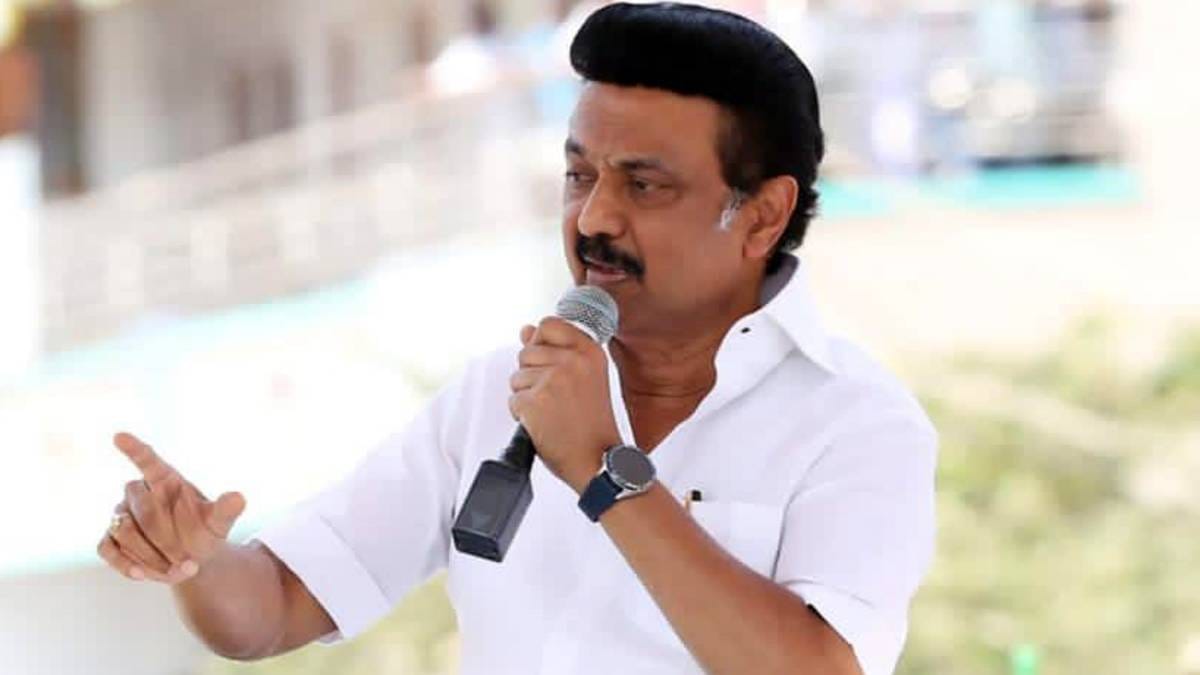
For the 2026 election campaign, the DMK also roped in Rishi Raj Singh from the I-PAC and Robbin Sharma, despite having its own firm, PEN.
A senior DMK source had then confirmed to ThePrint that while the party may not need multiple consultants, the move was aimed at putting the rival AIADMK at a disadvantage by securing these key consultants.
However, Theepura asserts that the industry may have become a bit too “crowded”, with more and more people who may not have experience in the field setting up shop and promising results.
“So, they launch a firm and get 8-10 people to join. Initially, they will ask for Rs 100 for an assignment. But politicians negotiate or they may not be able to sustain that demand. So, after some time, the same firm may offer the same service in Rs 10. So, there’s also a bit of market spoliation that’s been happening now,” he asserts.
Also Read: CEEW to iFOREST, Modi govt listens when think tanks talk. They are growing in clout & cash
Beyond elections
Political consultancy began as an industry focused on pre-election planning and execution.
However, election management professionals have, at times, veered beyond this space, to aid the party or the leader in on-ground governance as well.
For instance, development and welfare initiatives are often undertaken on proposals presented by election management strategists. When ShowTime Consulting worked with the NPP for the 2023 Meghalaya elections, it drove “initiatives that made a difference”, according to its website.
These included a scheme launched by the NPP government to boost farming in Meghalaya, offering Rs 5,000 per farmer to enhance production and provide support. Similarly, the CM Elevate initiative was aimed at improving livestock farming by making access to credit and subsidies more efficient and accessible for farmers.
By way of an example, Sharrma explained that when their team was conducting an assessment on the field, they discovered several problems that people had been facing.
“For example, there was a village which just wanted a handpump for drinking water, and that village said that give us a handpump and we will vote for you. Those votes were crucial. At that time, I realised that anyway, the government has to provide the service for the people. They have to spend money. If the real issues of the people align with the electoral benefit, I think that’s what we bring to the table,” he told ThePrint.
Such engagement on governance may be more direct at times too.
For instance, I-PAC employees who had worked on the YSRCP campaign for the 2023 polls left the political consultancy firm to join the Field Operations Agency (FOA), which handles the volunteer system in Andhra Pradesh.
The opposition in the state later raised concerns over I-PAC’s influence within the state government, with Jana Sena Party’s (JSP) political affairs committee chairman Nadendla Manohar alleging in 2023 that I-PAC had become a “parallel administration”, with the then YSRCP-led government following its advice in almost all policy matters.
Sunil Kanugolu of Inclusive Minds is serving as chief political advisor to Karnataka CM Siddaramaiah. S Keerthana, the youngest MLA from Vijay-led Tamilaga Vettri Kazhagam (TVK), was a political consultant with I-PAC and ShowTime Consulting before entering active politics. She was reportedly involved in campaigns for the TDP, TMC and DMK. One of the Congress candidates in Bihar, Shashant Shekhar, had also worked with political consultancy firms like I-PAC and Inclusive Minds before taking the plunge into politics.
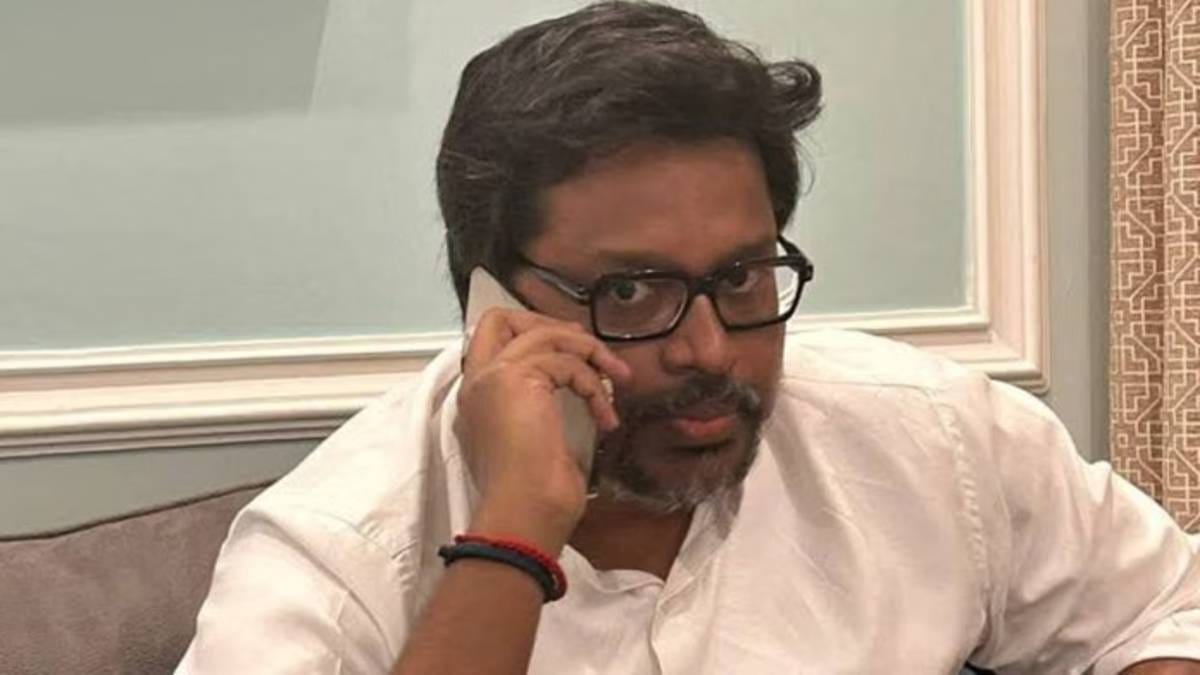
A second political consultancy professional told ThePrint on the condition of anonymity that he is working with former Madhya Pradesh CM and Congress leader Kamal Nath to help rebuild party structures in the state, even though the next elections are two years away.
Asmita, Director of Pepup HR, which has been actively working on hiring across the political consulting ecosystem, also notices the change in hiring trends in the industry. She says that while election periods speed up hiring, “the industry now works far beyond election cycles”.
“Organisations are continuously focused on data, research, digital communication, strategy, and outreach all year. So, there are peak periods, but the pace stays steady the year round,” she told ThePrint.
The value of consultants
While politicians thrive on perception and visibility, the adjacent political consultancy industry works on a largely opaque model—often shying away from sharing details of the parties of politicians they work with or the kind of work they end up undertaking. This leads to varying claims about the worth of India’s political consulting industry.
Two years ago, Pratik Jain, co-founder and director at I-PAC, estimated the value of the political consulting industry in India to be not less than Rs 1,500 crore annually.
His calculation, shared through a LinkedIn post, depended on certain assumptions. He wrote that while a political consultancy may offer a wider range of responsibilities to a particular party, he was solely focusing on the strategy and advisory component that a consultant may charge for.
There are 4,123 assembly constituencies and 543 parliamentary seats, with three serious candidates per constituency. Jain wrote that typically, political consultancies are engaged for a period of 24 months leading up to the elections. He takes the average monthly fees to be Rs 1.5 lakh per month for an assembly seat and Rs 7.5 lakh per month for a parliamentary seat. He thus calculates the total annual worth of assembly and parliamentary seats, and thus the worth of the political consulting industry, at Rs 1,477 crore.
However, a third political consultant, on the condition of anonymity, says the fee charged by a consultancy depends on the scale of the operation as well as the experience of the firm. The scale may vary as per the brief provided by the party hiring the firm.
“For example, I-PAC had more than 500 employees in Bengal. Their mandate was strategy and execution of the campaign. In Tamil Nadu, PEN was executing things on the ground, so I-PAC had around 20 people for strategy only. They were the brains,” he explains.
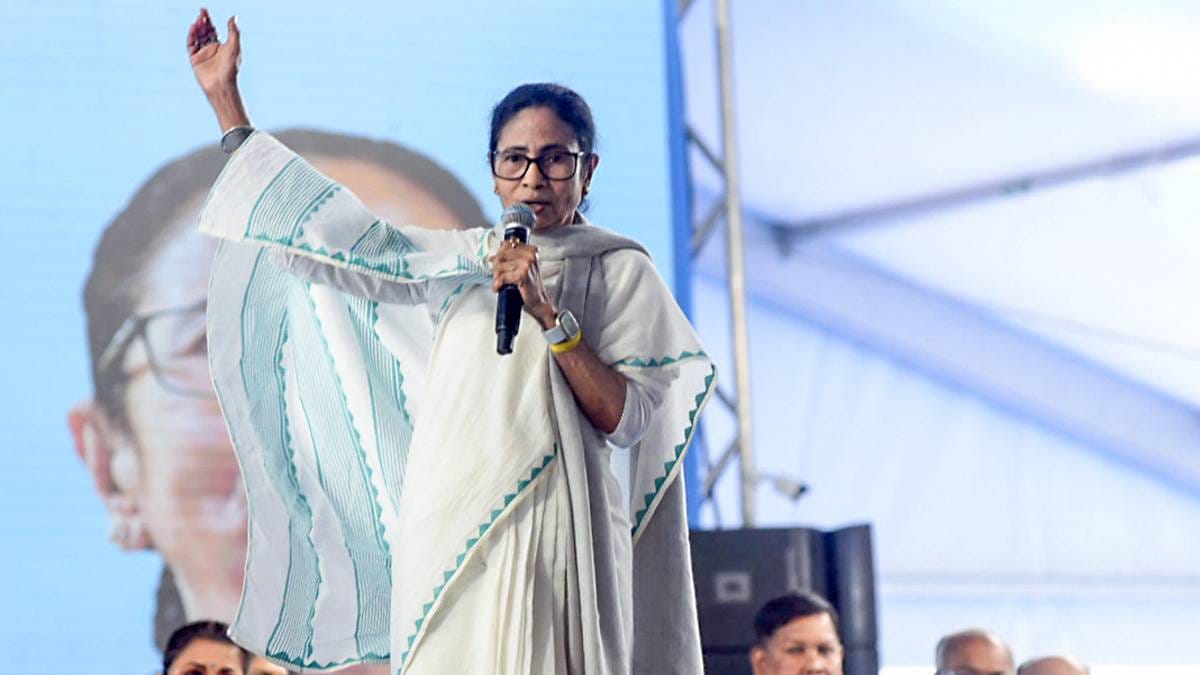
As for the monetary aspect in case of political parties hiring consultants, he says that a fee of Rs 5 crore a month would be a decent average cost for the campaign.
A fourth political consultant with a decade of experience in the field had a more conservative view when it comes to hiring of political consultants by individual candidates.
She says that individual candidates ideally hire consultants 8 to 10 months ahead of elections, and she would then need at least a 10-member core strategic team and a 10-member calling unit. Depending on the campaign, she then hires volunteers.
“Anywhere between Rs 8 to 12 lakh a month is just the salary cost of all of these people… And I won’t just have people at the assembly constituency level. I will have my higher management, my finance experts, who have a few elections worth of experience. So, I will have to have multiple projects to sustain the operation,” she told ThePrint.
She then does the calculation. Each of the 4,123 constituencies may have an average of four serious candidates, and five states go for elections together on an average in a year. However, very few candidates actually go on to hire consultants, she says.
“If there are 234 constituencies in a state, you have only about 700 people who are viable candidates who would hire consultants. Remove the top 20 leaders from this list and remove the 50 percent of people who are not even convinced they would get a ticket,” she asserts, adding that only around 20 leaders in one state election actually hire consultants and around 100 candidates may potentially hire consultants in an election year.
“So then, the industry size sounds huge on paper, but it is actually not that huge.”
Also Read: Who is ‘elusive’ strategist Kanugolu & why raid on his Telangana office has Congress seeing red
The workplace spectrum
A full-service consultancy firm has different verticals. They include political intelligence, which can be broken down into two verticals—qualitative and quantitative.
Quantitative work typically involves surveys, and qualitative assessment involves social listening and issue-specific focus group discussions. The firm would also have a campaign management and logistics vertical to create catching and relevant campaign entities, and create the PR mechanism around it.
For instance, this is the vertical that would work on a 2016 campaign like Kamal Sandesh in Uttar Pradesh, a consultant explained on the condition of anonymity. The campaign involved party workers travelling on two-wheelers to carry PM Modi’s message to the people.
“You can imagine the scale at which this campaign ran. There were bikes that were centrally procured, and these bikes were sent out across the entire state, so you had to track the rider to ensure he’s reached every household. You have to do fuel management for the entire fleet. These are problems that even the global headquarters of FedEx would not have to worry about, and scales that they would also not have reached,” he explains.
Consultancy firms also have the ‘Research’ vertical, which aids parties or candidates with writing policy papers and speeches, and drafting manifestos. The social media and communication vertical, which is often mistaken as the sole job of political consultancies, looks at content creation.
The professionals working in the political consultancy industry also display a wide spectrum of qualifications and skills.
Asmita recalled that when she started working with the industry, hiring was almost entirely relationship-driven. Organisations, she says, leaned on referrals and their own networks because very few structured hiring partners focused on this domain.
However, this has now changed a lot. Political consulting is far more organised now, and young professionals are viewing it as a serious, meaningful career path.
According to Asmita, the biggest shift in the demand for different roles in the industry has been the rise of digital and data-focused roles.
“Earlier, the focus was operational. Today organisations want people who understand analytics, audience behaviour, digital outreach, and result-driven communication,” she told ThePrint.
She says that during hiring for the industry, she now meets people from law, public policy, consulting, marketing, technology, research, data, media, NGOs and even startups. And that’s not all.
“What’s been especially interesting lately is experienced corporate professionals wanting to move into this space. They’re looking for faster learning, more ownership, and work that feels closer to people and impact,” she says.
However, one thing she says hasn’t changed is “the importance of people who truly understand the ground.”
An ideological gap
A prominent critique of the professionalisation of politics has been that it may lead to de-politicisation of the process through the entry of professionals who may not be as committed to the ideological convictions of a party or a leader, as the ground cadre or party bureaucrats may be.
Sharma’s book rejects this proposition for the BJP, asserting that the party’s transition towards an “electoral-professional party” has not resulted in the dilution of the core ideological tenets of the BJP, and that it has retained its commitment to the ideological project of Hindu nationalism. He credits BJP’s organisational strength, among other things, for this.
“The BJP’s ideological stability is no doubt derived from its position in the wider Sangh Parivar. But it is possible to draw a more general conclusion here—parties that professionalise from a position of organisational strength and those that can command a larger ecosystem of partisan supporters (such as, say, through affiliated sociocultural organisations, sympathetic media platforms and think tanks) face fewer temptations for ideological dilution,” he theorises.
As for other parties and leaders, professionals within the industry come up in staunch defence of their role in elections.
One political consultant with a decade of experience, quoted earlier, explained that those making this argument overlook the fact that political consultants do not act as the cadre.
“We just make the process a tad bit more efficient, that’s all… for example, we attempt to better connect the booth worker to the leader. And with that, if a road is getting built, who is benefiting out of all of this? The people,” she says, asserting that consultants may, in fact, be levelling the playing field for leaders and smaller parties by bringing their experience on board.
“We get the people’s voice to reach the leaders. And while we get a lot of footage and credit for several things, this is the only credit that should ideally be given to us,” she adds.
Professionals also find their own affiliations within the industry.
The consultant at the political consultancy working with an opposition party, quoted earlier, explains that ideological affiliation is an issue that the consultancy tries to solve internally.
“Because we exclusively work with the opposition party, we try our best to have people who are ideologically motivated, ideologically committed,” he says.
“For example, I will not work for any other political consultancy if they’re working for anybody other than the opposition party, and that is the clarity that I have, and most of my colleagues do as well,” he adds.
(Edited by Nida Fatima Siddiqui)
Also Read: Think tanks acting as war rooms. This is what Indian political parties are building for 2024
What is the success rate of ipac when it works for opposition parties as opposed to when it works for ruling parties ( before the 2026 debacles)? This statistic alone can show what is the actual forte of ipac. It needs state power to succeed. Ask any bengal guy and he will tell u what devastation ipac has done
Political parties should do their own research. Instead of outsourcing the job.
Perhaps, we should create a common infrastructure, for political campaigning, like giant TV screens at major road intersections, displaying ads of every political party, one after the other.
Then political funding will not be a necessity anymore. Everyone will get equal chance.