







I started evaluating my future. It looked bleak. I was trapped with my parents in our single room—a situation by no means unusual for middle-class families in space-starved Bombay. The expectation would be for me to marry and bring my bride home to live with us. Since I hadn’t wanted to become an engineer or a doctor, there would never be enough money to buy myself a separate flat.
Not that I’d have an easy escape even if I did earn the money. My parents’ relationship was worsening. I was an adult now, but still felt obliged to give them their daily shot of physical affection—something they craved, since they didn’t get it from each other. I held them and hugged them and kissed them on the lips—our customs had not changed. Kissing my mother was still comforting, if unconventional—an older cousin continued to kiss his mother, so I could tell myself it ran in the family. With my father, it was increasingly discomfiting. I dreaded the obligatory goodnight routine, when he’d look up glassy-eyed from his food, swipe the back of his hand over his lips, and lean forward for his kiss. I could smell the alcohol, no matter how pungent the curry.
And yet I continued, unable to tell them I was too old. The phase I was stuck in further complicated things. I was thin and unmuscled and wanted to build up my body. But I felt awkward exercising in the room in front of my parents. My father, especially, would watch and sometimes grin indulgently. I felt disconcerted by his interest in my body and railed against him in my diary.
I was tired of masturbating in the bathing room, suffocated by the lack of privacy. Each day the flat seemed to close a little tighter around me, the Jaffers more disapproving, Taslima more toxic. Contributing to my claustrophobia was the dawning realization that I might never be free of my phase. Hadn’t my mother also told me (though with the caveat that newer theories had emerged) about a few boys becoming arrested in their development, remaining homosexual all their lives?
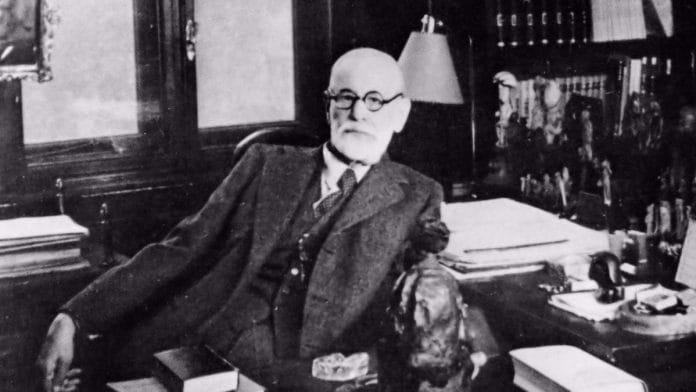
I began reading the Freud tome for answers. My intention was to tackle it cover to cover, but I quickly got bogged down in the first section, The Interpretation of Dreams. So I started riffling randomly through the book, trying to find the “homo” parts. The pages were so old and delicate they came apart in my fingers. I discovered a section theorizing that the combination of dominant mother and weak father figure contributed to arrested development. Surely that didn’t bode well for me.
Then I hit the jackpot—a letter sent by Freud to a woman who’d asked him to treat her son’s homosexuality. “Homosexuality is assuredly no advantage, but it is nothing to be ashamed of, no vice, no degradation; it cannot be classified as an illness.” He went on to say that “several of the greatest men” in history had been homosexual.
If there was ever a karmic reason why the book had remained out in the room for all this time, this was it. With his lines, Freud saved me—he performed therapy from beyond the grave. I could now go on without guilt or shame, without the taint of immorality or abnormality hanging over me. I returned to that letter many times in the months to come, each reading making me more determined to accept any possible homosexuality. In fact, I hoped this would turn out to be my natural state, just so I would have a chance to deploy the fierce arguments I felt I could now muster in its defense.
What hadn’t changed was my situation—I was still stuck and alone, with nobody to share in my epiphany. I started spending time away from the flat as much as I could, searching the streets of Bombay for a kindred soul. On one of these forays, someone grabbed my crotch in a crowded local train. It felt so sordid that I jumped out at the next station, momentarily relieved I wasn’t one of them after all.
But I always bounced back from such negative feelings. I would read about gay orgies in Harold Robbins’s latest, Dreams Die First, or watch Michael York being seduced by Max the German in Cabaret, and want to be there. I was racked by the most incendiary fantasies, both awake and while asleep—the dreams were always women-free. I recorded a few of them in lurid detail in my diary.
Perhaps I was more conflicted than I admitted to myself, because I also made several references in my diary to the only way I saw out—suicide. This might have been due to the influence of my mother, who had bandied the idea of doing away with herself for years, always telling me I was the only thing that kept her going. Like her, I never came close to action—rather, it felt good to write down overwrought phrases like “the extremely tragic and slightly romantic form of death in whose embrace I shall find poetic irony.” And yet, there was a blackness to those days, a precariousness I must have recognized.
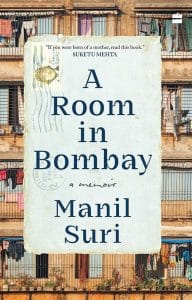
This excerpt from ‘A Room in Bombay’ by Manil Suri has been published with permission from HarperCollins.
Disgusting article! Why does The print publish such articles promoting unnatural poisonous relations?