







I took Sanskrit right from the start of my first year at Radcliffe, but I didn’t start with Ingalls, the Wales Professor of Sanskrit, for his father died in the fall of 1958, just as I entered Radcliffe. Ingalls immediately departed from Cambridge on compassionate leave for that semester, to settle his father’s estate, and in his absence the beginning Sanskrit class was taught by Masatoshi Nagatomi, an excellent scholar of Buddhism but one who didn’t really know Sanskrit. […]
I studied the Sanskrit grammar book mostly on my own, not very well. Ingalls returned in January 1959, and, as he wrongly assumed that I had learned the grammar, we immediately plunged right into the reading of texts, with me flying by the seat of my pants whenever I had to negotiate a grammatically complex Sanskrit passage. This is one of many reasons—the main one being my own impatient and disorderly mind—why I never did learn Sanskrit grammar properly.
Since I was the only Sanskrit major, almost all my Sanskrit classes turned out to be private tutorials with the great man himself. In the general world of universities in those days, beginning Sanskrit classes were small (usually four to six students), peopled by two non-intersecting groups: Hittites and hippies. The Hittites were linguistics majors who just wanted to learn the basic grammar of Sanskrit (which we covered in that one semester) to enrich their general knowledge of the grammars of the various other languages (such as Hittite) that they already knew. They usually dropped the language after the first semester, with A’s on their report cards. The hippies, by contrast, were seekers and meditators, who tended to flunk out in the first semester and go off to find gurus. Being neither a Hittite nor a hippy, I was therefore generally the only Sanskrit student for the second semester and thereafter. (Occasionally, Sanskritists from other institutions, visiting Harvard, would join us in higher-level classes.) […]
We met in Widener A, the Sanskrit library and classroom, a tiny eyrie way up at the top of Widener Library, Harvard’s major library, an enormous building, established in 1915, that dominates Harvard Yard. Widener A was so high up that the bottom of the big window in the room was flush with one of the great flat roofs of the library, a broad arena frequented by pigeons. The birds waddled about and cooed and occasionally flew up in alarm, and for years afterwards, whenever I read Sanskrit poetry, I would hear in my mind the sounds of those doves in the background.
I can still vividly remember those wonderful tutorials with Ingalls. He was a tall, handsome man, forty-two years old when I began to work with him, and I was deeply in awe of him. For a while, we read the text of the great Anthology of Sanskrit Court Poetry that he was then translating, his magnum opus that he would publish in 1965. One verse puzzled him; it described a young girl playing with a ball that kept returning to her, and Ingalls couldn’t visualize the scene that the poet had in mind. “I think she’s playing with a yoyo,” I suggested timidly; Ingalls agreed and gave me credit for my interpretation in a footnote in his book, and so I entered the annals of Indian literature in 1965 in a footnote, with a yoyo. On another occasion, the poet used the Sanskrit word kucha, which meant the girl’s nipple, as I knew well. But I would rather have been struck dead on the spot than say “nipple” in the presence of Professor Ingalls (I was a very young eighteen years old), so I muttered something about “her arm.” “No,” said the great man; “kucha means ‘nipple.’” “Oh, ah, hmm, yes, er, I see, ‘nipple,’” I mumbled into the text, blushing crimson red.
We read one of the masterpieces of ancient Sanskrit literature, Kumara-sambhava, “The Birth of the Prince,” a long poem by Kalidasa, a poet who occupies in India a position equivalent to that of Shakespeare in England. “The Birth of the Prince” describes the god Shiva’s courtship of the goddess Parvati, daughter of the mountain Himalaya, and the birth (sambhava) of their child, the prince, kumara. The text was highly literary and elaborate. But I was more intrigued by the message, the plot of the myth, than by the medium, the elegant Sanskrit, and Ingalls happened to mention that the story of the marriage of Shiva and Parvati was also widely retold in a genre of medieval Sanskrit texts called Puranas, “old stories.”
Now, the Puranas were written in a simple, rather coarse form of Sanskrit roughly equivalent to Koine Greek, the language of St. Paul’s letters (my Greek teacher at Harvard, Sterling Dow, used to say, “If I had Paul in Greek class, I’d flunk him”), or, in our day, the English of the National Enquirer. No scholars in my world were working on the Puranas at that time; proper Sanskritists regarded the Puranas as the equivalent of cheap popular novels. But that rather basic sort of Sanskrit suited my rather limited Sanskrit grammatical skills very well. And, to Ingalls’ horror, I liked reading the stories in the Puranas, much more than reading Kalidasa. It was like telling a Mozart aficionado that you preferred Elvis Presley. But I loved those texts, loved the stories that they told, stories about gods and horses and women and mythical beasts and tricksters and yogis. So, I decided to write about them rather than about the much more difficult Sanskrit texts of philosophy or poetry that everyone else was writing about. I wanted people to know about these wonderful stories that American and British—and, indeed, Indian—scholars of Sanskrit had largely overlooked, stories that had been told in vernacular Indian languages by women and people of lower castes for centuries before the male, Brahmin authors of the Puranas started retelling them in rather bad Sanskrit. This was the rather crude beginning of my literary anti-authoritarianism.
In an act of supreme generosity, Ingalls let me write my Ph.D. dissertation (to become my first book) on the mythology of Shiva in the Puranas. I set about gathering materials for that dissertation, spelunking for Sanskrit texts in Widener, jotting down ideas, sketching out tentative sub-topics. One day in the Spring of 1963, I had a phone call from Professor Ingalls. “Wendy,” he said, “could you come down to my office sometime this week?” “Of course,” I replied, and added, as casually as I could manage, “Nothing wrong, I hope?” “No, no, nothing wrong,” he said. “I just had a note from the Dean, reminding me that I need to submit your grade on the Ph.D. oral exam by this Friday.” “Ph.D. oral exam? What Ph.D. oral exam?” I asked, hoping that my voice did not betray my rising panic. “Ah, yes, well,” he replied. “It’s been so long since we had a Ph.D. student in Sanskrit, I had forgotten all about it. But you do need to be examined by the end of this quarter on your general knowledge of Sanskrit literature.” Richard Gombrich, who was with me when I received Ingalls’ phone call, swears that I then said to Ingalls, “But you already know how much I know. You know me! Do you really need to give me an exam?” Ingalls, however, insisted that we follow the rules. And so, we agreed that I would come to his office later in the week.
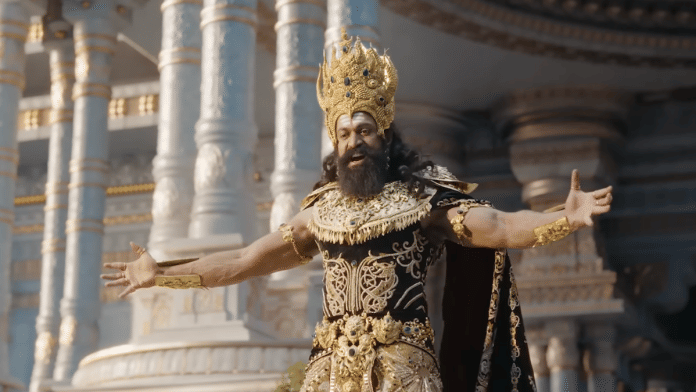
And so, one afternoon that week, I climbed up to the Sanskrit room at the top of Widener, and sat down, and Ingalls asked me several questions that I was able to answer well, and then he asked me about Ravana, the arch villain in the Ramayana (one of the two great Sanskrit Epics, the other being the Mahabharata). Now, I was primarily interested in the Mahabharata, and I did not know the Ramayana well enough to say anything interesting about Ravana, a fact that I frankly confessed to Ingalls. “Oh!” he said. “What a shame! Ravana is a fascinating fellow.” And he proceeded to tell me all about Ravana, one wonderful story after another, as the afternoon wore on; and that was how I passed my Ph.D. oral exam. When I tell this story to my own Ph.D. students, who lose sleep for several years while preparing for their Ph.D. exams, they stare at me in disbelief.
 This excerpt from ‘For the Love of Stories: Confessions of an Accidental Feminist’ by Wendy Doniger has been published with permission from Speaking Tiger.