





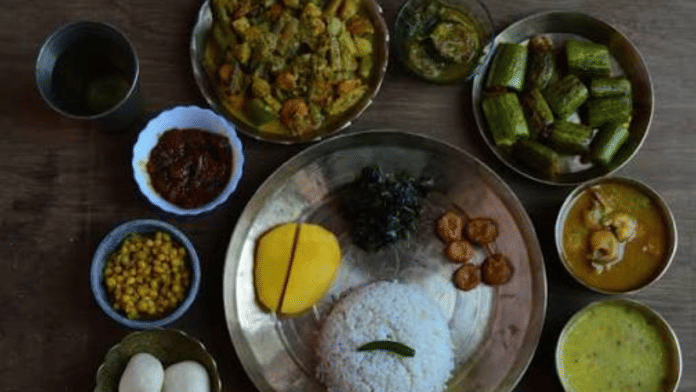


Odia cuisine celebrates balance. The concept of this balance embodies itself best in the creation of a traditional serving of pakhala, an Odia staple fermented rice dish.
Often enjoyed during the warmer months, pakhala is a cooling, probiotic-rich dish made by soaking cooked rice in water, sometimes with soft toppings of yoghurt and a hint of the tangy pith of a raw mango, left to ferment overnight. It is not just about nourishment; it embodies a deeper harmony between taste, nutrition, and culture. From the humble fisherfolk to aristocratic households, pakhala bhata is our comfort food. A balanced pakhala plate typically includes a range of accompaniments that provide variety in texture, flavour, and nutrients. The sour, slightly tangy pakhala acts as the base, providing hydration and probiotics. Alongside it, there is usually a bhaja (fried vegetable) or bharta (mashed vegetables with spices), which adds crunch on one side and soft-textured depth on the other. Popular choices include crispy fried baigana bhaja (eggplant fry), badi chura, sajana chuin bhaja (fried drumsticks), and mashed potato or tomato. These enhance the earthy flavour of pakhala while adding healthy fats and spices. For those with non-vegetarian palates, machha bhaja (fried fish), masala chingudi (spicy prawns), or even kasa mansa (slow-cooked mutton, low on gravy) are exotic additions. Given that the pakhala itself is generously watery, the accompaniments are usually dry and spicy.
Similarly, balance can be seen across other meal servings. Protein comes from lentils, like a simple dalma or machha bhaja, balancing the cooling nature of pakhala with warmth and nutrition. Seasonal vegetables, pickles, and sometimes fresh green chillies or pancha phutana (a spice blend similar to the Bengali panch phoron, but without radhuni seeds and with cumin seeds instead) provide bursts of flavour, offering a spicy contrast to the cooling rice. This thoughtful combination of elements creates a meal that is cooling yet nourishing, hydrating yet rich in flavour—a true reflection of the Odia ethos of balance and moderation in every meal.
In Odia culture, the traditional feast is an important part of celebrations and religious rituals. It is often served on a banana leaf, like in most parts of eastern and southern India—India’s answer to naturally provided, eco-friendly ‘use-and-throw’ crockery, and a sustainable substitute for non-biodegradable plates. Diners typically begin eating from right to left, as most people are right-handed. Traditionally, for all Indians, the right hand is the ‘pure’ hand and the one used for eating and performing all auspicious and social tasks. This custom is observed in many parts of India, including Odisha, and has cultural and symbolic significance.
With growing awareness of the relationship between the body and the gut, Odia food works really well in addressing the need for fermented foods to support gut flora. For instance, pakhala bhata can be seen as a probiotic powerhouse. The fermentation process encourages beneficial bacteria that aid digestion, soothe the gut, and improve immunity, making it a daily summer staple for many. The food also savours diverse vegetables and seasonal eating. Dishes like dalma use a seasonal medley: raw banana, pumpkin, papaya, brinjal, and more. This provides a wide array of probiotic fiber and micronutrients that fuel good bacteria in the gut and support smooth digestion. The food is gentle but deeply flavourful, tempered with digestive spices like ada (ginger), jeera (cumin), ajwain (carom seeds), soriso manji (mustard seed), and hengu (asafoetida). These spices help in controlling bloating, reducing inflammation, and stimulating digestive enzymes—an Ayurvedic win for your gut! Unlike heavy curries loaded with cream or butter, Odia food tends to be light, less oily, and steamed or pan-cooked. This makes them easier on the gut and reduces the risk of sluggish digestion.
Ghee is used mindfully in dishes like kanika (sweet rice) or chhena poda. Rich in butyrate, ghee supports the intestinal lining and lowers inflammation in the digestive tract. Many Odia desserts like chhena poda, rasabali, or chhena jhili use fresh chhena rich in casein protein and calcium. These are better for digestion than store-bought sugary treats and often made with minimal ingredients. We primarily eat rice, which is easily digestible. It’s balanced with lentils (protein), vegetables (fiber), and sides like badi chura for crunch and gut-friendly fermented punch.
Odia food is intuitive gut care. It respects the seasons, embraces slow cooking, and balances taste with nourishment. It’s grandma-approved, microbiome-friendly, and rooted in rhythms that modern nutrition science is just starting to validate.
 This excerpt from ‘The Orissan:2500 Years of Odisha’s Culinary Heritage Rooted in Temple Traditions, Culture and Authentic Recipes’ by Sandip Das, Alka Jena, and Pallavi Das has been published with permission from Penguin Books India.