







Even before the British Crown took over direct control from the British East India Company, there is evidence of groups such as the Madras Native Association (MNA) voluntarily and independently collecting data of torture of peasants by tax collectors (N. Dutta 2023, 15). Across the ideological divide, an emphasis on securing peoples’ liberties and a suspicion of state power were integral to India’s political culture.
Some may be surprised to learn that several Indian Marxists ‘retained their emphasis on individual freedom more determinedly than their European peers’ (Bayly 2011, 319). The value of civil liberties and the manner in which they were fought for in colonial India influenced this activism in postcolonial India, albeit in a changed context and form.
In colonial India, for instance, in particular from 1917 onwards, the Indian National Congress (INC) would often expose the claims of the colonial government as partisan and partial by publishing reports from the ground that challenged the official narrative. M. K. Gandhi along with his team would often collect data through field visits and release reports on the conditions of people on the ground.
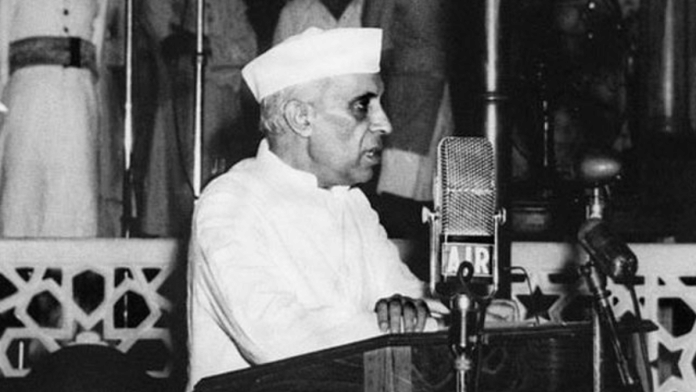
Some of the better-known ones are the Congress report on their Champaran Inquiry of 1917 and the Congress Punjab Inquiry of 19191920 after the Jallianwala Bagh Massacre (Prasad 1928; Tuteja 1997; Habib 2019). Soon enough, the INC needed a dedicated group to collect and disseminate such data widely, and in 1936, Jawaharlal Nehru wrote a letter to 150 ‘prominent individuals’ suggesting the establishment of the Indian Civil Liberties Union (ICLU) (Jha 2003; U. K. Singh 2005; Burra 2019).
The ICLU was inspired, in part, by the American Civil Liberties Union (ACLU) founded in the United States (US) in 1920 and the National Council for Civil Liberties (NCCL, now called Liberty) in the United Kingdom (UK) founded in 1934. At their core, the ACLU, the NCCL and the ICLU were set up to secure people’s liberties against undue interference by the state. The ACLU’s mission was to ‘defend and preserve the individual rights and liberties guaranteed to every person in this country by the Constitution and laws of the United States’ (ACLU 2024). In its early years, the ICLU lobbied to secure political rights for Indians as British subjects, demanded imperial citizenship, the rights to form assemblies and associations and to organise collective action, and protested the violations of fundamental liberties of Indians in British India (Jha 2003). It also campaigned against actions of governments like the arrests of Congress leaders and workers or banning Congress committees or volunteer groups.
In addition, the INC was keen on raising popular awareness around issues of civil liberties. In 1936, Ram Manohar Lohia, who had been one of the founders of the Congress Socialist Party and was serving as the secretary of the Foreign Department of the All India Congress Committee, wrote a pamphlet to clarify and develop popular understanding of civil liberties. He began by defining civil liberties:
The concept of civil liberties … defines state authority within clear limits. It assigns well-defined liberties to the people. The task of the state is to protect these liberties. But the states usually do not like the task and act contrarily. Armed with the concept of civil liberties the people develop an agitation to force the state to keep within clear and well-defined limits. (Lohia, as reproduced in U. K. Singh 2009, 210).
Also read: If it were up to Vajpayee, India would’ve had its first woman Solicitor General in 1998
Therefore, the INC’s vision was to build an organisation that would hold the state to account, protect the rights and liberties of people and challenge the abuse of power by those in positions of authority. Regrettably, the mandate to focus on watching the state—and not society—lost this activism some valued potential supporters. B. R. Ambedkar had made a daunting criticism of civil liberties activism in the 1930s, which continues to stay relevant to this day.
The context was a 1937 conference in London called the Indian Civil Liberties Conference. The ICLU, the India League and the NCCL jointly organised this conference. It was attended by over 136 delegates from Labour parties, varied left groups, trade unions, youth organisations, peace groups, co-operatives and left book clubs, among others (N. Dutta 2023, 191–193). The INC gathered letters and messages from India-based leaders for the conference. However, Ambedkar refused to sign the letter sent by ICLU to the Indian Civil Liberties Conference in London.
Ambedkar wrote, ‘I am sorry, I cannot subscribe to it … you make no mention of the systematic tyranny and oppression practiced by caste Hindus against the untouchables, which is undoubtedly a matter of civil liberties of Indians’ (N. Dutta 2023, vi).
This marked an early instance of a critique that would continue to resonate among those who argued that civil liberties activism must address not only state oppression but also entrenched social discrimination based on gender and caste. All these developments notwithstanding, the ICLU inaugurated a specific form of collective political action, and left an instrument in the hands of future civil liberties activists of the country.
After independence in 1947, Nehru saw no relevance for such an organisation. Evidently, the party that had formed the government could not act as a check on itself, and so the ICLU dissolved. For the next few years civil liberties issues were raised by the opposition. For instance, a left-oriented group, Civil Liberties Committee (CLC), had been formed in West Bengal, and while its founding year is uncertain, some accounts confirm its activities going back to the 1940s and 1950s. In 1946, for instance, a team from the CLC was sent to investigate the death of 32 peasants due to police firing in the areas where the Tebhaga movement had broken out (N. Dutta 2023, 235–243).
In 1948, when the central government banned the Communist Party of India (CPI) and detained many of its party members, the CLC campaigned for the release of those detained and attempted to create awareness on the abuse of civil liberties in India. There were a few such infrequent initiatives in the 1950s and the early to mid-1960s, but the first civil liberties groups appeared in a concerted manner only in the wake of the Naxalite movement in the late 1960s–1970s.
The APDR was established in Calcutta (now Kolkata) in 1972 and the APCLC was established in Andhra Pradesh in 1974 (Sebastian 1991, 313). The members of these groups were urban, educated, mostly middle class, salaried professionals (such as activists, lawyers, journalists and academics) who were sympathisers but not members of the Naxalite movement. They protested police abuse, detentions and torture. They also arranged legal aid for arrested Naxalite prisoners.
I use the term ‘middle class’ here not as a defined socio-economic group but as a cultural identity shaped by a common set of values, attitudes and manner of engaging with politics (Joshi 2001; Baviskar and Ray 2020). In particular, a segment of this middle class at the time carried a deep sense of civic responsibility, an ethos, alongside ideals like economic restraint, collective purpose, nation-building, personal sacrifice, and so on, that shaped the Nehruvian project but equally the self-understanding of the middle class as custodians of the nation (Varma 1998; Deshpande 2003; Fernandes 2006).
 This excerpt from ‘Becoming Allies’ by Ankita Pandey has been published with permission from Cambridge University Press.