






In the course of her long career, Shyamala handled a variety of cases. She started with purely civil cases in Bangalore, and after moving to Delhi she took up labour and constitutional cases. Among the many cases she argued were Delhi Transport Corporation v. DTC Mazdoor Congress and Indra Sawhney v. Union of India.
She soon came to be recognized as an expert on the rights of women. Apart from fighting for women’s causes in court, she counselled them through legal aid. She was one of India’s representatives to the United Nations’ World Conference of the International Women’s Year, held in Mexico City in June–July 1975. She was at the forefront of the move to change personal laws to permit divorce by mutual consent.
In the Government of India’s 1975 publication ‘Indian Women’ – a comprehensive assessment of the position of Indian women by experts from various fields – Shyamala authored the chapter on legal provisions. She advocated for reforms which would enable women to ‘emerge as socially and economically independent beings’, including legislation to recognize the irretrievable breakdown of a marriage as a ground for divorce, to ‘enable parties to marry at will and to separate at will’, and to ‘provide for the woman to be the natural guardian of her child’.
In 1976, the Hindu Marriage Act was amended to include Section 13B, permitting divorce
by mutual consent. I have already mentioned that she was close to Indira Gandhi. Ram Jethmalani: The Authorized Biography by Nalini Gera recounts the time when Jethmalani kept up a campaign against the Emergency from the United States. The biography records:
Back in India, Mrs. Gandhi knew she had to send someone to the United States to counter his comments. She chose a senior lady advocate of the Supreme Court, Shyamala Pappu, for this purpose. Unfortunately for Pappu, wherever she sought a platform, the organizers said they would let her speak on the condition that Ram too should be present. Unwilling to get into a debate with him, she declined. Consequently, she never addressed a single meeting during her several months’ stay in the United States. Mrs. Gandhi’s rebuttal to Ram never saw the light of day.
Different lawyers have different career patterns. Some see early struggles followed by moderate and sometimes dazzling success. The careers of some manifest lacklustre steadiness throughout. And for some, there are those heady early and middle years but declining later years. Shyamala’s career fell in the last category. Indira Gandhi was tragically assassinated in 1984. Shyamala and Ramamurthi separated not very amicably in the mid-80s, and this led to much personal distraction. She appeared lost and unsure.
Also read: How IKEA turned a boycott into a billion-dollar business
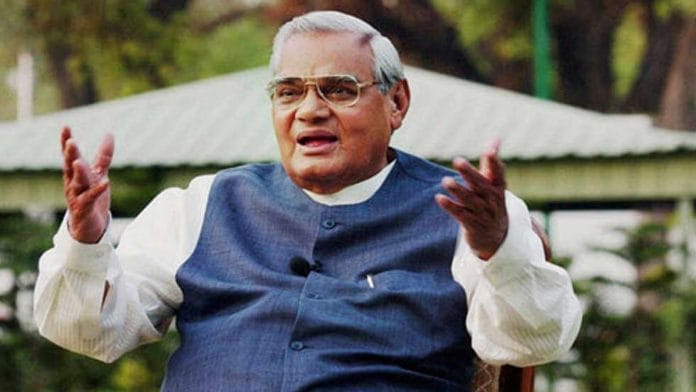
But her inner strength made her bounce back. Her bubbling personality, her love of music and poetry and her effortless ease in Hindi drew her into the circle of Atal Behari Vajpayee. India would have had its first woman Solicitor General in 1998 in Shyamala Pappu if Vajpayee had his way. And who knows, as a logical progression, she could have also become India’s first female Attorney General. (For the record, India got its first woman law officer in the Supreme Court as late as 2009, when Indira Jaising was appointed Additional Solicitor General.) The Sunday Mid-Day edition of 19 April 1998 carried this interesting report:
There is controversy over Atal Behari Vajpayee’s keenness to install a woman advocate, Shyamala Pappu, as the country’s solicitor general. The appointment of Pappu, a senior advocate and a long-time acquaintance of Vajpayee, was almost a certainty until the RSS top brass began sending out negative signals.
According to BJP sources, the Sangh has been using another high-profile law officer to put pressure on the Prime Minister. This law officer has reportedly told Vajpayee that it would not be possible for him to pull along with the lady in the solicitor general’s office and he would quit if she is appointed.
Vajpayee later appointed India’s first woman Foreign Secretary, Chokila Iyer, in 2001. This was a major step considering that as late as 1979, C.B. Muthamma had to fight in court to assert the right of a woman career diplomat to be appointed Ambassador.
This was the second major disappointment for Shyamala, after losing out on becoming Additional Solicitor General in the 1970s. But it did not deter her from soldiering on and working for causes dear to her. Recognition came to her again in 2008, when she was appointed a member of the Law Commission of India, and in 2009, when she received the Padma Shri. Sometime in 2014 or 2015, when she was well past her prime, I remember a conversation with one of today’s most formidable counsel, Dayan Krishnan. He had recently opposed Shyamala in a case and was hugely impressed by her advocacy. ‘Such a fine, old-world lawyer,’ he said. Very proudly, I said, ‘I hope you know that I was part of her chamber.’ A year or so after that conversation, Shyamala passed away on 7 September 2016.
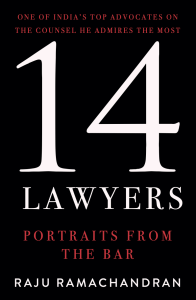 This excerpt from ’14 Lawyers’ by senior advocate Raju Ramachandran has been published with permission from Juggernaut.