





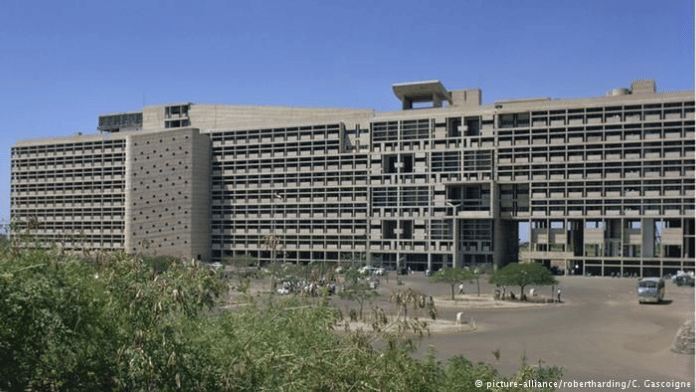



On 16 September 2016, I was at the Haryana Civil Secretariat in Chandigarh on one of my regular visits as a Special Correspondent for The Tribune. On the sixth floor, I ran into a group of young men and women in their twenties, milling about the corridor outside the joining formalities room. They looked distinctly different from the usual visitors to those floors — the familiar faces of petitioners, touts, and political operators that any Chandigarh journalist learns to recognise on sight. They were, I learnt on inquiry, a fresh batch of 29 HCS (Executive) recruits, recently selected by the Haryana Public Service Commission.
Their backgrounds were what stopped me.
Shweta Suhag, 24, who had topped the batch, was the daughter of a Haryana Roadways clerk. Jatinder Kumar, 37, from Sirsa, was the son of a man who plied a rickshaw. “The government has given people like me a chance by following a completely transparent procedure,” Jatinder told me. “Now, it is up to us to perform our best.” Shweta had a different kind of ambition. “I wish to get posted at a place where I have to do a lot of public dealing,” she said. “I feel I am good at communication, and I want to use my ability for the mitigation of people’s problems.” Belina, who stood fourth, was equally direct: “To do everything I am allotted in the best possible manner and to make sure that I help people to the best of my abilities is my goal.”
I had covered Haryana politics long enough to know exactly why this mattered.
For nearly five decades before 2014, the HPSC and the HSSC — formally constituted as merit-based bodies — had acquired a rather different reputation on the ground. There was a saying about Bansi Lal’s tenure, perhaps apocryphal but believed across the state, that when someone approached him with a request to recruit a person from another community, he would ask: “Kya Jaatniyo Ne Bachche Jaamne Band Kar Diya?” — Have Jat women stopped giving birth? During my visits to Mandi Adampur, Bhajan Lal’s assembly constituency, I found there was hardly a family without a government servant. Jobs had flowed there like water, needless to say, at the cost of those outside his stronghold. Khattar himself narrated a version of this at a 2024 election rally in Adampur — that a former chief minister from that area used to tell people that if a hundred-rupee note could get the work done, why bother coming all the way to Chandigarh? Whether Bhajan Lal actually said this, the anecdote captured something true about how the system was understood to work.
What I saw in that Secretariat corridor in September 2016 was a real shift. A rickshaw puller’s son from Sirsa, clearing a competitive examination on merit, walking into the administrative service. In a state where government jobs had for decades been distributed according to caste, connection, and the proximity of your village to whoever held the gaddi, that was not a small thing.
The BJP’s transformation of Haryana rested on three interlocking pillars. The first was governance — transparent recruitment, digital delivery of welfare, the Parivar Pehchan Patra system that registered 76 lakh families for direct benefit transfers, the CM Window for grievance redressal, the ‘Meri Fasal Mera Byora’ portal for farmers. The second was social engineering — the systematic cultivation of non-Jat OBCs, Dalits, and backward communities who had spent decades watching power flow to others. The third was campaign machinery — the BJP’s hyper-local booth management, the ‘Tridev’ unit system, and the projection of Narendra Modi’s national narrative as a canopy under which local discontents could be sheltered. Remove any one of these pillars and the 2014 victory, let alone the 2024 one, becomes difficult to explain.
But the story of Manohar Lal Khattar — the man who held those pillars together for nearly a decade — is also a story of real limitations, and it would be dishonest to write about one without the other.
Khattar arrived in October 2014 without prior ministerial experience, without an electoral history, and without a community base of his own in a state where the chief minister’s chair had always been understood as the property of whoever could deliver the largest caste bloc. He was an RSS pracharak by formation — a man accustomed to organisational discipline, ideological clarity, and the long patient work of institution-building. These qualities served him well in governance. They served him less well in the rough human theatre of Haryana politics, where a leader’s ability to absorb, deflect, and charm angry constituents is as important as policy.
Over time, something hardened. His ‘Jansamvaad’ sessions — designed as direct dialogues between the CM and citizens — became sites of friction. There were widely reported instances of Khattar reacting with visible anger when confronted with grievances he found repetitive or poorly articulated. A particularly striking incident occurred at Bani in Sirsa, during one of these programmes. A woman sarpanch, frustrated at the perceived lack of action on a local issue, threw her dupatta at his feet in a gesture of despair. The image, widely shared on social media, became shorthand for a growing perception: that Khattar was becoming less approachable, more prone to impatience, more the administrator than the people’s leader. His forthright demeanour, which had once read as integrity, began to read, to some, as rigidity. Cumulatively, these moments chipped away at his image in ways that structural governance achievements could not easily repair.
The social engineering that powered the BJP’s non-Jat coalition also carried a cost that deserves honest reckoning.
The BJP’s non-Jat focus, however strategically necessary, alienated a community that comprised roughly a quarter of Haryana’s population and had governed it for most of its existence. The 2016 reservation agitation — in which the Jat community demanded OBC status, the National Highway was blocked, rail tracks dug up, the Muktsar canal damaged, and dozens killed before the army restored order — was partly about reservation economics. But it carried within it the specific fury of a community that had never, in fifty years, had to negotiate from outside the room. The 2020-21 farmers’ agitation deepened those wounds, with lathi charges in Haryana alienating farmers in Jat-dominated areas further. Sirsa, Jind, Hisar, Rohtak — in the Jat belt, the BJP’s support during those years was brittle in ways that its booth management numbers did not always capture.
In Mewat — the Nuh district region where Meo Muslims constitute nearly 79 per cent of the population — the BJP’s transformation of Haryana arrived less as liberation and more as marginalisation. Critics argued that Khattar’s policies, while promoting industrial corridors in urban hubs like Gurugram, left rural districts such as Mewat and Palwal relatively underdeveloped. As late as 2023, there was no university in Mewat. The region was ranked India’s most backward district by NITI Aayog in 2018. The 2023 Nuh violence, which left six dead and over seventy injured, brought renewed attention to Mewat’s accumulated neglect. What the BJP’s social engineering built for non-Jat Hindus, it did not build for the Meo Muslim community in any comparable way. In UP, the BJP’s Hindutva push risked a similar estrangement, with around 85 per cent of Muslim voters going to the Samajwadi Party in 2024 — a polarisation that the party’s three-pillar model had, in effect, built in.
None of this is to say the transformation was cosmetic. A Dalit beneficiary from Sirsa told me emphatically: “BJP’s welfare changed our lives; we’ll stay with them.” She was speaking about a PMAY house she had received through the PPP system. But her gratitude carried within it a longer memory of decades when the government had not particularly been for her — and it is worth asking whether gratitude for basic welfare constitutes political transformation or merely a more efficient form of patronage.
The BJP replaced Khattar with Nayab Singh Saini in March 2024 — a quieter, more approachable OBC leader whose pleasing demeanour and humble background offered a deliberate contrast to his predecessor’s occasionally abrasive style. That the party then won 48 seats in October 2024, its best ever in Haryana, suggested the correction had worked. But it also confirmed what the Khattar years had demonstrated without quite resolving: that governance alone, however transparent, is not enough. A chief minister needs to be felt as well as administered.
The rickshaw puller’s son from Sirsa who walked into the HCS in 2016 is, by now, a mid-career officer somewhere in Haryana’s administrative machinery. His presence there — earned on merit, without a phone call from the right person — remains, for me, the most honest symbol of what changed. The question the coming years will answer is whether that change was the beginning of something structural, or the high-water mark of a particular political moment that the tide has already begun to recede from.
 This excerpt from ‘Beyond Dynasties: BJP’s Transformative Surge in Haryana and Other North Indian States’ by Sushil Manav has been published with permission from Manohar Publishers.