





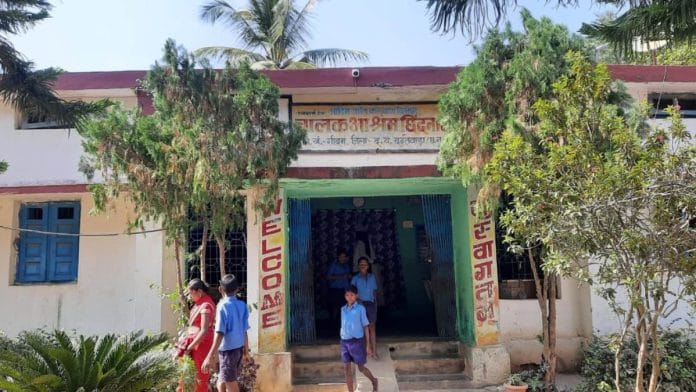

In the first fortnight of August 2017, as India readied itself to revel in the festivities marking 70 years of Independence, I found myself in the untamed terrains of Sukma and Dantewada, on a week-long quest for an offbeat feature story. My focus was simple and direct: How do young people in Bastar perceive and celebrate Independence Day?
At a school in Sukma, I paused for a moment, grappling with what I had just heard: the colour of India’s national flag, according to an eleven-year-old girl, was black. Kale jhande, she said promptly and innocently when I asked her to name the colours of the Indian Tricolour in their correct sequence. Seeing my surprise and hesitation, her teacher gently intervened, explaining that Ayati (name changed) came from a remote village in the southern tip of Bastar, Konta, and had only recently joined the school. I wondered if perhaps she hadn’t quite understood my question, despite it being translated into Gondi.
In contrast, my journey through Dantewada brought me face to face with the ingenuity of half a dozen high school students. With an impressive display of scientific curiosity, they had built a drone, draped it in the Tricolour, and flown it on Independence Day. As I watched the 700-gram marvel cut across the blue skies of Geedam and captured the moment on my Nikon, I couldn’t help but imagine how this small flying machine was charting a new future for Bastar.
Observing that Dantewada had far more paved roads than Sukma, I naively concluded that simply expanding road networks in the region would be a sufficient solution to address the complex challenges of Bastar’s insurgency.
It took me years – and many journeys deep into Bastar’s heartland – to correct this simplistic view. As I will argue, neither new roads nor advanced weaponry alone can dismantle an ideology that has grown deep roots over decades.
For Ayati and her fellow villagers, the very idea of government was synonymous with the Maoist jantana sarkar, and August 15 was another day marked by black flags (kale jhande). This raises a critical question: What alternative ideology was available to them, had they chosen to defy the authority of the Maoist commanders? The answer, I believe, lies in Mahua – a grassroots philosophy that I will explore in depth in the following chapter.
Also read: Hindutva and bulldozer are fashioning, fuelling, flirting with each other in ‘New India’
One village I often visited was Palnar, nestled deep within Dantewada and located about 450 km south of Raipur, the state capital. When I arrived there a week after demonetisation, it was just another obscure village grappling with the shadows of Maoism. The records I obtained from the office of district magistrate painted a grim picture: twenty-three encounters, sixteen policemen, and five villagers dead. My phone went dark as soon as I entered the mobile shadow zone.
Yet, change was in the air. The district administration swiftly brought in fibre optics and bandwidth to establish a Wi-Fi hotspot spanning 2.5 sq. km. The nine shopkeepers in the village were trained in e-payment transactions, and the villagers themselves were taught the merits and methods of going cashless. Palnar, tucked away in the heart of Dantewada, emerged as India’s first village where residents could go about their lives without needing even a 10-rupee note. Strangely, it felt like a return to the bygone days of barter, a time when people lived happily without cash.
By April 2017, this transformation earned the district magistrate, Saurabh Kumar, a trip to New Delhi to receive the Prime Minister’s Award for excellence in innovation for turning Palnar into a cashless hub. On a personal note, I couldn’t help but feel a deep sense of satisfaction, having witnessed the evolution of this remote village from a no-mobile outpost to a celebrated e-payment centre. Even more gratifying was hearing Kumar acknowledge that a long feature in The Economic Times Magazine (20 November 2016) had inspired him to think outside the box about how to remonetize Palnar.
‘Many people of Dantewada itself did not know about Palnar,’ he remarked. ‘ET Magazine’s report on demonetisation first put the village into prominence.’ When I revisited Palnar on the first anniversary of demonetisation, I took the opportunity to delve deeper into the lives of its residents. Anant Ram, the owner of Guddu Cycle Shop, recounted his journey from bicycle repair to motorcycle mechanics, while Lakhma Vetti, an old acquaintance, guided me to a shop to showcase a cashless transaction.
 This excerpt from ‘Rebel Bastar’ by Shantanu Sharma has been published with permission from Hachette India.