







Another 15th August has gone by. This Independence Day was rather significant as we entered the 80th year of Independence, and celebrations were galore as the nation commemorated the day we achieved freedom from colonial rule.
India was the largest and the wealthiest colony of the British Empire and was known as the erstwhile “Jewel in the Crown”.
This year’s Independence Day gave rise to significant media coverage. In the past month, media channels and headlines have been dominated by reports of protests by so-called Gen Z agitators, allegations of disrespect towards the National Song by descendants of former national leaders, and other such news. In all this media cacophony, sadly, a significant order by the Madras High Court was quietly buried.
A new form of colonialism
In a landmark judgment in M/s Sripathi Paper and Boards (P) Ltd v Commissioner of Customs, the Madras High Court held that “knowingly importing solid waste into India constitutes an aggravated form of ‘Deshdroh’ and endangers sovereignty.” Further, the judgment clearly states that this practice of “waste colonialism” allows developed countries, “either directly or through unscrupulous exporters”, to dump toxic and hazardous waste and “shift the burden of disposal” to “developing nations or [the] Global South, thereby externalising the environmental and social costs associated with such waste”.
Eighty years after breaking free from the shackles of colonialism in the traditional sense, India is now confronting the dangers of a new kind of colonialism — waste colonialism.
This judgement should be a wake-up call to all generations from Gen Alpha to Gen Z, i.e all generations collectively who are not just consumers but are also researchers, creators, and entrepreneurs. This generation of leaders should actively engage to solve the problems of the day. This landscape should reflect the nature and its impact on the future of humanity.
I pray that the activists who have been taking up cudgels against development projects that they believe will affect the environment, and those working towards Viksit Bharat, instead create awareness and activism against this extremely toxic form of environmental degradation — one whose consequences we may not be able to reverse.
Facts of the case
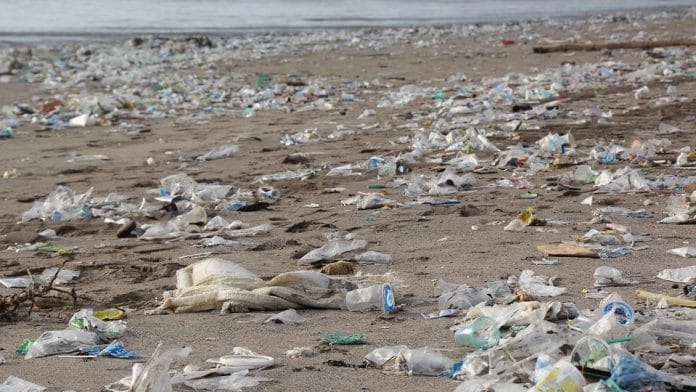
The case concerned two Indian paper manufacturers that imported consignments described to Customs as waste paper for recycling. In June 2022, however, inspections at Tuticorin Port by the Directorate of Revenue Intelligence and the Tamil Nadu Pollution Control Board found that the containers constituted substantial quantities of municipal solid waste, including used PET bottles, cans, plastic bags, containers and even street sweepings.
The waste had originated in Canada and the US, and importing such waste is prohibited under India’s laws. The importers challenged the seizure and sought to either dispose of the waste in India, thereby creating toxic pollution in our country, or to reexport it to Dubai, where it would likely have been shipped off to some poor African destination.
What was especially significant was the Madras High Court’s strict ruling disallowing the diversion of the shipment to Dubai, where it could have ended up in an African landfill, transferring the burden of toxic waste to another country in the Global South. Instead, the High Court directed that the waste be returned to its country of origin, Canada.
Not the first instance
This is not the first instance of “waste colonialism” in India, and I wish and pray that we should collectively rise to make it the last.
Years ago, I remember watching a programme on Bloomberg TV about an investigation into how plastic waste from the US and Canada was making its way to Indian landfills, specifically those outside Muzaffarnagar, over 7,000 miles away from its source. PET bottles, aluminium cans, and supposedly recycled Amazon labels – essentially domestic and household waste from customers in far-off Iowa who believed they were recycling their paper waste were among the identified materials.
Last year, when I travelled through Muzaffarnagar in Uttar Pradesh and further into Uttarakhand en route to Mount Kailash, I observed, during a halt at Tanakpur and earlier by the roadside near Rudrapur, mountains of shredded mixed plastic waste that appeared to have been compressed into containers and dumped along the banks of the Kali River.
Such waste and its pollutants can eventually enter soil and water systems, raising concerns about their impact on food and drinking-water supplies.
The numbers behind India’s waste trade
According to dollarbusiness.com, India imported over $12.74 billion worth of recyclable waste and scrap in 2024-25 alone. Because Indian environmental law restricts the import of municipal or hazardous waste for disposal, it cannot be imported into the country. With the law being strict, such acts are illegal and thus prohibited. But to get around such laws, these very materials are misdeclared and are imported as metal scrap or paper scrap for recycling sectors such as paper mills, foundries, and furnaces.
Also Read: One Asian country after another is shutting door on waste plastic from US, UK, Australia
What is waste colonialism?
According to earth.org, Waste colonialism refers to the practice of developed nations exporting waste, primarily plastic waste, to less developed countries with inadequate waste-processing facilities.
The term was coined in 1989, during the Basel Convention on the Control of Transboundary Movements of Hazardous Wastes and their Disposal – an international treaty that was designed to reduce the movements of hazardous waste between nations. It emerged from concerns over developed nations dumping environmentally hazardous waste in Africa and other parts of the developing world during the 1980s.
For this to happen in an India that aspires to become Viksit Bharat by 2047 is ridiculous.
How much sense does it make to import plastic waste?
Between 2021 and 2023, it is estimated that India received approximately 200 million kilograms of plastic waste, whereas Malaysia received around 1.4 billion kg, Vietnam and Turkey around 1 billion kg each, and Indonesia approximately 600 million kg.
As the Madras High Court described it, such transfers can amount to a transfer of pollution and are a direct challenge to India’s sovereignty and gross environmental and social injustice brought upon the Global South by developed nations.
Germany alone exported 279 million kg of plastic waste between January and June 2025, approximately equivalent to 1,385 fully loaded container trains. Germany has shifted its waste trade from European countries such as the Netherlands, Turkey and Poland towards Malaysia, Indonesia and Vietnam, as well as India.
We are approximately 1.4 billion Indians and generate huge amounts of waste ourselves. Why, then, are we importing waste that could further burden our already strained waste-management systems?
We need to first coordinate with our local authorities and recycling units to manage our own waste supply chains before taking on waste generated elsewhere.
What do India’s rules say?
It is not easy to legally import hazardous waste into India, as such imports are governed by strict environmental regulations designed to prevent the country from becoming a dumping ground for foreign refuse.
Under the Hazardous and Other Wastes (Management and Transboundary Movement) Rules, 2016, India prohibits the import of hazardous and other wastes for final disposal. Imports of permitted materials are allowed for resource recovery, recycling, reuse or co-processing, subject to regulatory requirements and authorisation.
Businesses seeking to legally import permitted materials must obtain prior authorisation from the Ministry of Environment, Forest and Climate Change (MoEF&CC), secure permissions from State Pollution Control Boards, and comply with international transit protocols such as Prior Informed Consent (PIC).
Certain highly polluting materials, including household waste and specific plastic scraps, face an unconditional ban. The regulatory framework is intended to ensure that waste imports are linked to legitimate recycling or recovery rather than disposal.
So where is the hazardous waste coming from?
As in the case of M/s Sripathi Paper and Boards (P) Ltd, paper manufacturers are allowed to import specified categories of clean waste paper and paper pulp, as these can serve as sustainable raw materials for the manufacture of paper and packaging products. Importing paper waste can keep mills running, reduce pressure on forests, and support the circular economy.
However, shipments are expected to meet strict environmental and legal requirements. What cannot be passed off as legitimate recyclable material is mixed municipal, medical, or other hazardous waste.
It is obvious that lax inspections at incoming ports, unscrupulous middlemen, and possible financial incentives are allowing domestic and toxic waste generated in exporting countries to enter India.
In the M/s Sripathi Paper and Boards (P) Ltd case, vigilant Customs officers at Tuticorin Port were able to seize the consignments and identify the importers. Yet how many containers of foreign waste may be entering undetected through other ports remains an important question.
After all, how else did the Bloomberg investigation previously uncover evidence of imported plastic waste in the Muzaffarnagar belt?
Import control authorities, toll collection system, municipal waste management authorities, and local gentry need to be made aware and empowered to ensure greater safety and efficiency. I wish to commend the customs officer and the judge who have taken the tough call to ensure justice for the most vulnerable.
The consequences after the waste is dumped
These waste shipments are often presented as resources or economic opportunities through catchy phrases such as “waste to wealth”. This, however, can ignore the ground reality: the practice can exploit cheaper labour in recipient countries while shifting environmental and health risks onto communities that may have fewer resources to manage them.
The weaker regulatory frameworks and environmental safeguards in some recipient countries can be exploited by developed nations, making them easy targets for the export of recycling and incineration technologies promoted by high-income countries under labels such as “waste to energy”, “energy recovery” and “circular economy”.
What is conveniently forgotten is how polluting these plastic incinerators are and how much toxicity they add to the environment.
Enormous volumes of imported waste have been found dumped in Indian landfills, as exposed by the Bloomberg investigation. Other waste is burned or discharged into rivers, as I personally observed in the Muzaffarnagar belt. Such practices allow pollutants to enter local ecosystems and potentially reach drinking-water sources.
Many pollutants eventually reach the oceans, allowing Western research and policy discourse to portray Asian countries as major sources of marine litter, whilst overlooking or failing to adequately account for the foreign origin of much of the waste entering these countries.
Why are we importing waste?
The question that arises is: Why do we need imported waste?
Do we have the facilities to recycle and process waste that is generated elsewhere? Have we been effectively able to manage our own waste?
The answer to this last question is a vehement no.
Look around. Plastic and other waste is strewn haphazardly along roadsides and sidewalks. A drive through NCR and other major cities across the country itself will show you construction waste, plastic waste, and other refuse piled up haphazardly on vacant land and along highways.
Is the risk of polluting our air, water supply, and oceans for generations to come really worth the trouble? And why should we bear the brunt of someone else’s carbon footprint?
Indians across generations — from Gen Z and Gen Alpha to even those who came before them — need to be sensitised, informed, and made aware of this issue. Only then can we truly be free and act for the well-being of our nation’s present and future, while taking inspiration from our past.
Past mistakes need to be corrected, new ones prevented, and violations punished strictly.
I look forward to greater public awareness and activism on this crucial issue.
Meenakshi Lekhi is a BJP leader and lawyer. Her X handle is @M_Lekhi.
Views are personal.
(Edited by Maryam Hassan)