





China is no longer merely catching up in science and technology. In several sectors, it is now at, or close to, the frontier. The World Intellectual Property Organization’s Global Innovation Index 2025 puts China in the global top ten for the first time. It leads the world in patent filings, with more than 70,000 international patent applications in 2024, and is now the world’s largest producer of science and engineering publications.
The evidence is visible across China’s economy and everyday life. It has built the world’s largest high-speed rail network. Its internet population exceeds 1.1 billion. Its mobile payments, e-commerce, and short-video ecosystems operate at unmatched scale. It accounted for almost two-thirds of global electric car sales in 2024, dominates large parts of the solar photovoltaic value chain, and has manufacturing value added nearly ten times that of India’s.
The question is no longer whether China has progressed, but how. I outline below six mechanisms that have driven China’s remarkable progress, and what India should and should not learn from them.
Also Read: More courses and certifications won’t fix India’s skills gap
Strategic intent and resource allocation
China’s first mechanism has been strategic intent translated into resource allocation. Since Deng Xiaoping’s famous formulation that “science and technology are the primary productive forces,” China has treated technological capability as an instrument of national power. Initiatives such as the 863 and Torch programmes, Project 211, Project 985, Made in China 2025, and the current emphasis on “new quality productive forces” are not isolated slogans. They are markers of a persistent state project to position the country as a global science and technology power.
Industrial policy is not the whole story here. China’s approach has been top-down in intent, but competitive and fragmented in execution. The state sets priorities, and then provinces, municipalities, universities, industrial parks, state enterprises, private firms, and banks compete to implement them. There is waste and overcapacity, but also speed, redundancy, and learning.
The numbers are striking. In 2024, China spent 3.613 trillion yuan on R&D, roughly half a trillion US dollars, or 2.68 per cent of GDP.
India’s R&D intensity is officially estimated at 0.6-0.7 per cent of GDP, though the India Industrial Development Report 2024–25 suggests that the real figure may be closer to 1.25 per cent. Even so, since China’s GDP is about five times larger than India’s, its absolute R&D spending is more than ten times greater.
That gap creates more of everything: laboratories, doctoral programmes, testbeds, and supplier ecosystems. It also allows China to place many bets at once in the same area.
Human capital: the long game
China understood early that technological progress required not just factories but scientists, engineers, and technical workers. It therefore invested heavily in universities, first through Project 211, then Project 985, and now through the Double First-Class initiative. Elite universities such as Peking, Tsinghua, Fudan, and Shanghai Jiao Tong became central actors in the innovation system.
China also benchmarked itself internationally. Some public universities adopted dual-track faculty policies: foreign-trained recruits, often Chinese returnees, were paid more but held to much higher publication expectations. It was controversial, but it shifted the research culture. Talent programmes such as Thousand Talents and later variants made it attractive for selected scientists and engineers to return from the US, Europe, and elsewhere.
India cannot copy this mechanically. In a democracy, public universities cannot easily create separate compensation and expectation regimes for foreign-trained and locally trained faculty. Nor can India pour Chinese-scale resources into a handful of institutions without political pushback. But the principle is still relevant: technological upgrading requires serious human-capital upgrading.
Trade, investment, and learning from multinationals
China’s opening to foreign direct investment was not simply liberalisation. It was a learning strategy. Multinationals brought capital, technology, quality systems, export links, and supplier-development practices. Chinese firms learned through joint ventures, subcontracting, labour mobility, reverse engineering and competition.
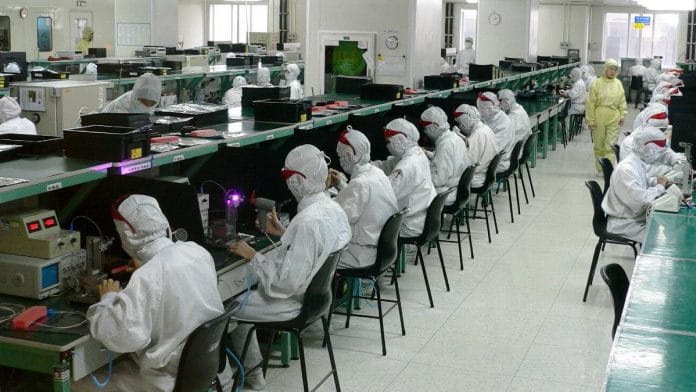
This is why the label “world’s factory” understates what manufacturing at scale actually does. This is itself a learning system. When suppliers, engineers, logistics providers, toolmakers, and customers sit near one another, innovation becomes faster.
Shenzhen’s electronics ecosystem and the manufacturing clusters of the Pearl River and Yangtze River deltas are examples of this cumulative learning. The same logic is visible in electric vehicles. BYD, CATL, NIO, XPeng, and Li Auto are not outcomes of subsidies alone. They emerged from batteries, software, supplier depth, demanding consumers, and brutal competition.
Overseas knowledge acquisition
China also strategically acquired knowledge from overseas. It licensed technology, paid for intellectual property, sent students abroad, acquired companies, hired returnees, and participated in global standards bodies. Its payments for the use of foreign intellectual property exceeded $45 billion in 2024. China copied, but it also paid. It reverse engineered, but it also licensed.
The guiding question was pragmatic: where is the knowledge, and how can it be absorbed?
The energy of the entrepreneurial ecosystem
The fifth driver was entrepreneurship. China’s technological rise was not produced by the state alone. Alibaba, Tencent, Baidu, JD.com, and Meituan in the internet era, and ByteDance, DJI, Xiaomi, CATL, BYD, DeepSeek and Unitree in later waves, were built by entrepreneurs facing intense domestic competition.
Foreign venture capital brought Silicon Valley-style selection, governance, and scaling logic. Domestic investors, corporate venture arms and municipal funds then created a financing ladder from seed capital to IPOs. The state increasingly used guidance funds and industrial funds to push capital toward hard technology. Not all of this was efficient, but it widened the pool of risk capital.
Scale as a technological asset
The sixth factor is scale. A billion users generate demand, data, use cases and feedback. Scale allows products to be tested across many segments and geographies. It spreads the cost of R&D, tooling and manufacturing. In China, the domestic market is not just large; it is technologically consequential.
But China’s model has limits. It is resource-heavy, depends on high savings, large public investment, state capacity, manufacturing depth, and the ability to direct credit and administrative attention. It can produce debt, overcapacity and geopolitical backlash. It also rests on political arrangements unacceptable in many democracies.
Also Read: India has a science soft power gap. Even after giving the world zero, Covaxin, Chandrayaan
India should not try to become China
China can discipline universities, mobilise local governments, direct land and capital, and tolerate policies that India cannot and should not imitate.
That is the central lesson for India. We should not try to become China.
India’s path has been more organic, frugal, and uneven. Yet it is impressive in its own way. UPI has become the world’s largest real-time payments platform — not through command-and-control policy, but through digital public infrastructure, banks, regulators, fintech firms, telecom penetration, and merchant adoption. India’s pharmaceutical industry supplies generics and vaccines through process chemistry, regulatory learning, and cost discipline. ISRO represents a distinctive model of frugal engineering. India’s IT services and startup ecosystem grew through talent, entrepreneurship, diaspora networks, and global demand rather than detailed state planning.
India therefore punches above its weight. It ranks 38th in the 2025 Global Innovation Index, making it the highest-ranked lower-middle-income country, despite underfunded public universities, an incomplete manufacturing ecosystem, and uneven state capacity. In software, pharmaceuticals, digital public infrastructure, space, and entrepreneurship, its achievements are genuinely impressive.
What should India learn from China? Seriousness. Technology capability must become a national priority, not merely a policy slogan. India must raise R&D spending to at least 2 per cent of GDP, upgrade doctoral education, strengthen laboratories, build manufacturing depth, and create better incentives for private Indian firms to invest in product development and intellectual property.
But it should do so in its own way: open, democratic, frugal, entrepreneurial, and globally trusted.
China shows what determined national mobilisation can achieve. India shows what constrained ingenuity can achieve. The task before India is not to become China. It is to become a more deliberate version of itself.
S. Ramakrishna Velamuri was the Founding Dean at Mahindra University School of Management and is currently a Visiting Professor at leading business schools in India and abroad. Views are personal.
(Edited by Asavari Singh)