








How did we miss an electoral revolution that was happening under our noses? Let’s be bare-knuckle honest. Any which way you look at this, the reasons would include a blinkered arrogance, a hopelessly ideologically driven media confirmation bias, and a complete misreading of the voting preferences of the youth.
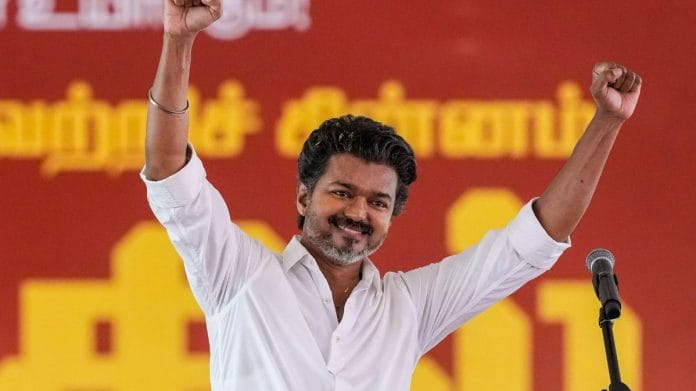
The results of the Tamil Nadu Assembly elections were a shocker. I count myself very much a part of the list of a large number of people — self-styled poll pundits, political journalists, opinion, and exit pollsters — who totally failed to predict the outcome. I had not anticipated, for instance, that Vijay’s TVK would all but sweep Chennai or unseat so many senior DMK ministers, including Chief Minister MK Stalin, leaving the party scattered in the wreckage of its own mandate.
At best, I can take a smidgeon of comfort in having said, in a social media post, that while I was confused about the outcome of this extraordinary election, the TVK’s vote share was probably being underestimated, and that the party’s performance could result in regional variations that could influence the result. Admittedly, it was a hesitant and somewhat vague comment, lacking in much analytical value. But, in hindsight, I am relieved it lacked that oracular precision now in favour with many pundits.
The larger question, of course, is why did so many of us get it so very wrong? The main reason was the belief that Vijay, Tamil Nadu’s leading box office star, would fail to convert his fanbase into his political support base. That he drew extraordinary crowds and that his rallies were reminiscent, in terms of size and frenzied excitement, of the Telugu film star NTR’s in 1983 was plain to see. It was lazy and supercilious to believe that these people, many who waited patiently in searing heat to hear Vijay, wouldn’t bother to show up on election day. Clearly, this bit of arrogance has been shown up.
Something very similar was said for the other impossible political debut, when NTR was dismissed as an actor with no political experience, whose Chaitanya Ratham tours were more spectacle than substance. NTR won his first election by a majority less than a year after the Telugu Desam was launched; Vijay has taken a little longer to emerge on top of the political pack, a little more than two years.
An echo chamber
To merely attribute Vijay’s emergence as the leader of the largest political party in Tamil Nadu to an immature electorate that is ideologically bankrupt and obsessed with cinema would be to ignore some strong and significant signals of this verdict. In a state where either one of the two dominant Dravidian parties, the DMK and the AIADMK, has been in power since 1967, the TVK’s focus on maatram (change) had a clear resonance. And so did its promise to start a war on corruption, which of course is easier said than done.
There was enough evidence, anecdotal and otherwise, to suggest that people wanted a change. At one level, this meant little more than giving someone else a stab at running the state. At another, it also signified a deeper disenchantment with status quoist politics; it helped that Vijay’s appeal was forged outside the traditional political establishment.
In this connection, it is not far-fetched at all to draw comparisons with Nepal, where a Gen Z-led movement eventually precipitated an election that saw a 35-year-old former rapper become Prime Minister, scattering the political old guard and some very weighty candidates, including former Prime Minister KP Sharma Oli, as if they were poorly balanced skittles. Something similar has happened here with the shock defeat of former Chief Minister MK Stalin and a clutch of senior ministers, who seemed as if they were too big to fail.
Of Tamil Nadu’s 5.75 crore electorate, about 40 per cent are below the age of 40, the key demographic that contributed to TVK’s performance. The other major segment were women, as the Axis My India exit poll, the only one that predicted TVK would be the largest party, suggested. Apart from underestimating the influence of these demographics, the clear warning signals about anti-incumbency and the desire for change were either ignored or played down by a politically partisan media ecosystem in Tamil Nadu, which is heavily tilted in favour of the DMK.
In this vast echo chamber, other voices were drowned out by the confirmation bias. On a recent TV panel that I shared with two regional political analysts, one went as far as saying that Vijay would get no more than five to seven seats; the other was certain that Vijay would lose both the Assembly seats he contested. I am sure they were both honest independent commentators, but I couldn’t help wondering whether they may have been misled by the bubble that was created within a sealed echo chamber, one in which the TVK had no room.
Also read: Why Bangladesh played a big role in BJP’s West Bengal win
The takeaways
This is written before the votes have been fully counted and when it appears that the TVK will fall slightly short of a majority in the Assembly. It is too early to say how it will bridge this gap or what shape the contours of a new government it will take. There is, and perhaps justifiably, a measure of anxiety about the formation of a new government, which is manned by MLAs with little experience and has a programme that is not entirely clear.
Looking now narrowly at the election itself, there are some positive takeaways. The first is that money is not enough to buy votes. This is good news in a state which has been notorious for handing out cash in exchange for pressing the ‘right’ EVM button. People took cash all right, but many chose to vote for the party that did not hand it out (at least not in an organised fashion). The other takeaway is that a massive advertising blitz doesn’t always pay off. And finally, the TVK’s vote share was arguably more pluralistic than that of the other parties, fuelled by a youth that is mercifully less influenced by considerations of religion and caste.
None of this guarantees a good, or even a better, government. But in a democracy, every change deserves a chance, and so does Vijay and his TVK.
The author is a professor of philosophy at Krea University and former Editor of The Hindu. Views are personal.
(Edited by Aamaan Alam Khan)