







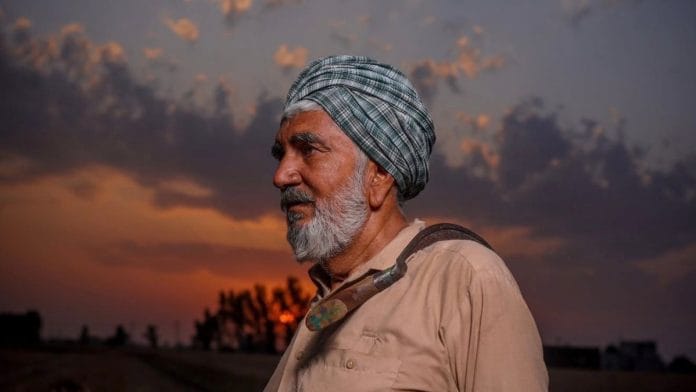


Vaisakhi in Punjab has never been just a harvest festival. It has been rooted in the soil, in the sweat of labour, and in the fragile hope that a year of uncertainty will finally return as grain.
Sikh history gave Vaisakhi an even deeper resonance. In 1699, the 10th Sikh Guru, Guru Gobind Singh, transformed it into a moment of spiritual and political awakening with the revelation of the Khalsa, an assertion of equality, dignity, and sovereignty. Long before that, Guru Nanak had already laid the foundation of this worldview in Kartarpur, where he tilled the land himself, collapsing the divide between the spiritual and the material, between labour and liberation.
In Sikh thought, the human being is not above nature but a part of it. The khet (field) is not merely a site of production, it is a site of existence, humility, and balance.
And yet, nearly three centuries later, this very land, the land of five rivers, is in quiet distress.
Even today, Vaisakhi continues to be celebrated, with fairs, gatherings, and cultural vibrancy, but its economic core has weakened. For many farmers, harvest is no longer a moment of fulfilment; it is a point of uncertainty, calculation, and often, loss. What has changed is not the festival itself, but the conditions that once gave it meaning.
The burden of loss
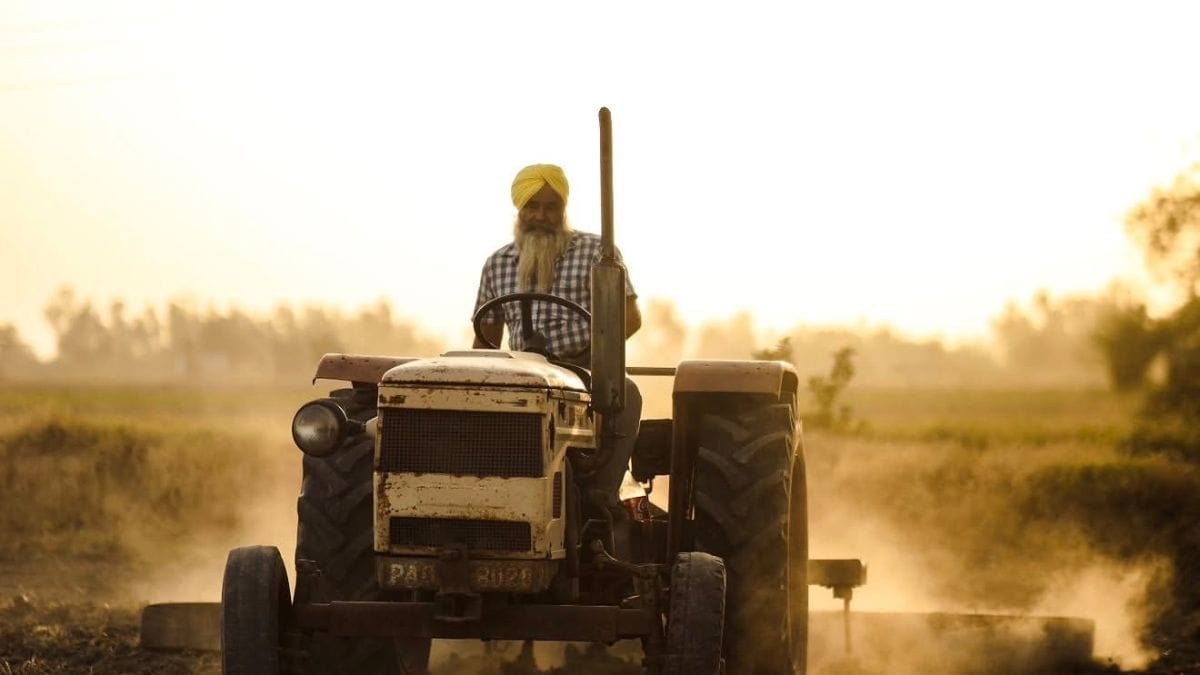
There was a time when Vaisakhi was the culmination of a farmer’s year-long labour. The image was simple yet powerful: a farmer harvesting her crop, arriving at the mandi and returning home with earnings, dignity and relief. “Kankan di mukk gayi rakhi, Jatta aayi Vaisakhi.” (The vigil over the wheat is over—Vaisakhi has arrived for the farmer) It was not symbolism, it was reality. Today, that meaning has shifted.
In recent years, Punjab’s agrarian crisis has not only been shaped by policy and economics, but increasingly by climate volatility, arriving at the worst possible moment: just before harvest.
This year, large parts of Punjab witnessed unseasonal rainfall right before Vaisakhi. Hailstorms damaged standing wheat crops that were ready for harvest, particularly in districts such as Bathinda, Mansa, Muktsar, Moga, and Amritsar. In several villages, losses reached 70–80 per cent, with standing crops flattened by strong winds, a phenomenon known as lodging, which severely affects both yield and grain quality. Initial estimates indicate that over 1.2–1.3 lakh acres were affected.
This is the stark irony: when farmers are supposed to be celebrating abundance on Vaisakhi, they are instead calculating loss.
This was not an isolated event. Punjab had already witnessed excess rainfall—up to 408 per cent above normal in parts of March 2026, further weakening crops at a critical stage of ripening.
In 2025, Punjab witnessed one of its most severe floods in decades. Over 1,400 villages were inundated, and approximately 3.7 lakh acres of farmland were submerged, affecting more than 3.5 lakh people across districts such as Gurdaspur, Ferozepur, Fazilka, Amritsar and Pathankot.
Entire agricultural belts were left underwater for days. Crops were destroyed, livestock lost, homes damaged and rural infrastructure disrupted. For many farmers, it was the erosion of an entire year’s investment. Not just one season. In districts along rivers like the Sutlej and Ravi, repeated flooding has begun to alter land use patterns. Farmers are forced to either abandon fields or invest heavily just to restore them.
MSP and the illusion of security
At its core, Vaisakhi was always tied to prosperity after harvest. Today, that link stands fractured.
For a large section of farmers, particularly small and marginal ones, harvest no longer guarantees income. It marks the settlement of dues, repayment of loans and often, the beginning of another cycle of financial stress.
This transformation did not happen overnight. As repeatedly highlighted in rural reportage by P Sainath, agrarian distress in India is rarely the result of a single failure; it is the accumulation of policy choices, ecological neglect, and economic pressures. Punjab’s journey reflects exactly that.
Punjab is often cited as a success story of the Minimum Support Price (MSP) system. Government procurement of wheat and paddy remains robust and farmers here, unlike many other states, do have relatively assured buyers. On paper, this should translate into stability and prosperity. And yet, distress persists. Why?
First, MSP operates effectively only for a narrow set of crops—primarily wheat and paddy. While declared for over 20 crops, procurement is concentrated around these two. This has locked Punjab into a monoculture cycle, discouraging crop diversification.
Second, MSP ensures price, not profit. According to the National Sample Survey (NSSO) Situation Assessment Survey, the average monthly income of an agricultural household in Punjab hovers around Rs 23,000–Rs 26,000, but this comes with high input costs and liabilities. More critically, various studies, including those by Punjab Agricultural University (PAU), have shown that costs of cultivation have risen sharply, particularly for: Fertilisers and pesticides, Diesel and electricity, Machinery and labour.
The Commission for Agricultural Costs and Prices (CACP) itself has repeatedly flagged that while MSP increases annually, the margin over comprehensive cost (C2) remains limited, especially when real expenses are accounted for.
Third, MSP does not shield against loss of yield or quality. A rain-damaged crop fetches less, even if procurement exists.
Finally, land fragmentation means that even a “guaranteed” price does not translate into sufficient household income. In effect, MSP offers stability, but not sustainability.
Debt trap
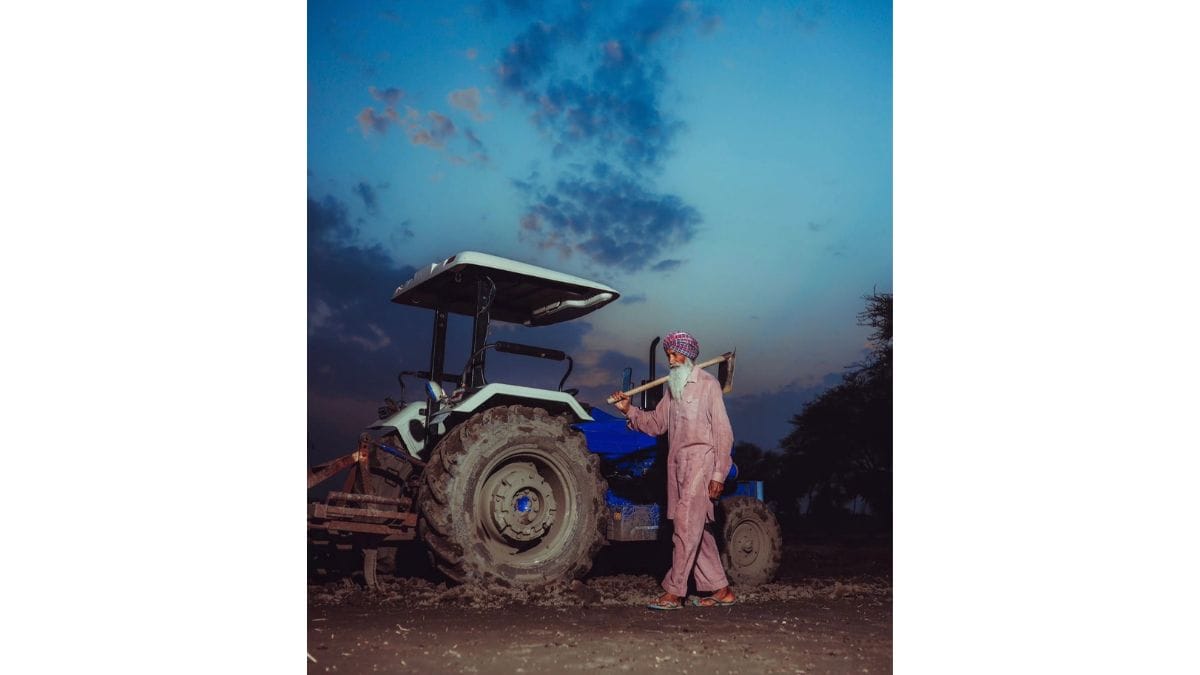
Punjab has among the highest levels of farm indebtedness in India, with estimates indicating that total debt has crossed the Rs 1 lakh crore mark and around 23.28 lakh bank accounts have availed loans from commercial banks (Punjab State Farmers’ and Farm Workers’ Commission report, 2024).
The cycle is structural: borrow to finance cultivation, sell at MSP, repay a portion of loans, and borrow again for the next season. Even in years of good procurement, farmers often end the cycle without surplus income.
While it creates an appearance of security, MSP does not shield farmers from rising input costs, climate shocks, declining soil productivity, or shrinking landholdings. Assured prices rarely translate into stable incomes.
A growing health crisis
Punjab’s agrarian distress is not just economic, it is deeply ecological, unfolding slowly beneath the surface of its fields.
Decades after the Green Revolution, the state’s agricultural model, once celebrated for transforming India into a food-secure nation, has begun to show signs of strain. Continuous wheat-paddy monocropping, combined with intensive use of chemical fertilisers and pesticides, has led to severe soil degradation. Studies by Punjab Agricultural University (PAU) have repeatedly flagged declining soil fertility, micronutrient deficiencies, and loss of organic matter, forcing farmers to use even higher quantities of inputs just to maintain the same yield. What was once fertile is now fatigued.
Alongside this, Punjab is facing an escalating groundwater crisis. According to the Central Ground Water Board (CGWB), a majority of blocks in the state are now classified as “over-exploited,” with extraction far exceeding recharge. In several regions, groundwater levels are falling at rates of 30-40 cm annually, driven largely by water-intensive paddy cultivation dependent on tube wells. This has created a dangerous imbalance: a state historically defined by its rivers is now surviving on rapidly depleting underground reserves. But the consequences do not stop at the field.
The ecological stress has begun to translate into a public health concern. Parts of southern Punjab, particularly the Malwa region, have reported rising incidences of cancer, often linked in studies and field reports to prolonged exposure to contaminated water and excessive agrochemicals.
The so-called “cancer train” running from Bathinda to Bikaner has come to symbolise this silent crisis, where illness travels alongside migration, carrying stories that rarely enter policy discourse. Water, once a source of life, is now approached with caution. Together, these trends, degrading soil, declining water tables, and emerging health risks, point to a deeper structural imbalance. The current agricultural system is not only extracting more from the land than it can replenish, but also transferring its costs onto the bodies and futures of those who depend on it.
Neglect and pollution
Punjab’s rivers and water bodies have also suffered immensely due to unchecked industrial pollution, ritualistic waste dumping, and government neglect. The Buddha Nullah, once a tributary of the Satluj, is a case in point.
Over the years, it has transformed into a toxic channel carrying the waste of Ludhiana’s dyeing and dairy industries. The river water has turned from moderately polluted (Class B) to heavily polluted (Class E), making it unfit for human consumption or agricultural use.
Before 1985, people drank water from the Buddha Nallah. Today, its blackened waters tell the grim tale of environmental degradation.
While farmers are often publicly blamed for seasonal air pollution through stubble burning, voices within the government—including Minister of Agriculture and Farmers Welfare Shivraj Singh Chauhan—have acknowledged that farmers alone cannot be held responsible for pollution. There’s a need for a broader understanding of environmental degradation. Reports suggest that Delhi witnessed one of its worst cycles of smog this year, even though stubble burning in Punjab was lower, partly due to the 2025 floods.
Punjab has lost 1.13 per cent of the geographical area under forest cover and 0.28 per cent of the geographical area under tree cover in the last 22 years. The forest cover, which was 4.80 per cent of the geographical area in 2001, decreased to 3.67 per cent of the geographical area in 2023, while the tree cover, which was 3.20 per cent of the geographical area in 2001, decreased to 2.92 per cent of the geographical area in 2023. Combined together the forest and tree cover deceased to 6.59 per cent of the geographical area in 2023 from 8 per cent in 2001 as per the Indian state of forest report (ISFR 2023).
Also read: Punjab’s debt-ridden farmers can’t break free from Green Revolution chakravyuh
A festival between memory and reality
Vaisakhi today exists in two parallel worlds. In one, it remains vibrant, celebrated with fairs, music and collective joy. In the other, it unfolds quietly in fields marked by uncertainty, calculation and risk.
The contradiction is not loud, but it is deep. What was once a festival of assured reward is now, for many, a moment of fragile hope.
The question, then, is not whether Vaisakhi will continue to be celebrated; it will. But can it once again become what it was meant to be? A true marker of dignity, balance and economic security?
Sikh philosophy offers a framework of harmony with nature, of honest labour (kirat karo), and of shared prosperity (vand chhako). But the present agrarian system stands increasingly distant from these ideals. Punjab’s crisis is not merely agricultural; it is civilisational.
Damanjeet Kaur is a writer from Punjab and Kanwal Singh is a columnist and writer from Jammu and Kashmir. Views are personal.
(Edited by Ratan Priya)