



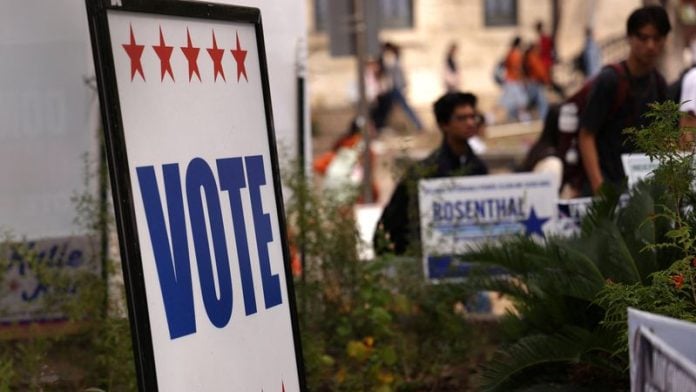
The US midterm elections are scheduled for today. National polls indicate that inflation and institutional corruption are the top concerns among voters, followed by the Iran war and immigration, which have remained among the leading issues throughout most of 2026.
Each of these issues — the four ‘I’s — amplifies the others while connecting regional and demography concerns with the broader national debate, influencing voters’ decisions.
Inflation
The first ‘I’, inflation, covers concerns about the rising cost of living, healthcare expenses, unemployment, energy prices, the administration’s tariff policies and housing costs. Many polls also rank these concerns separately, which shows the extent of economic anxiety among voters.
In an AP-NORC poll, 84 per cent of voters consider the cost of living one of the most important issues influencing their vote. Forty-seven per cent of registered voters in a Reuters and Ipsos poll say it is the most important factor in how they will vote. Lowering inflation was a key promise of Donald Trump’s 2024 campaign.
However, tariff policies, cuts to healthcare spending, and the Iran conflict have worsened the economic situation for voters. The primary performances of Ryan Elijah and Abdul El-Sayed, both of whom campaigned on affordability, highlight the bipartisan appeal of this issue.
Also read:
Institutional mistrust
Institutional corruption and the mistrust it breeds have become growing concerns among voters. Corruption allegations against the administration and the failure of institutions to check President Trump’s actions have contributed to this sentiment. Congress’s weak oversight of the Trump administration’s tariff policy and Iran war, coupled with its botched handling of the Epstein investigation, contributed to a record disapproval rating of 86 per cent by April 2026. The two longest government shutdowns in US history, gerrymandering and reports of wrongful deportations by ICE have further damaged the credibility of political and legal institutions.
Polling data confirms this with 60 per cent of voters said they were extremely concerned about government corruption. A record 89 per cent of Americans say corruption is widespread in government, the highest level in 20 years. Historically low approval ratings for Congress and the president also reflect this sentiment. In the primaries, Republicans rallied around MAGA talking points and loyalty to President Trump, while Democrats were openly critical of their party establishment.
Iran War
Some 21 per cent of registered voters named the war with Iran as one of the two most important issues influencing their vote in September. Sixty-four per cent of voters call it one of the most important issues for their vote. The deadlock over Hormuz, the collapse of the June memorandum, and fears of major escalation following the midterms, have widened the influence of this issue on voter behaviour.
Voters appear to experience the economic impact of the war mainly through rising prices. Some 86 per cent of Americans say the war has been bad for the cost of living, including 76 per cent of Republicans. The war has also raised questions about US support for Israel, furthering institutional mistrust. Fifty-eight per cent of Americans want the US to reduce or end its military support for Israel, while a record 46 per cent say the US is too supportive of Israel.
Congress’ repeated failure to pass a war powers resolution aimed at limiting President Trump’s authority over the conflict, along with the role of the Israel lobby in the debate, has further damaged public perceptions. Despite this, MAGA and Trump loyalists dominate the rhetoric among Republicans in support of the war, while Democrats and independents oppose it. The Iran war and Israeli influence became a key determinant in the primaries of members like Thomas Massie, Nida Allam and Shri Thanedar, highlighting the divergence in party positions on the issue.
Immigration
Some 45 per cent of voters rank immigration and crime among their most important voting issues. While it has remained a consistent point of concern even in previous elections, concerns until 2024 was centered on border security and weak enforcement. However, by 2026, harsh enforcement methods have become the main point of friction.
Only 35 per cent view ICE favourably, while 56 per cent view it unfavourably. About 46 per cent of respondents stated that they are more likely to vote for a candidate who supports a reduction in ICE funding. The primaries involving prominent members of both parties, including Representatives María Elvira Salazar, Raja Krishnamoorthi and Angie Craig were significantly influenced by immigration. After the primaries, some Republicans in competitive seats are distancing themselves from President Trump’s immigration record, while Democrats are trying to avoid seeming “too soft” on crime, border and immigration, seeking a middle ground.
Beyond the four ‘I’s, crime, the Epstein files, artificial intelligence (AI), data centres and foreign policy have also been peripheral voter concerns. While these rank well below the four main issues, each amplifies the four main issues, shaping voter behaviour in specific races and among particular voter groups.
Polls show that voters tend to trust Democrats more on the first three issues, while the Republican edge on immigration has narrowed and is less consistent across polls. This preference is also reflected in the generic congressional ballot, where Democrats hold a clear lead. Democrats are widely expected to win control of the House of Representatives, while the Senate remains less certain.
Abhishek Kadiyala is a Research Analyst at the Takshashila Institution’s Geostrategy Programme. He tweets @AbhishekSocials. Views are personal.
(Edited by Prashant Dixit)