



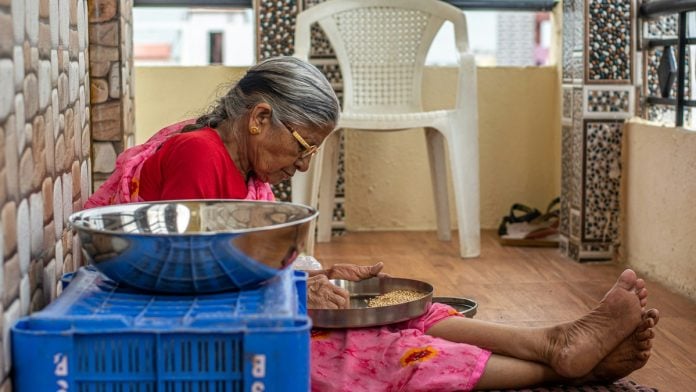
Kerala has reached a demographic milestone the rest of India will soon face. The share of people aged 60 and above rose from 12.7 per cent in 2011 to an estimated 18.7 per cent in 2026. The state’s Elderly Budget for 2026-27 projects 22.8 per cent by 2036, when the number of senior citizens will have doubled from 4.2 million in 2011 to 8.4 million.
Against this backdrop, the Kerala Legislative Assembly unanimously passed the Keralam Senior Citizens’ (Care and Protection of Rights) Bill, 2026 on 26 October. It would regulate care centres and home-care agencies, set service standards, certify caregivers and strengthen social security for older people and their caregivers. But the challenge extends beyond regulating facilities. The fact remains that the state is still counting on families to provide eldercare.
Imagine a 61-year-old woman with arthritic knees who must turn her bedridden 91-year-old father at night to prevent bedsores. The agency caregiver who had begun to earn his trust left after three weeks; a replacement has been promised. Until then, a senior citizen is caring for another.
This is the overlooked reality of ageing at home. A 2024 study on Keralam’s palliative care programme, published in the International Journal for Equity in Health, notes that migration and women’s rising workforce participation have left some households with fewer relatives to provide care. Someone must find the caregiver, pay for the service and worry about its reliability.
Also Read: Longevity industry has a blind spot—older adults with spending power and willingness to engage
The gendered economics of care
Hands-on care falls disproportionately on women. The same study surveyed 221 caregivers of palliative-care patients in five Kollam panchayats and found that about nine in ten were women.
A working paper by the Prime Minister’s Economic Advisory Council likewise notes that caregiving is still treated largely as a private, women-led household responsibility.
There’s a gender skew in professional care work as well. It is physically demanding, often poorly paid and offers limited career progression, while social expectations discourage men from entering it.
Yet nothing about eldercare is inherently women’s work. Nursing, a caring profession long seen as women’s work, shows that such boundaries can shift: the proportion of male nurses in Kerala rose from 11 per cent in 2011 to 21 per cent in 2016, according to research on male nurses in India. Wider participation requires care to be recognised as skilled, fairly paid work.
The price of help
Good care costs money, and caregivers deserve fair wages. One Kochi-based eldercare guide quotes Rs 8,000-15,000 a month for part-time attendants and Rs 40,000-65,000 for live-in care. These are just indicative private prices, but they show how unaffordable professional care can be for families on limited or fixed incomes.
Families that cannot pay take on the unpaid work themselves. This often means reducing their working hours or withdrawing from paid employment. The cost of eldercare therefore includes forgone income, time spent coordinating care and physical and emotional strain, not just the service bill.
A system that relies on families absorbing these costs will become harder to sustain. The Bill promises affordable home care, day care, respite and palliative services, and promotes long-term care insurance. But delivery will depend on public investment, local capacity and trained workers.
Continuity and skilled work
For someone living with dementia or recovering from a stroke, every change of caregiver is unsettling. A new person must learn how they are lifted, what they can eat and how they signal discomfort. Turnover reflects low pay, long hours and insecure work, not individual failure. The Bill provides for continuity mechanisms, but caregivers also need conditions that let them stay.
Family caregivers are strained too. The same Kollam study found that nearly three in ten caregivers were 60 or older and that those reporting a high burden had the poorest health-related quality of life. Respite and support services are necessary, not optional.
Caregiving demands training, patience and judgement, yet home-based care often remains informal. A recent study of 560 women in the informal sector across six districts of Keralam found that care workers, including eldercare aides, worked an average of 11.8 hours a day, and that only 8 per cent earned above the applicable minimum wage.
The Bill envisages caregiver certification and a minimum-wage entitlement, but certification alone will not build a professional workforce. Training must be affordable, qualifications must lead to jobs, and pay must make caregiving viable.
Also Read: India is unprepared for its demographic shift — elderly outnumbering children
Care is infrastructure
The Bill’s real test is implementation. Government-supported services must reach households that cannot afford private care, with transparent standards, local coordination and adequate resources.
Existing initiatives offer starting points. Kudumbashree’s K4Care programme links caregiver training with jobs; its first phase saw 605 trained participants find jobs. Community efforts can complement this: K-DISC’s time-bank pilot in Elikulam, Kottayam lets volunteers earn credits for helping older residents. Yet Japan’s Fureai Kippu experience shows time banks cannot substitute for trained, paid care. Their value lies in making care a shared community responsibility and drawing in men and young people.
The Bill treats family care as the primary model, with institutional care as a last resort. Supporting families must mean affordable services, respite and reliable professional help, not leaving them to cope alone.
As Keralam grows older, care must be treated as essential social infrastructure, with sustained public investment, trained workers and coordination across departments. Growing old at home should not depend on one family’s exhaustion, nor should giving care mean accepting low wages and insecurity. A system that protects the dignity of older people must also protect the dignity of those who care for them.
Elizabeth Lyn is a Lecturer at the Jindal School of Government and Public Policy, O.P. Jindal Global University, Sonipat, Haryana. Views are personal.
(Edited by Asavari Singh)