






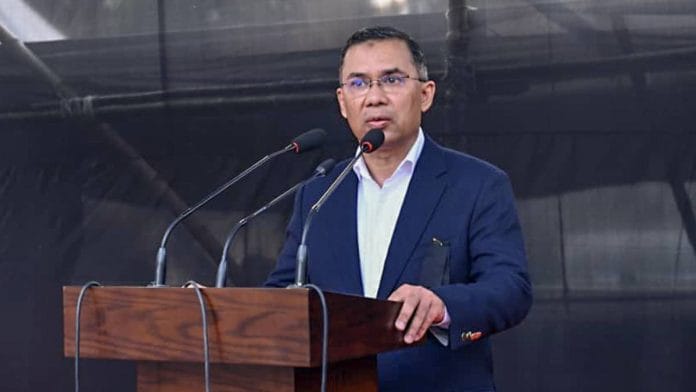


Bangladesh Prime Minister Tarique Rahman, made his first overseas visit to Malaysia on 22 June. His visit to Kuala Lumpur comes after spending more than 100 days in office, which could be considered enough time to prepare and strategise the direction of a new Bangladesh’s foreign policy. For India, this is Dhaka’s break from its past diplomatic tradition of visiting New Delhi, but not too surprising given the mounting tensions between the two countries over the past three years, especially since the ouster of former Prime Minister Sheikh Hasina.
Many read this visit as a key strategic move by Dhaka, one that accommodates public sentiment in decentralising Bangladesh’s foreign policy from India and charts its future direction by creating a new precedent. But is that the only message Dhaka has conveyed, or is there something more worthwhile reading?
Rahman’s visit to Malaysia is more than meets the eye, and, no surprise, there is a China angle to it. The Malaysia visit was the first leg of his two-nation tour, and as of 24 June, Rahman is in China at the invitation of his counterpart President Xi Jinping.
Undoubtedly, as a long-term friend and as the closest neighbour, New Delhi would have liked to host Rahman, but it is for Dhaka to decide. Prime Minister Narendra Modi had sent an early invitation to the newly elected PM in February 2026 through Lok Sabha Speaker Om Birla, who attended Rahman’s swearing-in ceremony.
However, even if Rahman’s early diplomatic exchanges with India seemed promising, he is weighing the value of not visiting India to preserve his political longevity and avoid controversies at home, given that many still see Hasina’s presence in Delhi as a major obstacle to ties. At the same time, by choosing to go to Malaysia, Rahman has also tried to avoid a media frenzy. Meanwhile, a visit to China before India would still be read strategically in New Delhi.
Bangladesh-Malaysia bilateral ties
Away from Malaysia’s visit to political messaging, the bilateral ties with Kuala Lumpur hold value for Bangladesh. Notably, Malaysia was among the first countries to establish diplomatic ties with Bangladesh in 1972, soon after Bangladesh’s independence in 1971. As a newly formed nation with a majority Muslim population, Malaysia’s early recognition of Bangladesh’s independence opened greater avenues for people-to-people ties, and by 1976, Bangladeshis began moving to Malaysia in search of employment.
Today, for an estimated seven million Bangladeshi overseas migrant workers, Malaysia is the top destination, with approximately one million residing there. Malaysia is also home to a large chunk of reported illegal Bangladeshi migrant workers, making it a key challenge for the two governments to resolve. During the visit, Rahman made labour migration a central theme of discussions with the host, which is reflected strongly in the joint statement.
Apart from the labour migration, education, tourism, political cooperation, trade and investment cooperation, halal industry, digital economy, AI as well as semiconductors, energy, defence and security cooperation were the key themes.
The elements of shared Islamic values also came out very clearly. The other message from Rahman’s visit to Malaysia could be for the families of immigrants to ensure the government cares for them and their loved ones abroad.
Also read: My absence is not silence. Though I am away, I am with people of Bangladesh: Sheikh Hasina
Dhaka not first to drift from New Delhi
The political messaging Rahman is trying to convey through his two-nation trip, especially the emphasis on deepening ties with China, is not new. The regional watchers in New Delhi would agree that over the past decade, many other countries in the Indian subcontinent have sought to shift their foreign policy. For instance, soon after Nepal became a democracy in 2008, the first democratically elected Prime Minister, Pushpa Kamal Dahal ‘Prachanda’, arrived in Beijing as an invited guest at the closing ceremony of the 2008 Olympic Games.
While Prachanda’s visit to China was conveniently not categorised as a state visit, it still raised alarms in India, mainly because it broke the diplomatic tradition. Notably, first visits by newly elected/appointed leaders in neighbouring countries to New Delhi are seen as a reiteration of a stable regional future and an acknowledgement of historical ties with India. This seems to be changing now.
Similarly, in 2017, Maldivian President Abdulla Yameen visited China for his first foreign visit, not India. While President Yameen was key in bringing the ‘China first’ notion into the Maldives’ foreign policy, for Beijing, it was an opportunity to gain a strong foothold in the Indian Ocean Region, and to make strategic investments in the Island nation.
Following the footsteps of President Yameen, the current President of the Maldives, Mohammed Muizzu, too indicated drafting a foreign policy away from Indian centrality. From the very beginning, Muizzu was too vocal in calling on New Delhi to withdraw the Indian technical staff from the Island, who were reportedly helping the Maldives operate advanced light helicopters for emergency and rescue missions at the Maldives’ request only. Muizzu’s reported ‘India Out’ campaign during the presidential elections in 2023 was closely watched in Delhi.
After taking office, Muizzu went to Turkey and then to Saudi Arabia on his first foreign tour, signalling an early emphasis on strengthening ties with Islamic countries. While shared religious ties provided a soft launchpad for departing from the traditional practice of prioritising India, Muizzu also avoided immediate controversy by delaying his visit to China—something that Bangladeshi Rahman has also done.
While Nepal, the Maldives, and now Bangladesh are a few countries in the region experimenting with regional powers, mainly India and China, the growing anxiety among the neighbourhood watchers in New Delhi has more questions than answers: where does the regional balance go from here, and will Delhi succeed in tackling this drift? One possible answer is that such drifting may deepen further among neighbouring countries, especially as new actors, mainly youth, take leadership roles who neither bear the ‘burden of history’ with India nor see China in possible rival terms.
Also read: Muhammad Yunus still haunts Bangladesh. Tarique Rahman must announce his own reform plan
Options for New Delhi
For the longest time, the ‘small state’ syndrome among the neighbouring countries has come to describe the theoretical positioning of India and its challenges in the Indian subcontinent, and it is here to stay. However, New Delhi clearly understands that a reactionary approach to every diplomatic experiment neighbouring countries are undertaking may not be a viable strategy; strategies like ‘cautious optimism’ hold value and represent a forward-looking approach for continuing partnerships with neighbouring countries.
The good news is that New Delhi recognises this change and wants to engage with new partners, even if their response is slow.
Rishi Gupta is a commentator on global strategic affairs. The opinions expressed in this article are those of the author alone and do not reflect the views of the author’s current or past affiliations in any form. Views are personal.
(Edited by Saptak Datta)
A small step forward – deporting Ms Sheikh Hasina back is of course out of the question – would be to tamp down the political discourse around illegal immigrants from Bangladesh. The process of identifying and sending back illegal immigrants can be professional, low key, executed in coordination with Bangladeshi authorities. 2. For the rest, India must recognise that South Asian neighbours, all developing countries with low per capita income, are seeking more trade and investment ties with all major economies. Looking to both China and the West. Not mind their doing so.