






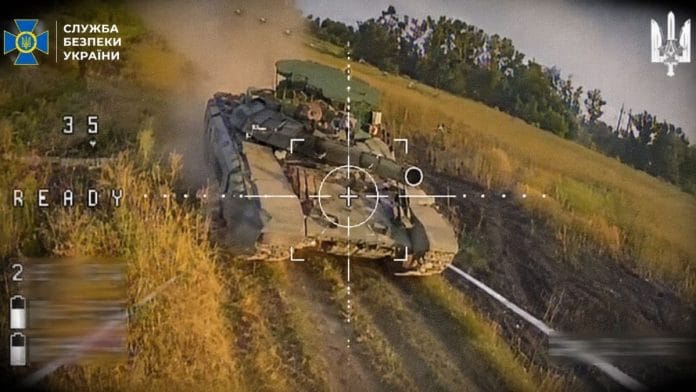

Wars on land still end much as they always have – with soldiers standing on ground the enemy can no longer contest. For a century, the tank has been central to getting them there. A gun moving under armour delivers direct fire while surviving what would destroy anything softer. Air power can punish, missiles can reach deep and drones can bleed a force white. None can occupy ground. That is why Russia’s 22 July mechanised assault southeast of Dobropillya deserves closer scrutiny than another declaration of the tank’s death.
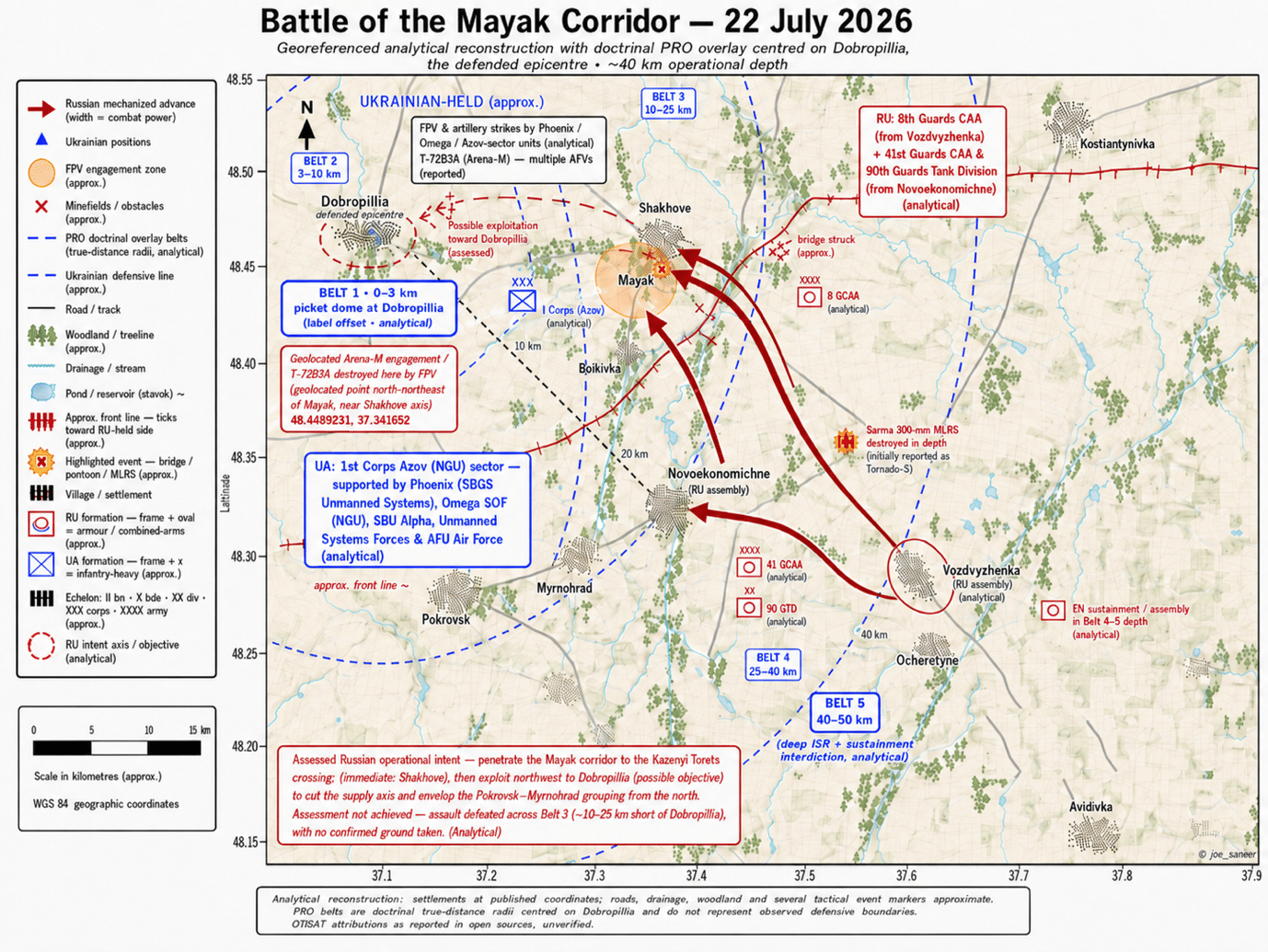
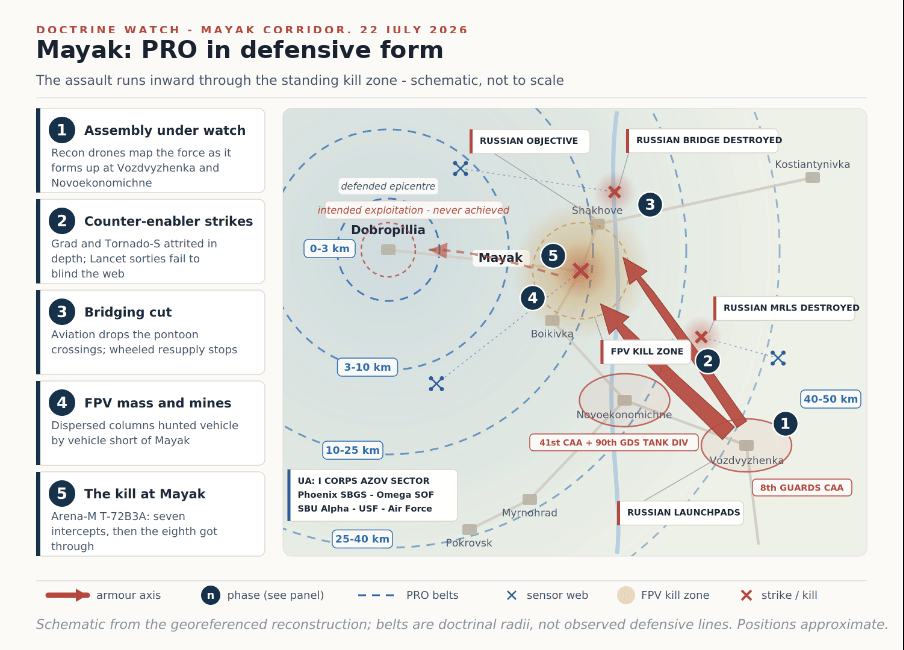
The assault moved toward Shakhove along several axes, including the Boikivka-Mayak-Shakhove corridor. Ukrainian accounts say seven Russian tanks, six other armoured vehicles, two multiple-launch rocket systems and dozens of lighter vehicles were destroyed, with more than 150 casualties. The precise composition is less certain; elements from two Russian combined-arms armies and a tank division were involved in the wider action, but the armoured force visible in released footage appears closer to a reinforced company than a battalion. It was nonetheless one of the larger mechanised attacks seen on that sector for some time, and it failed to produce a confirmed breakthrough.
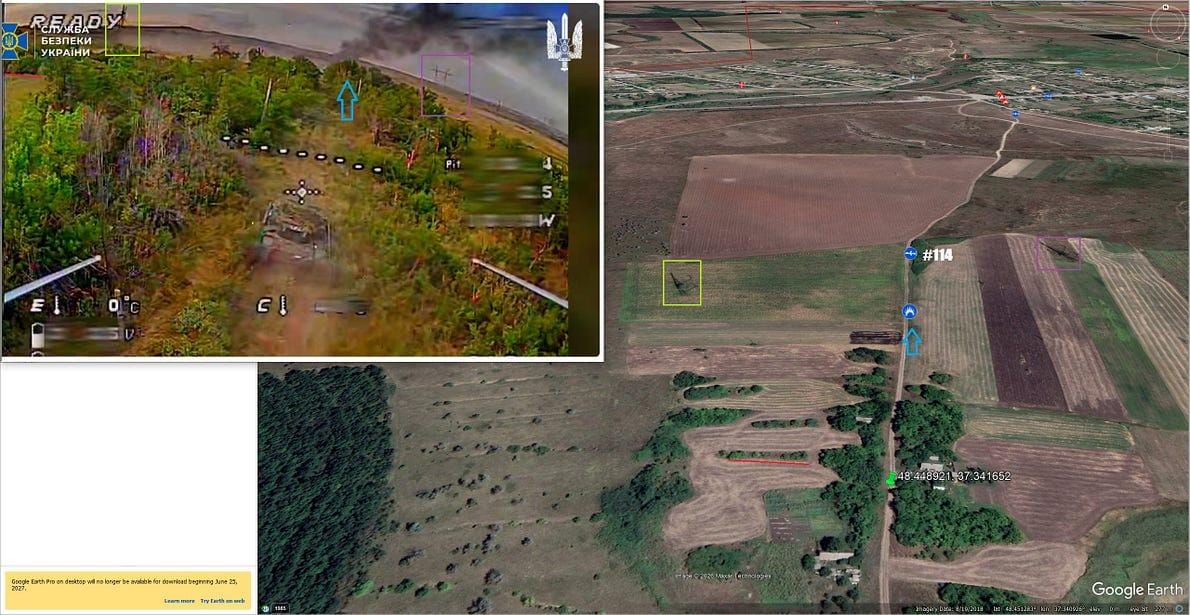
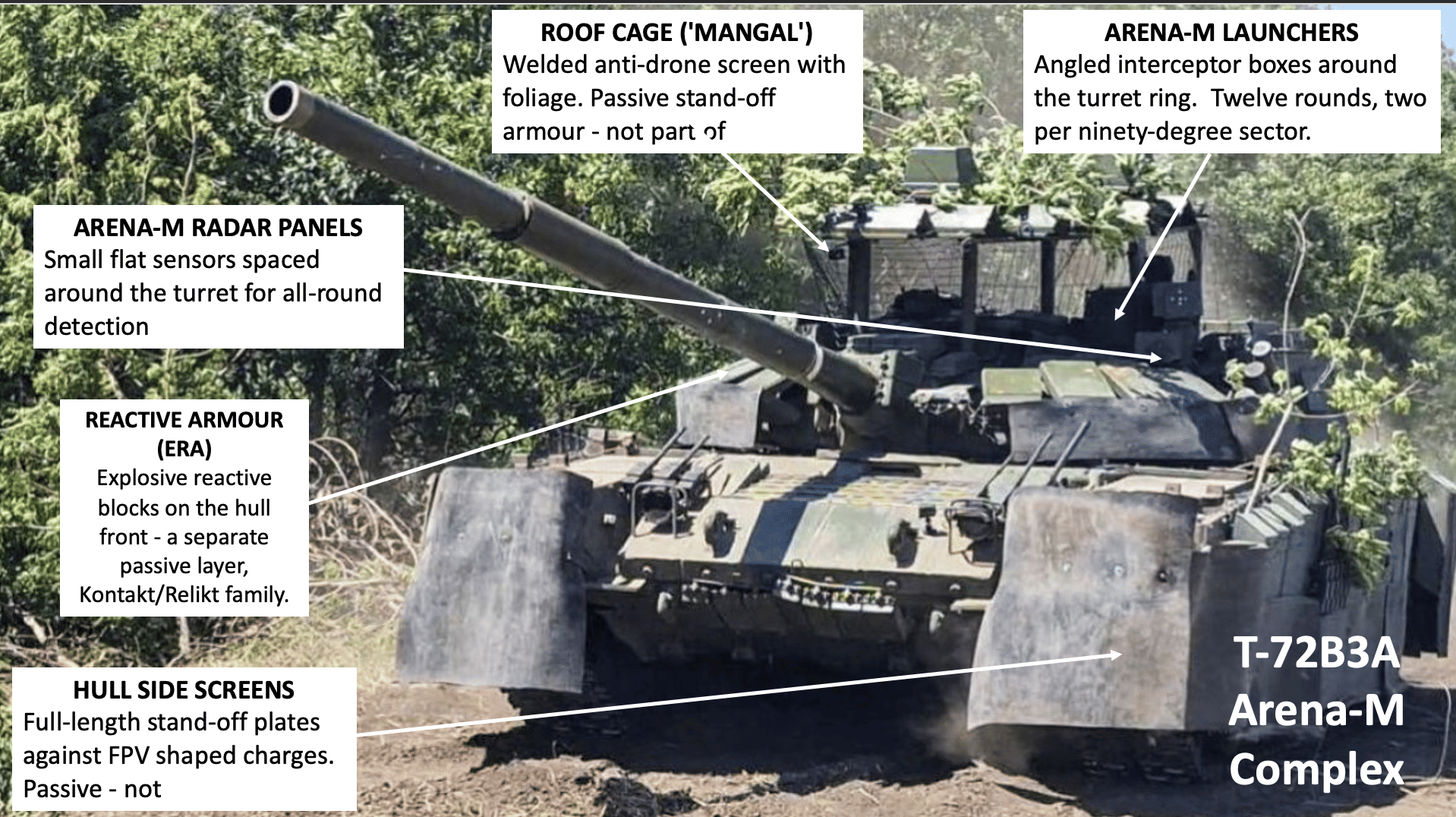
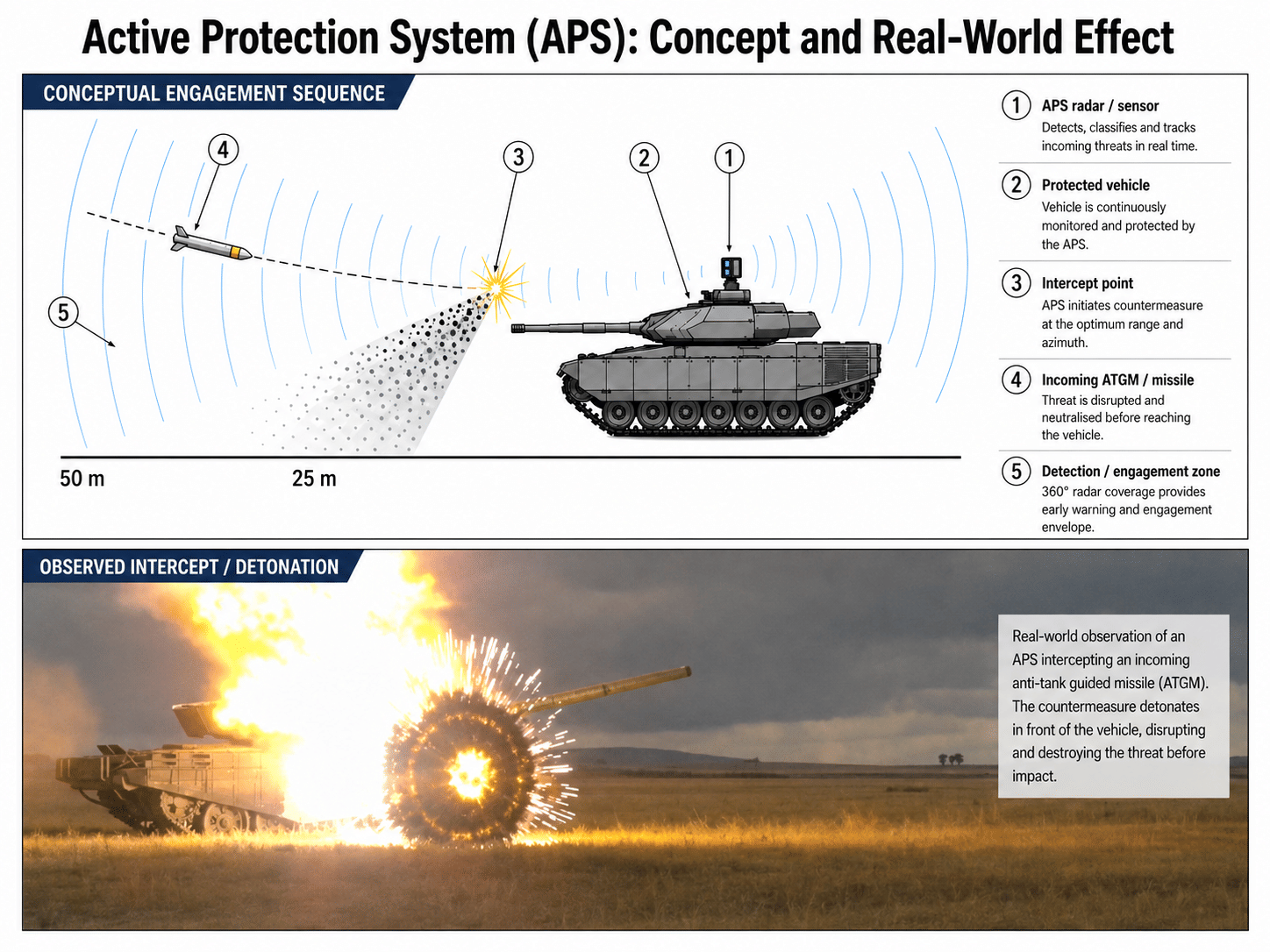
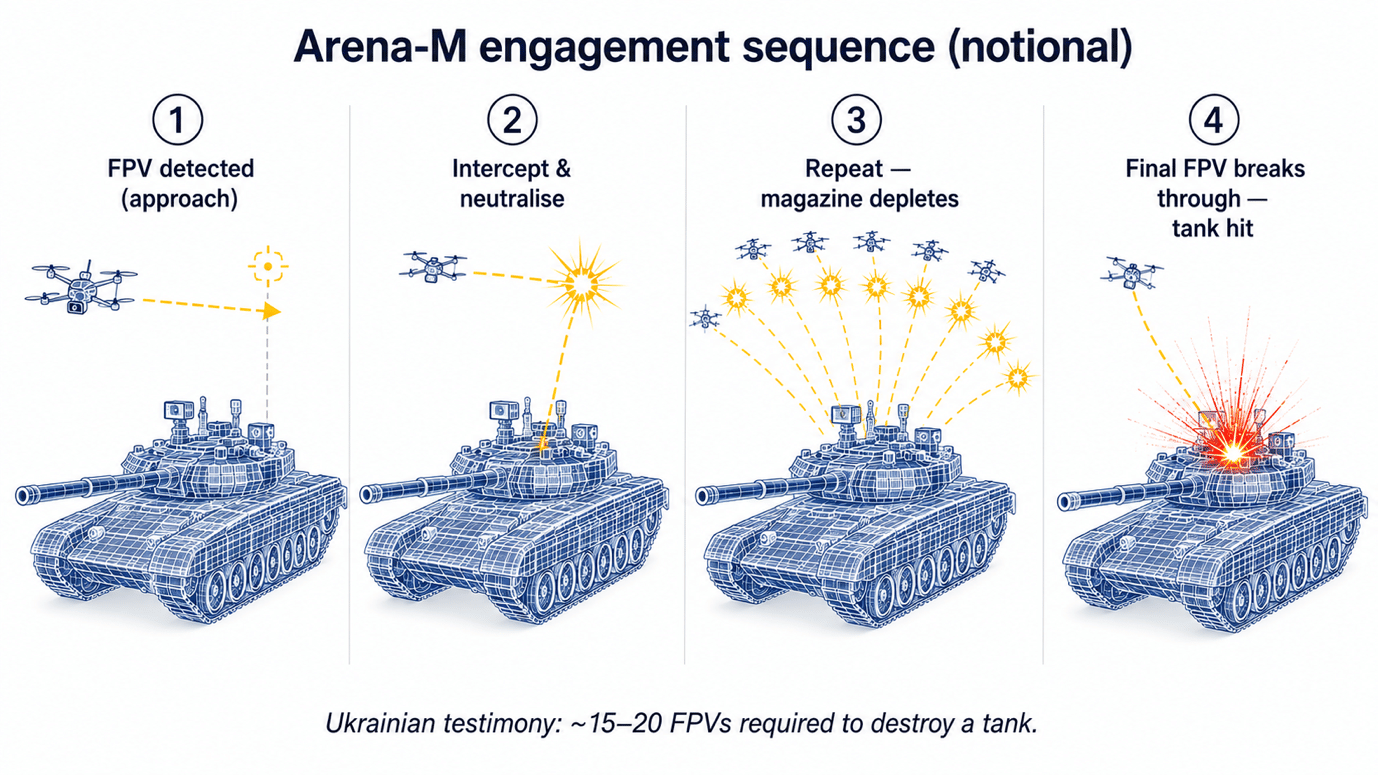
One detail matters especially. Later testimony from a participating Ukrainian unit, relayed by drone-warfare specialist Dmytro Putiata and analyst Rob Lee, suggests that a T-72B3A fitted with Arena active protection destroyed seven FPV drones before it was finally hit. The same testimony said roughly fifteen to twenty FPVs were required to destroy a tank during the engagement. These are not independently audited figures, but they change the meaning of the episode. Arena may not have failed. It may have worked – and still been overwhelmed.
That cuts through two easy conclusions. The tank is not dead – protected mobility, direct fire and shock action still do a job nothing else quite replaces. But active protection has not solved the drone problem either. A finite defensive magazine can be exhausted by repeated attacks. The defender does not have to defeat an APS technically if it can saturate it economically.
More important is what happened before the final drone arrived. Ukrainian reconnaissance drones detected the advancing force. Minefields and damaged crossings constrained it. Pontoon crossings were struck by Ukrainian tactical aviation; FPVs, heavy bomber drones and artillery then engaged vehicles across the depth of the advance. By the time individual tanks were fighting for survival, the formation was already being broken apart.
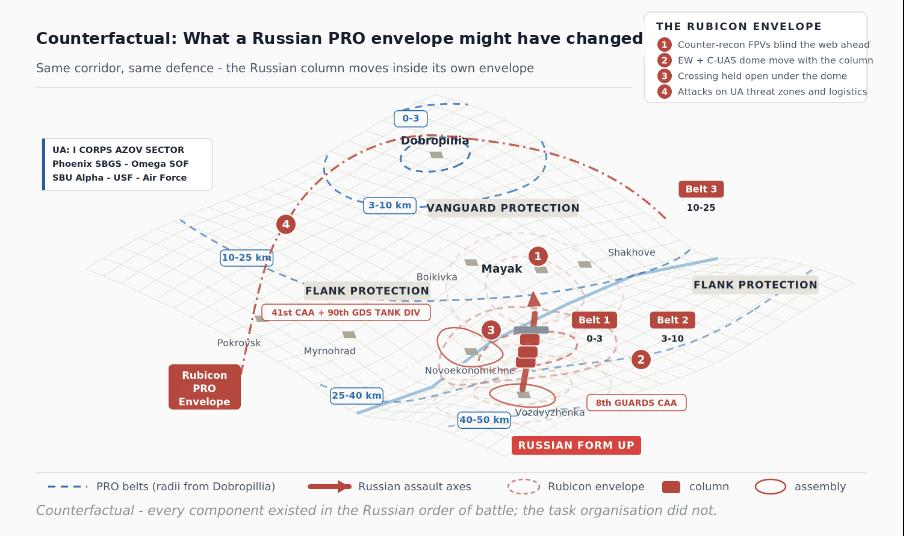
Russia was not without drones. Reporting indicates Gerbera and Lancet strikes, but the available record suggests they did not provide persistent enough cover to suppress the Ukrainian sensor-strike web. While the Russian Rubicon centre has grown into a specialised unmanned formation with FPV, reconnaissance-strike, counter-UAS and electronic-warfare elements, there is no clear open-source evidence that the Mayak assault moved inside a persistent, task-organised unmanned and electronic Rubicon protective envelope integrated with the manoeuvre commander. Drone support is not the same as a robotic layer that lives with a formation, rehearses with it and moves as it manoeuvres.
Also read: The case for an intelligent one-way attack drone
Ukraine’s broader digital architecture matters too. Systems such as Delta can fuse sensor information and UAV feeds into a common picture and coordinate reconnaissance and target acquisition. The public record does not prove that every Mayak engagement passed through Delta in real time. But the battle fits a wider operational logic – distributed sensors, multiple shooters and a command system designed to shorten the time between seeing a target and acting on it.
This is where Mayak becomes doctrinal rather than merely technical. I describe that logic as Persistent Robotic Overwatch, or PRO. Its proposition is simple: protection is no longer only a property of platforms. Increasingly, it is a property of the envelope around the formation. Persistent Robotic Overwatch makes the robotic layer a permanent constituent of combined arms and shifts the primary unit of battlefield protection from the individual platform to the manoeuvre formation.
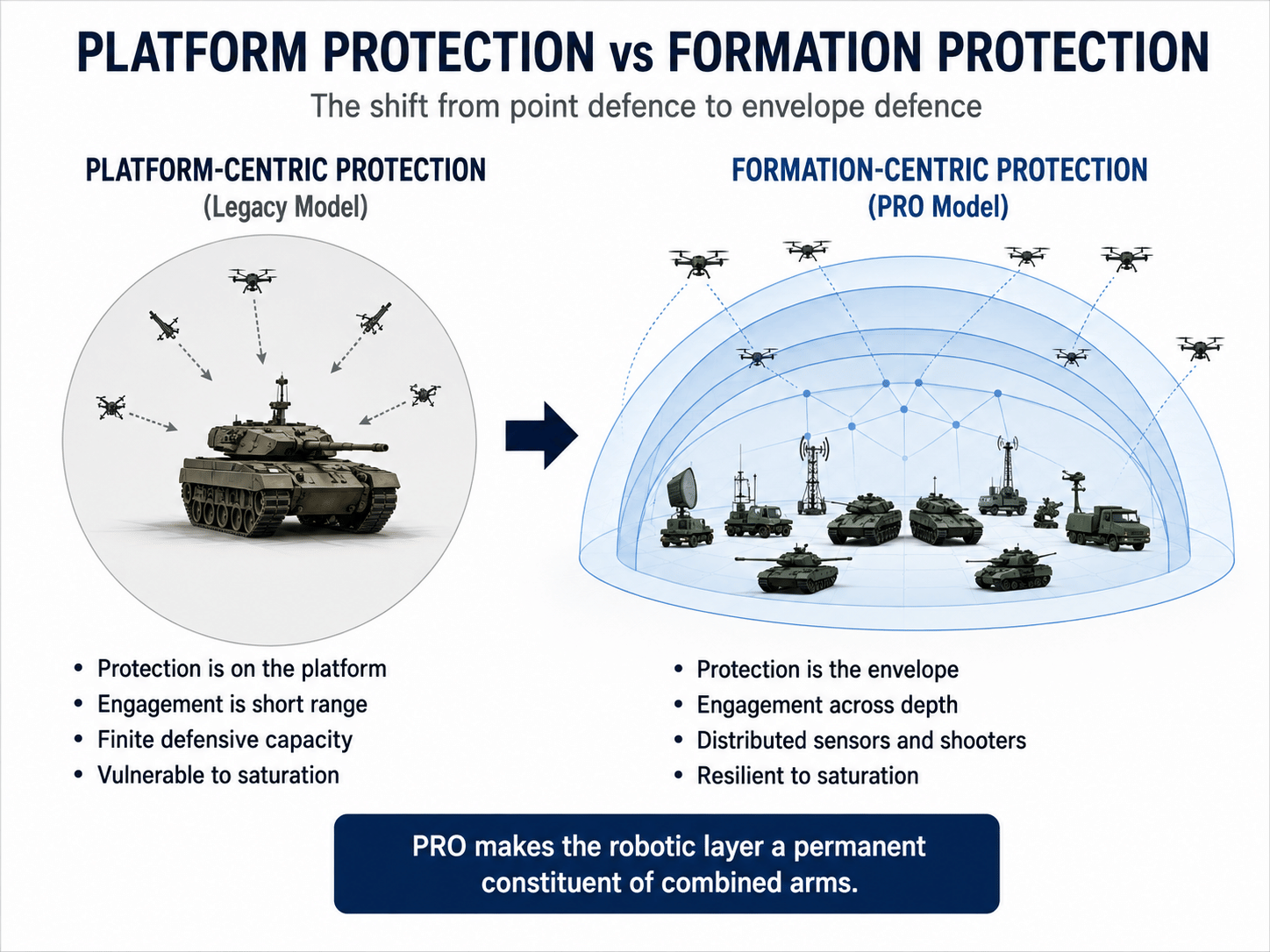
PRO does not write the tank’s obituary. It changes the conditions under which armour can survive. The object is to get the tank to the point of decision with its crew alive, mobility intact and ammunition still available for the fight that matters.
Three assumptions follow. First, soldiers need not make first contact. Expendable machines can increasingly find, identify and probe the enemy before people are exposed. Second, protection must move outward from the hull. APS remains a last line of defence, but the formation also needs interceptor drones, jammers, decoys, counter-reconnaissance and strikes against the operators, relays and sensors feeding the opposing kill chain. Third, command must move faster. Against a network passing targets from sensor to shooter in minutes or seconds, reporting everything upward before acting can turn procedure into vulnerability.
Also read: ‘Drone swarms’ are coming, and they are the future of wars in the air
The doctrinal consequence is larger than “more drones”. The unmanned layer has to become a combat function, task-organised under the manoeuvre commander with its own training, maintenance and resupply. Protection should be designed around the formation, not each vehicle. Commanders set priorities, boundaries and rules while target hand-offs and engagements happen at the lowest practical level. The tank remains an arm of decision – breakthrough, exploitation and protected direct fire – but fights inside an envelope that helps it reach that decision point.
History argues against premature obituaries. Anti-tank missiles in 1973 did not make the tank obsolete; armies adapted tactics and combined arms. Nagorno-Karabakh in 2020 exposed armour under persistent aerial observation. Ukraine’s 2023 counteroffensive showed how mines, artillery, drones and prepared belts could strip momentum from mechanised formations. The tank survived each doctrinal shock because the system around it adapted.
Major armies are now approaching the same problem by different routes. The US Army’s armoured-brigade experimentation stresses persistent sensing and strike from platoon to brigade, organic layered counter-UAS and embedded electronic warfare. Britain’s 2025 Strategic Defence Review describes a likely 20-40-40 land mix of crewed platforms, reusable uncrewed systems and expendable effectors. China is studying Ukraine for lessons in AI and unmanned warfare while developing an “intelligentized” joint force built around tighter integration of data and computing.
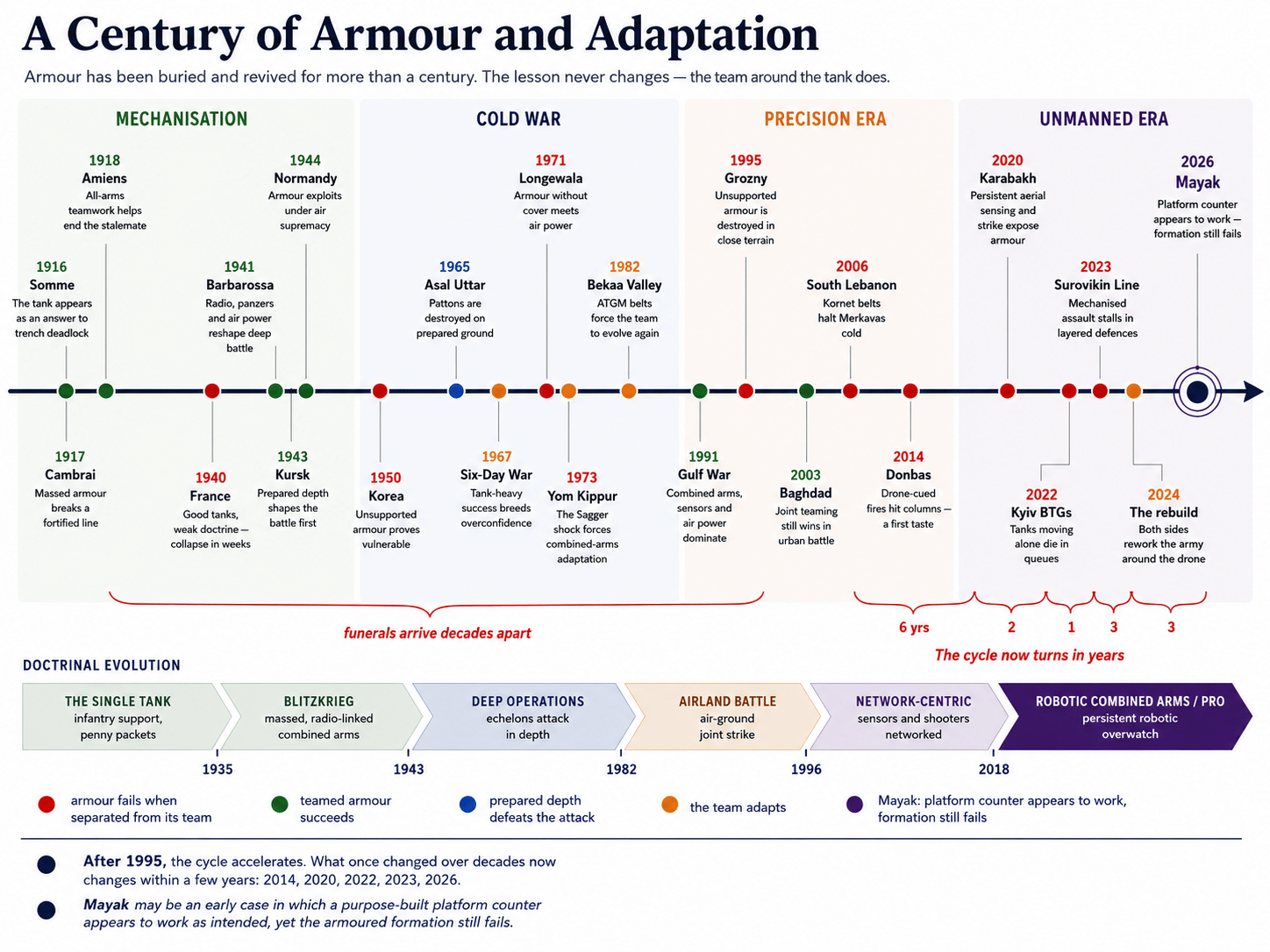
These are not identical doctrines. But the pressure is similar. Wealthier armies may build the envelope with autonomous interceptors, distributed sensors, resilient networks, electronic warfare and machine-assisted command. Others may approximate it with cheap FPVs, decoys, commercial communications, jammers and mass. The contest is moving beyond platform against platform toward envelope against envelope: whose machines see first, whose network survives disruption, whose defensive magazines last, and whose formation reconfigures faster.
That is why Mayak matters. Drones killing tanks is no longer news. What is more significant is the formation-level effect – an armoured attack was detected, canalised and attrited through depth by a distributed set of sensors and shooters. It had tanks whose active protection appears to have worked at the platform level, yet the formation still failed to break through. Survivability is thus becoming a responsibility of the integrated formation.
For India, the timing is useful. The Army has begun operationalising Integrated Battle Groups intended to mobilise and fight faster under a single commander. The Mayak question for an IBG commander is straightforward: does the machine layer belong to the formation when it moves, or is it something he requests after the fight has begun?
A drone unit that can be tasked is not the same as one that has rehearsed with tanks, mechanised infantry, engineers, gunners and air-defence elements. Command relationships, spectrum plans, data links, replenishment and engagement authorities cannot be improvised once a column is committed.
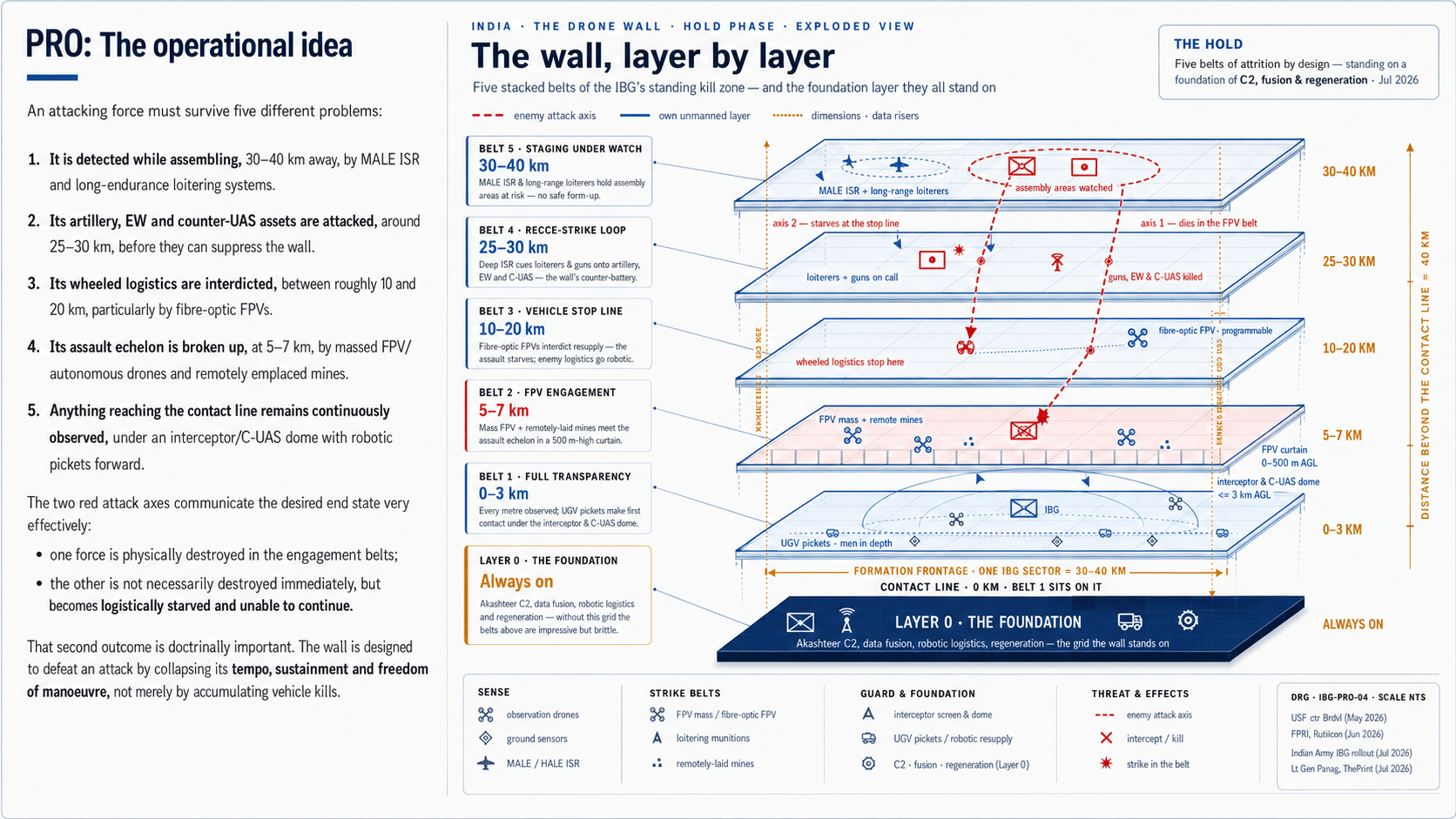
The two Indian fronts require different versions of the PRO construct. On the western plains, canal lines and obstacle belts can channel armour toward predictable breach points; robotic overwatch would help preserve tempo through continuous reconnaissance, counter-reconnaissance, decoys, electronic protection and unmanned escort. In the northern valleys and high-altitude approaches, persistence may matter more. Limited routes and observable corridors favour robotic pickets, layered surveillance, high-altitude airframes and unmanned logistics that reduce repeated exposure of soldiers.
The institutional changes come before the shopping list. Robotic overwatch has to belong to the manoeuvre commander in the same practical sense that artillery, engineers and air defence do. The formation needs a common digital C2 layer, resilient networks and engagement authority low enough to act on fleeting targets. Replenishment matters just as much: a force consuming drones at artillery-like rates cannot depend on boutique inventories.
Training is where the concept becomes real. Can the formation maintain continuous watch, replace lost relays and keep fighting when primary links are denied? Can armour, engineers, artillery, air defence, EW and unmanned teams fight from the same picture without a distant headquarters stitching the battle together? If the robotic layer is absent from major exercises, it will be absent in the first hours of war.
There is no off-the-shelf version of PRO. It has to be built through organisation, technology, network architecture, logistics and repeated field training. Different armies will use different systems and different names. But wherever forces manoeuvre under persistent observation, the pressure will be similar – push machines forward towards the threat, distribute the network and protect the formation in depth.
The tank will still be needed in the next war. But the opening moves will increasingly belong to machines, and armour will survive by fighting inside the formation-wide protective envelope.
The principle worth writing into doctrine fits on one slide – the cheapest casualty on the next battlefield should be a machine. Combined-arms formations that acknowledge that in peacetime will not have to discover it in war. Mayak does not sound the tank’s death knell. It suggests what the tank’s next evolution may look like – inside the integrated battle group.
Sameer Joshi is a former Indian Air Force fighter pilot who writes on aerospace & defence. He tweets @joe_sameer. Views are personal.
(Edited by Prashant Dixit)