







Foreign imports, department stores, foreign culture, the Americanisation of the economy, foreign people: the speaker at the meeting of the Northeim Housewives’ Club had droned on all evening, urging his listeners to buy local-made goods from small businesses. Even though the small German town of Northeim had yet to recover from the savagery of the First World War, the shadows of the second were upon it that evening, in the spring of 1931. Enterprise Bank, the pride of Northeim’s middle class, had gone bankrupt, as the global economic recession took hold. Twelve thousand workers were registered as unemployed with the town’s municipal authorities, while others suffered sharp pay-cuts or reduced hours.
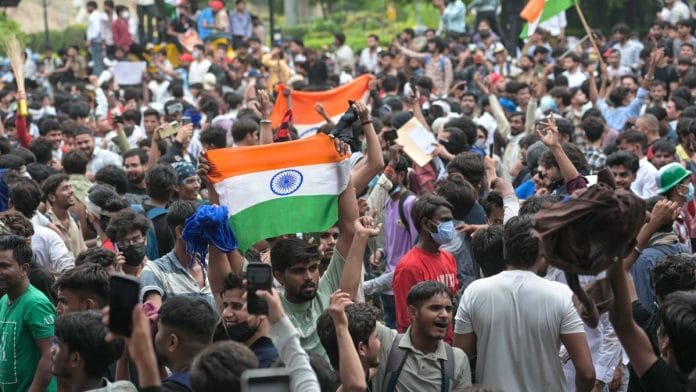
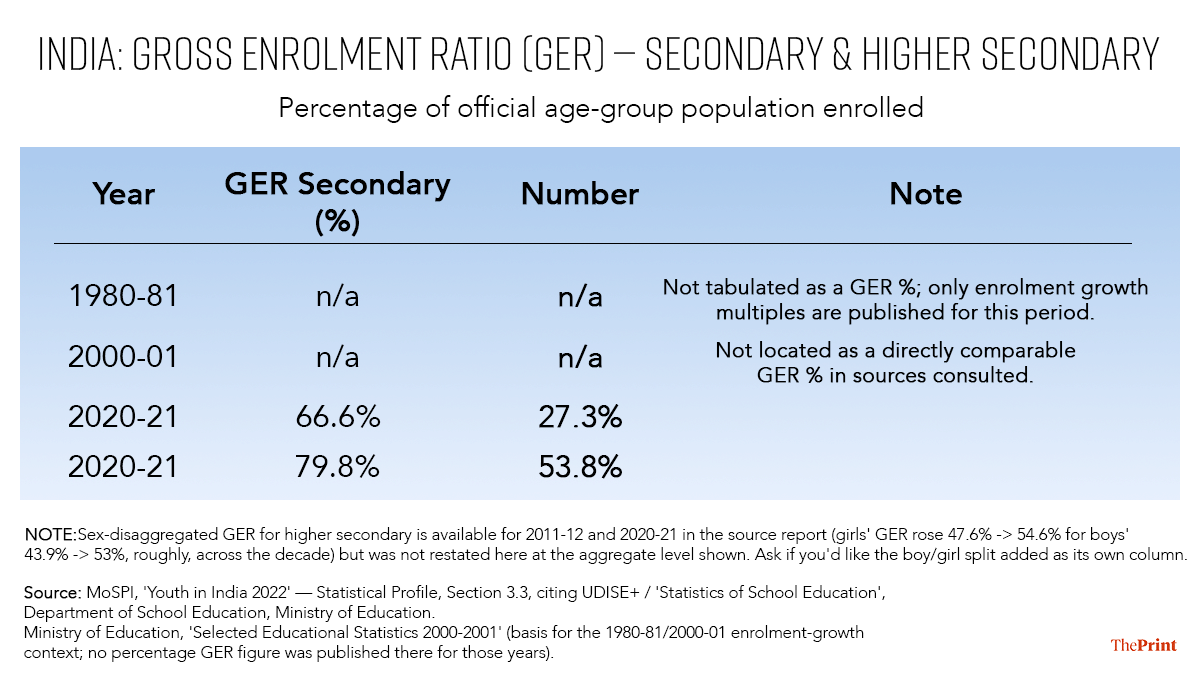
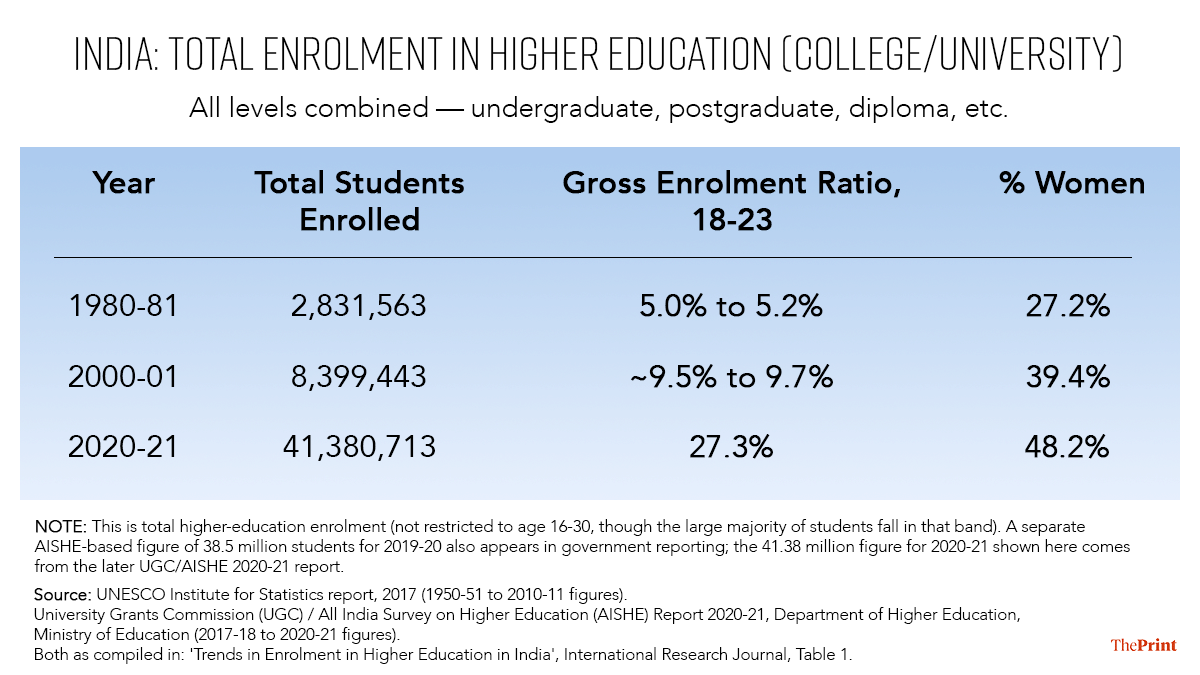
All through the summer, Indians watched, incredulous, as their children challenged and humbled an apparently all-powerful government. The articulate, educated protesters in New Delhi, though, aren’t all of Generation Z. Even though the number of students in higher education expanded five-fold in the two decades from 2000-2001 to 2020-21, just half of 15-29-year-old Indians complete high school, and only one third will go on to college. Few will ever gain access to the middle class: eight out of ten Indian jobs lie in the informal sector, which is far more than in Brazil, Indonesia, Sri Lanka and Vietnam.
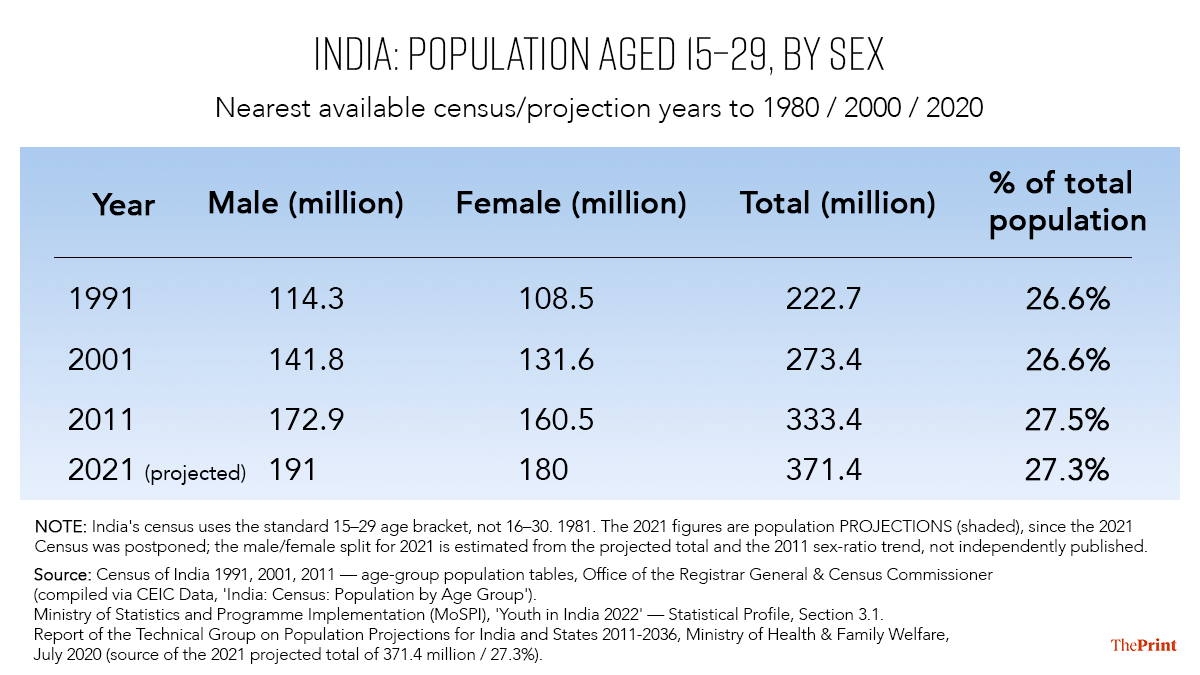
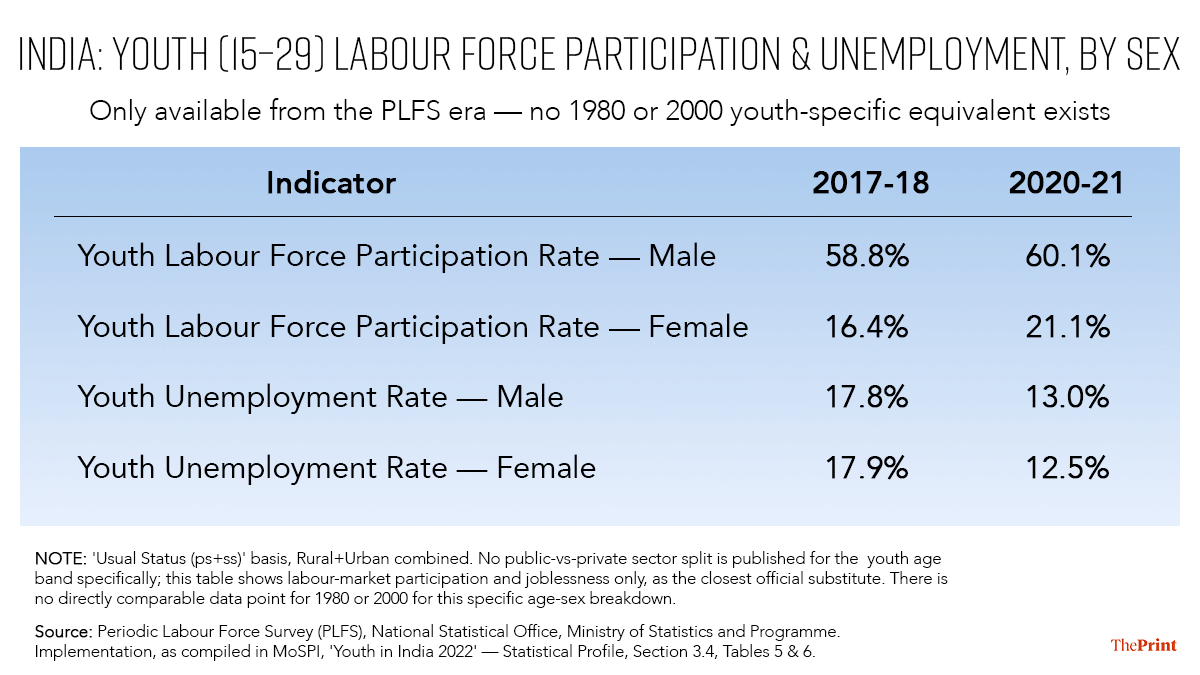 The Kanwar Yatra hooligans, the so-called Gau Rakshaks, and the growing number of adolescent criminals: these, too, are faces of Generation Z, along with the millions staring at smartphones in endless timepass. Few experts now believe that Gen Z will help India reach even modest levels of prosperity. Educational attainment and employment are both falling for young men. The story of Northeim teaches just how quickly the sullen silence of the hopeless can turn into incandescent rage.
Also read: India’s turned a blind Right eye to Hindutva violence, but it can be a threat to State itself
Generation Rage
Fifteen years old in March 1933, when she became one of millions of young people to join the Hitler Youth, Melita Maschman had allowed herself to be seduced by the flickering light from the torches held up by the men marching past with red-and-black banners, their jackboots hammering on the streets in perfect time. Ten years later, she was leading a camp for German settlers, on seized lands near the Polish city of Poznan. There was pleasure, Maschman recorded, in rejecting the values of her middle-class parents, who she held responsible for her generation’s hardships. Pushing, shoving, and beating Polish villagers filled her with “a cold, almost intoxicating feeling of superiority.”
Less than a generation earlier, the only dream many young Germans had was to escape their homeland. From the age of nine, one soldier interviewed by the sociologist Theodore Abel in Northeim remembered being put to work. “Today I stop at every bowling alley to watch the pin boy,” the soldier said, “because I know how badly his back hurts when midnight comes, and how parched his throat is.” His one wish was to “emigrate as soon as possible.”
For Germans in the 19th century, America became the promised land: The population of German-born emigrants in the United States grew to more than 2.3 million in 1910. The levels of emigration declined until the beginning of the First World War, though, as the growth of the German welfare state made leaving the country less attractive. Anti-German xenophobia during the 1914-1918 war contributed to the disillusion. Emigrants returned home with cash tucked into their socks and underwear—building homes with markers of prosperity like tiled roofs and brass doorknobs.
Like all herd mammals, human reproduction is tied to environmental conditions. The long peace that followed the unification of Germany in 1871—together with growing access to clean drinking water, vaccination and antibiotics—led to record numbers of births from 1900-1914. This unprecedented youth cohort began entering the job market, the demographer Eugene Kulischer wrote in his 1949 masterwork, just after the end of the First World War.
The crushing war debt imposed on Germany after the war, as well as the crushing impact of the Great Depression, created a generation that was jobless by profession, without hope and without a future. The Depression also led the doors to America to slam shut. In 1924, the American Congress passed legislation restricting emigration to 150,000 a year, down from over 1,000,000 a year before 1914. This was a significant triumph for the populist labour movement which, as now, blamed job losses on immigrants. Although some immigration continued, it could no longer serve as a safety-valve for Europe.
Four and a half million first-time voters lined up behind Adolf Hitler in the 1930 elections, gifting the Nazis their first significant electoral triumph. The doors of escape had closed for 18- to 40-year-olds just as economic hardship and unemployment reached a climax.
Troubled times
The story of how young people laid the foundations of Nazi power isn’t exceptional—although its impacts, of course, were just that. The work of historian Jack Goldstone underlined the relationship between revolutions and large youth populations, from the English revolution to the European revolutions of 1848. The scholar Norm Cohn’s work pushes the timeline even further back, pointing to the centrality of youth to the Crusades, and the antisemitic violence which surrounded them. The Russian revolution of 1905—the predecessor to the crisis that birthed the Soviet Union—also came on the back of a historic youth bulge. Even though our language around youth activism is often suffused with optimism, its outcomes are not always roseate.
For the most part, commentators hailed the so-called Arab Spring of 2009, named for the revolutions of 1848, which brought nation-states and democratic ideals to Europe. The outcomes didn’t justify the marketing, though. Tunisia, where the Arab Spring began, remained mired in authoritarianism, but also became the largest supplier of foreign jihadists to the Islamic State. Wider West Asia remains unstable, largely because the region has both the largest youth cohorts and the highest youth unemployment levels in the world.
There is, of course, no inevitability to what outcomes a youth bulge will have. The Baby Boom generation (1946-1964) brought unprecedented progress and prosperity to Europe and the Americas—but only because the region’s nation-states were well equipped to provide education, healthcare and infrastructure. The same generation also drove the dismantling of institutionalised racism in America.
The crisis ahead
From around 2030, India’s Youth Bulge will end, peaking at around 400 million citizens aged 15-24, a little under a third of the population. The costs won’t end then, though. Forty percent of Indian graduates already do not find employment, numbers that are certain to grow as artificial intelligence and robotics suck low-skill jobs out of the economy. Tens of millions in rural areas remain trapped in low-productivity economies, lacking capital, technology and land. As the economist Hans Binswanger-Mkhize noted more than a decade ago, the structural transformation was slow and stunted, with India failing to move low-wage agricultural labour into industrial jobs and to enhance farm productivity.
Five million new graduates entered the workforce between 2004-05 and 2023, but only around 2.8 million found any form of employment. The government estimates that the country needs to create 7.8 million non-farm jobs a year—a number many experts consider an undercount—but it has never touched that level.
Like Germany in the 1930s, the crisis could be exacerbated by the closing of opportunities for emigration. The outcome of anti-immigrant resentment in the United Kingdom and the United States is impossible to predict, especially as the need for lower-end employment declines. The war in Iran and the deep harm caused to regional economies have also demonstrated the risks that confront other parts of the Indian diaspora.
The coming Youth Bust will have consequences that will run for at least a generation. Governments will have to struggle with the problem of supporting hundreds of millions of young people. The crisis will not just be economic: Every social institution from the care of elderly parents to marriage will be reordered. And many young people will, most likely, be drawn not just to extreme political causes but to crime, just as similar circumstances in Central America birthed a murderous narco-culture that has claimed far more lives than terrorism or insurgencies.
Long accustomed to the reverie induced by India’s sunshine years, politicians and policy-makers have been slow to awaken to the enormous dangers ahead. Today might already be too late.
Praveen Swami is Contributing Editor at ThePrint. His X handle is @praveenswami. Views are personal.
(Edited by Prashant Dixit)