



Lit up by the burning Temple of Eshmun, God of Healing, the wife of the general who had surrendered the city chose death. “Traitor, most effeminate of men, this fire will entomb me and my children,” she declaimed. “Will you, the leader of great Carthage, decorate a Roman triumph?” Then she slew her sons and embraced the burning streets with them. The streets were covered with the bodies of defenders; the dead and the living, the eyewitness historian Appian of Alexandria recorded, were tossed into pits together to make way for the soldiers of the Roman commander Scipio Aemilianus. The city’s gold was looted, and its ships and weapons destroyed. Fifty-thousand citizens, half of them women, were sold into slavery.
The annihilation of Rome’s most powerful Mediterranean rival in 146 BCE was, as the historian Ben Kiernan writes, the world’s first documented genocide. There was no shame to killing: Every speech the powerful Roman senator Marcus Porcius Cato delivered ended with the words Delenda est Carthago, “Carthage must be destroyed!”
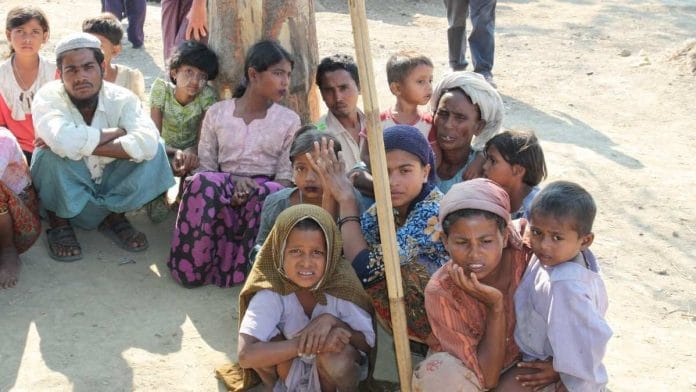
Last week, the International Court of Justice held Myanmar responsible for three separate acts of genocide against its ethnic Rohingya people, the first time it has made such a finding against a nation-state. The judgment dramatically expands the ICJ’s power to infer genocidal intent from circumstances alone, when official documentation isn’t available. It also opens the way for states to be held to account even if no genocide has yet taken place: “The obligation to prevent genocide does not allow a State that is in a position to act in the face of a serious risk of genocide to remain idle.”
The ruling will have significant consequences for Israel and Russia, both facing genocide charges at the ICJ. The Court has no enforcement mechanism of its own, and a deadlocked Security Council has shown itself powerless to uphold basic principles, but diplomatic isolation and sanctions are real concerns for both governments.
For India, the consequences are just as serious, and they reach beyond policies hostile to offering refuge to Rohingya survivors of genocide. The judgment underlines India’s obligation to act against threats of genocide, like those made by the Hindu priests Yati Narsinghanand and Dhirendra Krishna Shastri. India, like some other countries, ratified the Genocide Convention in 1959 only on condition that any litigation at the ICJ would need its consent, and the government has insisted that it needs no special laws against genocide. The Myanmar judgment should make it clear that global values are changing.
The shadow of Partition
Late in the autumn of 1946, sitting on a sofa in the delegates’ lounge at the very first session of the United Nations General Assembly at Lake Success, Raphael Lemkin drafted a resolution calling on the body to treat genocide as an international crime. Lemkin, a Polish lawyer of Jewish origin, had coined the word. “Long Island’s landscape was undressing itself of its colours and leaves for the bleaching totality of November,” he later wrote. Nazi leaders had been tried by the International Military Tribunal at Nuremberg, but for war crimes and crimes against humanity, not for the wider genocide conducted against political dissidents, as well as religious and ethnic minorities.
To get a hearing, Lemkin needed three signatures. The international lawyer Ricardo Alfaro, representing Panama, proved easy to persuade, and Guillermo Belt, the delegate for Cuba, was also willing to sign. The third was harder, until a friend from London introduced him to Vijaya Lakshmi Pandit, who headed the Indian delegation. The treaty, Lemkin explained, sought “a universal concert in which every nation plays its part.” The pitch delighted the Gandhian leader.
Lemkin’s ideas won the support of many post-colonial countries, and of women’s groups concerned about state-sponsored sexual violence, a subject that had received little attention. The United Kingdom pushed back, worried — with excellent reason— that the Genocide Convention would expose it to attack over its brutal violence against populations in Kenya, Malaya and Aden. The United States and Canada were concerned about their policies toward aboriginal populations; the Soviet Union wanted to make sure political dissidents were not a protected group.
Five nations lined up behind Lemkin as he fought off this assault. The Egyptian jurist Monim Bey Riad proved a critical ally, seeing in the convention protection against the usurpation of Arab lands and the destruction of Islamic cultures. Riad claimed that a genocide was “being committed in the Holy Land.” He went on to accuse “certain metropolitan powers in non-self-governing territories [who were] attempting to substitute their own culture for the ancient one respected by the local population.”
This thinly veiled reference to Palestine — which is still being litigated in the ICJ today — found wide resonance across the Middle East. Through Riad, Lemkin gained the support of Lebanon, Iran and Saudi Arabia. The fifth musketeer, Pakistan, had its guns trained on India.
Holy wars
Like many educated European Jews of his generation, Lemkin was profoundly cosmopolitan. His friend Nancy Ackerley told his biographer Douglas Irvin-Erickson that he kept up with New York’s art galleries, recited Hindu sutras on walks through the city’s parks, and claimed to be able to say “I love you” in 20 languages. Yet the man who delighted in Rainer Maria Rilke’s idea of a cosmic consciousness soon found himself mired in a toxic ideological pit. To win Western powers over to draft Article III of the Genocide Convention, which aimed to protect national customs, cultural practices and heritages, he ended up on the side of religious chauvinism.
To protect his convention, Lemkin persuaded Pakistan’s Foreign Minister, Sir Zafrullah Khan, to charge India with committing genocide against Muslims during Partition — an accusation the lawyer hoped would also embarrass the United Kingdom. Khan made the charge in January 1948, telling the Security Council that India’s military intervention in Kashmir was, he argued, part of a larger genocide of Muslims under way in at least twelve provinces. He called on the United Nations to set up a commission that would restore the properties of Muslims forced to leave India, provide relief to refugees, and ensure that India paid compensation.
In February, Khan sent a letter to Lebanese diplomat Charles Malik, stating that of the 35 million Muslims in India, “one million Muslims have been destroyed and over five million driven from their homes.” “The remaining Muslim population of India stands faced with physical and cultural annihilation,” Khan said.
Also read: Why the upcoming Trump, Xi, and Putin summit risks repeating the mistakes of Yalta 1945
End of illusions
Late in 1948, the diplomat KVK Sundaram, India’s delegate at the United Nations, announced India’s rejection of the idea of cultural genocide, breaking ranks in a way that ensured the defeat of Lemkin’s expansive plans. Prime Minister Jawaharlal Nehru, furious at what he took to be a change of policy made without his authorisation, rounded on Sundaram. He discovered, though, that the decision had been made by the Ministries of Home and Law and approved by the Foreign Secretary. Several countries had pointed out that putting cultural genocide at the centre of the convention would undermine the ability of states to reform tyrannical customary practices.
India’s wariness of the convention thus has deep roots: the treaty it had helped launch was, within months, turned against it. India ratified in 1959, with its reservation on ICJ jurisdiction, but the idea of a global norm against genocide proved illusory. The slaughter in East Pakistan, the war of annihilation in Vietnam, the killing fields of Guatemala: not a single genocide of the Cold War led to a prosecution.
The Cold War did, however, make plain what happens when great powers are bound by neither law nor norm: the Holocaust was not, after all, a one-off evil. “The twentieth century,” the sociologist Roger Smith observed in 1987, “is an age of genocide.” “The number and range of victims, the variety of forms that genocide has taken, the urge toward total destruction of whole groups, the elaborate technology that facilitates death and eases conscience, the concentration camp, and the radical evil that is inseparable from it, it is a unique age of genocide.”
After the Cold War, pressure for action began to mount, first at the margins of power, in Rwanda and Bosnia, and now spreading to powers that once considered themselves immune from pressure, like Israel and Russia. Even though 9/11 led to a long muting of human rights concerns, the United States and United Kingdom actions during that period are facing renewed scrutiny.
To ignore changing global values is to risk disrepute and marginalisation. Future violence against ethnic and religious groups, like the 1984 riots or the pogrom in Gujarat, could well carry international consequences, the Rohingya judgment shows. There is no guarantee that allies who backed India in the Security Council and other global bodies during past crises will be able, or willing, to do so again. To secure its interests, India needs to engage its critics — not coddle its genocidaires.
Praveen Swami is a Contributing Editor at ThePrint. His X handle is @praveenswami. Views are personal.
(Edited by Aamaan Alam Khan)