






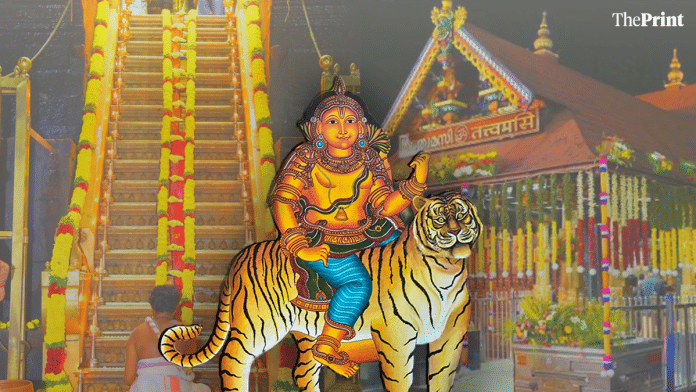

The gods of Hinduism carry many histories. Ayyappa of Sabarimala, one of the most dynamic South Indian deities of the past century, is no exception.
In Part 1 of this series on the deity’s history, I traced how the ancient Tamil hill-god Aiyan merged with the Sanskritic Shasta over centuries. By the 1600s, he had come to be venerated at Ayyappa’s hilltop shrine at Sabarimala and along the Malabar Coast.
But this is just one part of the god’s story. Across the Western Ghats on the Coromandel Coast, a parallel tradition had been developing since at least the eighth century. Here, he was recognised as Ayyanar, the fierce protector-god of southern Tamil Nadu, worshipped by non-Brahmin castes. When those castes encountered Ayyappa at Sabarimala in the mid-20th century, they welcomed him with open arms. This transformed not only the devotees but, in a way, the god.
Shasta, Aiyan, Ayyanar
The ancient hill-god Aiyan is mentioned in Tamil poetry dating to the early centuries CE. Another deity, Shasta (Chathan in Tamil), also appears around this time. However, the relationship between these two figures only becomes clearer from the eighth century. Around this time, temple inscriptions across a wide geographic range—from Kanchipuram to Kanyakumari—came to identify both deities with the names Ayyanar and Ayyappa.
As with Ayyappa, these early temples to Ayyanar were consecrated by warrior aristocrats such as the Ay chiefs and worshipped by Brahmin priests. However, on the Malabar Coast, archaeological evidence suggests that this composite deity was typically integrated into the wall-niches of both Vishnu and Shiva temples. In Tamil Nadu, he had his own shrines.
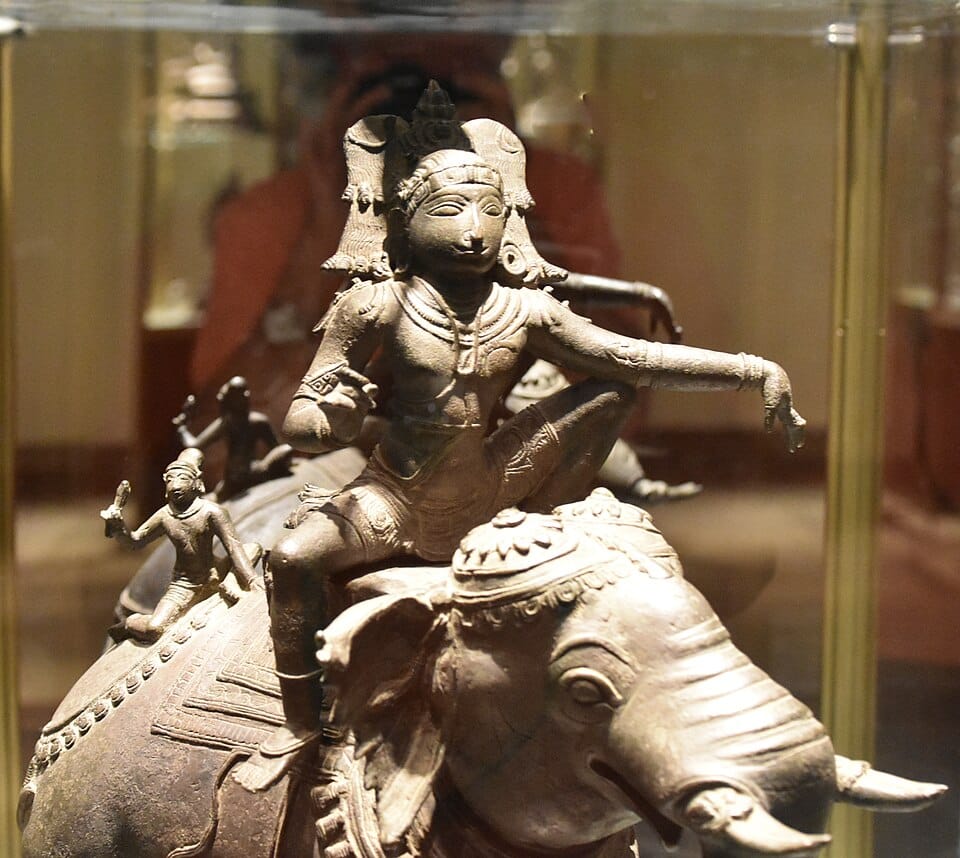
However, in medieval Tamil inscriptions and bronzes, Ayyanar or Aiyan-Shasta is proportionately less represented than Shiva and Vishnu. He was not identified as their son, as he would come to be known on the Malabar Coast much later. In medieval sculpture, Ayyanar is depicted with long locks of hair and an extended left arm resting on his knee, while an extended right leg seats him on a pedestal or an elephant. Visually, he is reminiscent of a king.
Over the last several decades, a substantial body of evidence on contemporary Ayyanar worship has been gathered by sociologists in Tirunelveli in southern Tamil Nadu. The city is not far from Kanyakumari, which has a few medieval temples to Aiyan-Shasta—including one dating to the reign of Rajaraja Chola in the 11th century. Yet, the relationship between medieval Aiyan-Shasta and today’s Ayyanar raises many intriguing historical questions.
Also read: Religion was not a consistent barrier for temple or mosque entry in India. It’s caste doing
Ayyanar in southern Tamil Nadu
Ayyanar in contemporary Tirunelveli—often depicted riding a horse—is associated with local mother- or forest-goddesses, and rules over a retinue of powerful peys (often rendered as ‘demons’). He is also known as Dharma-Shasta, reflecting his association with the local social order. Unlike the Aiyan-Shasta, who was worshipped by Brahmin priests, Ayyanar’s priests today are primarily potters (Velar), who manufacture large terracotta (and now cement) horses as offerings.
The god is believed to patrol villages on horseback at night, and devotees usually make vegetarian offerings to him in return for boons. In ‘Horse Shrines in Tamil India: Reflections on Modernity’, architectural historian and critic Mark Jarzombek pointed out that Ayyanar is sometimes seen with a mix of both awe and fear. Anthropologist Lars Kjaerholm, who interviewed devotees in the late 1970s, wrote that one aspect of Ayyanar—the Sanskritic Shasta/Chattan—is claimed by some castes as an ancestor, but they do not similarly claim Ayyappa. Kjaerholm also did not find temples to Ayyanar in the dominant-caste parts of Tirunelveli towns.
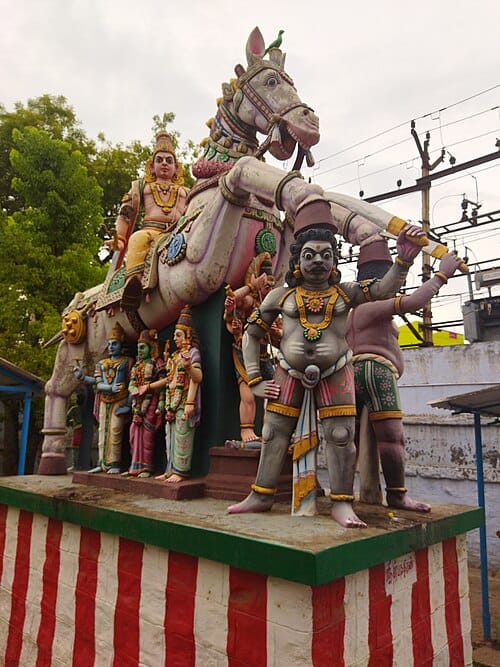
Mari-Louise Reiniche (who conducted extensive fieldwork on Tirunelveli’s religious traditions), Kjaerholm, and many other scholars attest that Ayyanar was more commonly found in the ‘lower-caste’, meat-eating neighbourhoods (though the god is believed to be vegetarian). In his open-air temples, composed of statues and small shrines, he was worshipped alongside an eclectic pantheon. It includes well-known deities such as Ganesha, as well as local figures such as Ayyanar’s general Karuppasamy, village mother goddesses, and serpents. The ‘lower’ caste households of the village consider Ayyanar’s fierce attendants (such as Karuppasamy) as their lineage deities, and offer them meat or liquor as caste tradition demands. Conceptually, both Reiniche and Kjaerholm argued that Ayyanar and his shrines bridge Sanskritic purity notions such as vegetarianism and asceticism; royal attributes such as the horse, sword, and a retinue; with the more “local” traditions of mother and rain goddesses, meat offerings, and worship of ancestral village or caste deities.
This leads to some interesting questions. How did Tirunelveli’s popular version of the deity develop, and what is his relationship with the medieval Aiyan-Shasta? Were the medieval bronzes and inscriptions for an elite, kingly variant of the god later subsumed within popular worship? Or is the popular tradition a descendant of medieval temple rituals? The Madras District Gazetteers: Tinnevelly, Vol. I (1917) mentions ritual dances to Ayyanar conducted by Brahmins, suggesting that “folk” and “elite” traditions may have had a rich intermixing in devotions to this particular god.
Not all of these questions can be answered with the current state of the evidence. However, another major development has been unfolding in South Indian religious history, under the glare of smartphones and 24/7 national television. The village-god Ayyanar is converging with the epic mythology and pilgrimage of Ayyappa at Sabarimala. This will have long-lasting effects on both.
Ayyanar meets Ayyappa
The early 20th-century was a crossroads for many Indian gods. New standard iconographies, powered by mass-printed oleographs, were taking over the Hindu imagination. Railways had made pilgrimage easier than ever. And struggles and satyagrahas over caste purity and temple access were bringing the gods to ever-larger communities of devotees. Within this context, Sabarimala was already remarkable, as it was open to men of all castes and creeds from as early as 1830.
In his paper, ‘Theogony and Power in South India’, historian Fred W Clothey, relaying a tradition from a Tamil professor at Madurai, claimed that in the 1920s, a group of Namboodiri Brahmins became aware of the popularity of the Murugan shrine at Palani. Seeking to draw pilgrims, they renovated the temple of Ayyappa at Sabarimala, which already attracted several tens of thousands of devotees annually. This drew a few isolated Tamil groups, but the situation changed drastically in the 1950s, when a fire destroyed the Sabarimala temple and the image of Ayyappa within. Today, this is generally believed to have been the work of Christian missionaries. However, according to a tradition recorded in the 1980s by Kjaerholm, there was no religious angle. (‘Aiyanar and Aiyappan in Tamilnadu: change and continuity in South Indian Hinduism’)
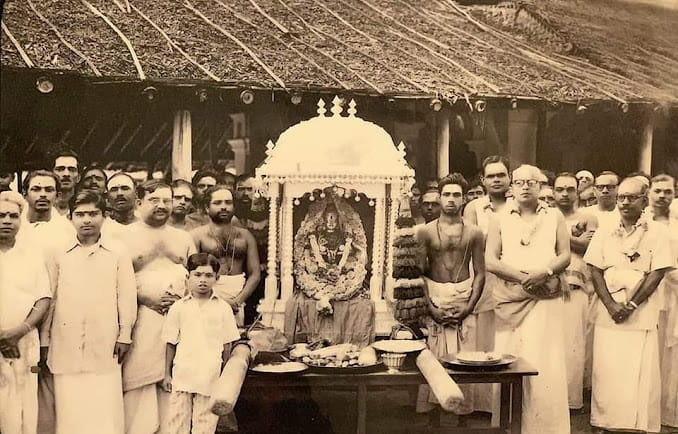
PT Rajan, an influential non-Brahmin industrialist and politician, swung into action. (He was the grandfather of Palanivel Thiaga Rajan, currently Tamil Nadu’s minister for IT and Digital Services.) He organised processions and fundraising for Ayyappa across Tamil Nadu, with the god’s new metal idol, intended for reinstallation at Sabarimala, carried by devotees. Soon after, pilgrims returning from Sabarimala reported the god’s miraculous powers: limbs healed, sons born, protection granted from wild beasts. Steadily, Ayyappa societies grew across Tamil Nadu, and pilgrimage boomed.
There were other aspects to Ayyappa’s popularity. In his book The Many Faces of Murukan (1978), Clothey made note of the god’s rising following, pointing out that Sabarimala’s forest isolation spoke to “urban nostalgia” and a sort of “supra-Tamil aura”. Indeed, as pointed out in Part 1 of this series, Ayyappa is believed to have been established at Sabarimala by the Pandalam royal family, ostensibly descended from the ancient Tamil Pandya kings. It is also Tamil literature that first mentions the names Aiyan and Shasta, both of which came to be linked with Ayyappa. These beliefs need to be understood within the religious atmosphere of the mid-20th century.
The decades leading up to 1950 had seen the growth of Dravidian ideology, whose most radical thinkers saw caste and religion as an ‘Aryan’ imposition from the north. By 1950, this had been tempered by a Tamil identity within united India, which, though secular and progressive, took pride in its religious heritage. In The Sabarimalai Pilgrimage and Ayyappan Cultus, anthropologist Radhika Sekhar traces how, in the mid 20th-century, Ayyappa may have been perceived as a “Dravidian god, born on Dravidian soil… who frowns on class barriers.” He “represents unity and brotherhood amongst all men… Thus Christians and Muslims can also join the army of Ayyappas, who in a previous era fought tyranny and restored order together.”
From the late 1960s onward, the story of Ayyappa was enacted by several popular film stars in Malayalam and especially Tamil. According to Sekhar, icons such as Sivaji Ganesan and Rajinikanth both undertook the Sabarimala pilgrimage, contributing to popular awareness of the circuit.
Anthropologists Filippo and Caroline Osella studied the pilgrimage in 2003. They argued that the emphasis on celibacy and renunciation, and the long journey in the company of other renunciants and a guru, allowed immersion in a potently masculine experience tied to Hindu beliefs. To devotees of Ayyanar, Ayyappa could be interpreted as a more cosmic version of their own local god, who allowed them to transcend their village hierarchies and identities, and experience a grand sense of community. Indeed, the remarkable syncretism of the Sabarimala temple allowed it to absorb even the most local figures, such as Karuppasamy, whose image is now paraded during the pilgrimage. Conversely, the mythos of Ayyanar has also evolved to include more stories of his protective aspects, rather than his magical powers.
With all this said, academic accounts of the pilgrimage (Sekhar, Kjaelhorn, Osella) record that devotees tend to travel within their own caste groups, or at least groups with the same dietary restrictions. Furthermore, despite Sabarimala’s inclusion of Muslim deities such as Vavar, few non-Hindus visit the shrine. While boundaries dissolve before the god in his forest, realities like caste remain in place when devotees return to their mundane lives.
Sekhar, herself a woman whose pilgrimage to Sabarimala raised eyebrows in the 1990s, documents devotion to Ayyappa at a time when networks of temples, associations, male gurus, and devotees were developing. The Osellas noted in 2003 that as the pilgrimage came to be understood as a supra-masculine experience, and the number of pilgrims continued to swell, menstruating women were steadily distanced in religious terms (as temptresses, impure, or otherwise dangerous to the pilgrims).
However, the Supreme Court judgment of 2018 ordering women’s entry into the temple was not in response to a demand from Ayyappa’s female devotees in South India. Whatever the history of the restriction on menstruating women, interviews in Kerala suggest that it was generally accepted in South Indian ritual and gendered life (at least in public). Online discourse, mostly but not entirely from the Hindutva and upper-caste Right, painted women’s entry into the sacred space as something akin to blasphemy.
As of 2026, most major Indian political parties support the exclusion of menstruating women from Sabarimala.
Also read: Mohenjo-daro city is not older than Egyptian cities. Here’s what the recent dig really shows
The many meanings of a god
The evidence assembled here demonstrates that Shasta-Ayyappa-Ayyanar has never been a monolithic divinity. He has been a king, a village protector, a lineage ancestor, a Dravidian hero, and a renunciant model for the contemporary Indian male. Each form reflected his devotees at various times. Warrior aristocrats built his stone temples in the 8th century. Tirunelveli potters made him the king of their village gods. Tamil industrialists powered his 20th-century renaissance. Male pilgrims found in his forest a symbol of a transcendent, united masculinity.
The form of Ayyappa most popular today—the celibate god of an overwhelmingly male pilgrimage—is the product of our times. His pilgrimage encompasses the mid-20th-century encounter between Ayyanar’s devotees and Sabarimala, accelerated by cinema, urban nostalgia, and both the Dravidian and masculine Hindu perspective. Yet even this is one trajectory among many.
In 1954, sociologist MN Srinivas recorded an Ayyappa tradition in Coorg—at the time relatively isolated from currents in Kerala and Tamil Nadu. Here, Ayyappa was a hunter: tracts called devara kadu (god’s jungle) were dedicated to him, and it was said that he could be heard whistling to his seven hunting-dogs at night. His shrines ranged from forest clearings to proper temples; his forms from uncarved stones to full sculptures; his offerings from clay dogs and arrows to, in some shrines, a fowl and arrack.
Similarly, Sekhar notes that even within Kerala, Sabarimala is one strand among many. Five temples, believed to have been founded by the sage Parashurama, depict Ayyappa at different stages of life—a child at Kulathupuzha; an adolescent at Aryankavu; a householder at Achankoil (seated on a horse with two consorts, like Ayyanar); a forest renunciant at Sabarimala. The fifth temple, Sekhar writes, is either undiscovered or exists “only in the minds and hearts of the devout”.
What Srinivas found in Balamavatti, Coorg, is the most arresting. There, Ayyappa was the deity of women. On the last day of the month of Scorpio, the high-caste women of the village travelled to his forest shrine at dawn, bathed in the pool, cooked cakes of rice-flour as offerings, and danced. Returning to the village, they were welcomed by the men, who then danced on the village greens.
In Balamavatti, Ayyappa in his forest belonged to the women.
This is the second column in a series about the history of Ayyappa.
Anirudh Kanisetti is a public historian. He is the author of ‘Lords of Earth and Sea: A History of the Chola Empire’ and the award-winning ‘Lords of the Deccan’. He hosts the Echoes of India and Yuddha podcasts. He tweets @AKanisetti and is on Instagram @anirbuddha.
This article is a part of the ‘Thinking Medieval‘ series that takes a deep dive into India’s medieval culture, politics, and history.
(Edited by Prasanna Bachchhav)