





The public outrage in India following a series of horrific incidents of rape, sexual assault and abuse points to a deeper malaise. It is increasingly visible across South Asia, including Sri Lanka—our continuing failure to protect women and children from violence.
For a region that takes legitimate pride in traditions that speak of compassion, dignity, duty and respect for human life, this should be a matter of profound shame.
The problem is not a lack of laws, institutions or international attention. South Asian countries have enacted legislation and established mechanisms to address violence against women and children. Governments have also worked with UNICEF, UN Women, the World Health Organization and other international organisations. Regional initiatives have sought to exchange experience and develop best practices.
There has been progress. But the persistence of horrific cases suggests that it has not been enough.
The challenge extends from policing and the courts to education, families, communities and social services. It increasingly includes the digital world, where women and children can be exploited across national boundaries.
This raises a larger question for South Asia: if its governments cannot agree on many of the geopolitical questions, can they at least agree that political differences need not prevent practical cooperation when it comes to the safety and dignity of women and children?
A purpose for SAARC
There is already an institution that could provide the framework: the South Asian Association for Regional Cooperation, or SAARC.
SAARC has been severely constrained by political differences among its members. Its broader agenda has consequently struggled to move forward. There is little reason to believe that those disputes will disappear quickly.
Perhaps, therefore, we should stop waiting for them to do so.
SAARC does not have to solve every disagreement among its members to remain relevant. Nor does it need another grand declaration about regional cooperation.
It needs a purpose.
One possibility would be for South Asian governments to make the protection of women and children a protected area of SAARC cooperation.
This would not mean sidelining politics. It would mean agreeing that political differences should not prevent cooperation on an issue concerning the basic safety and dignity of millions of people.
There is already a foundation on which to build.
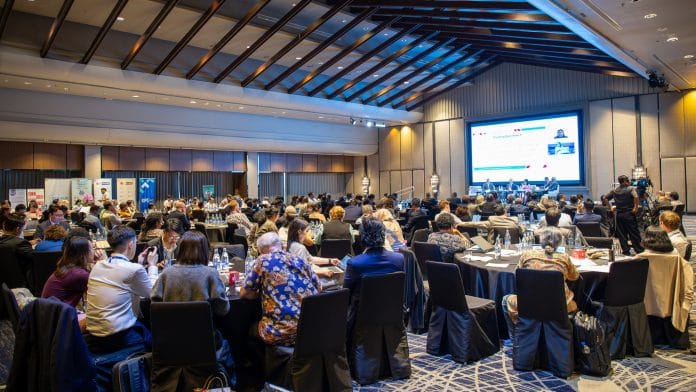
In June, SAARC, together with UNICEF, the World Health Organization and the UN Special Representative of the Secretary-General on Violence Against Children, convened a South Asia Ministerial Conference on Ending Violence Against Children in Colombo. Ministers and officials discussed strengthening child-protection systems, prevention, reporting mechanisms and cooperation among health, education, justice and social-welfare institutions.
The significance of that meeting goes beyond the subject itself. At a time when SAARC’s wider political agenda remains constrained, its members came together around a common human concern.
Sri Lanka itself offers practical examples that could be shared more widely, including its emerging child-friendly justice model and the training of police officers assigned to Women and Child Desks. These initiatives reflect the broader recognition that effective protection requires not only laws, but also trained personnel, survivor-sensitive institutions and better coordination between agencies. Such experiences need not remain national initiatives; they could become part of a South Asian exchange of what works.
The question now is whether such cooperation can be given continuity and political ownership.
Also read: India’s Gen Z is fighting, not praying. Why its protests are bigger than politics
A South Asia Compact for protection
The answer is not to create another South Asian institution. The region already has enough institutions and declarations. Rather, existing mechanisms should be brought together under a sustained SAARC political commitment.
A South Asia Compact for the Protection of Women and Children could provide such a framework.
Each member state could identify a limited number of practical commitments relating to prevention, reporting, victim support, access to justice and child protection. Progress could then be reviewed annually by SAARC ministers.
The purpose would not be to name and shame individual countries or impose one country’s laws or social model on another. It would be to create transparency, encourage learning and establish a shared South Asian commitment to protecting women and children.
A permanent South Asian network could also bring together police officers, prosecutors, judges, educators, social workers and child-protection specialists to exchange experience.
South Asia is extraordinarily diverse, but its countries confront many of the same problems. Some have developed effective approaches in particular areas; others have lessons to learn from failures. There is little reason why such experience should remain confined within national borders.
Trafficking, sexual exploitation and the online abuse of children increasingly cross borders. No country can deal effectively with every aspect of these problems in isolation. Better information-sharing and cooperation between relevant authorities could therefore give SAARC a practical role beyond political symbolism.
None of this requires a supranational authority.
The principle should be simple: not one South Asian law, but a shared South Asian commitment to protecting women and children.
This is also where the region’s civilizational heritage becomes relevant—not as a claim that South Asia has always treated women and children well, but as a challenge to live up to the values it frequently invokes.
South Asia celebrates its ancient traditions, religions, literature, philosophy and great centres of learning. But a civilisation is ultimately tested not only by the monuments it leaves behind or the wisdom contained in its texts. It is also tested by how it treats those who are most vulnerable.
The protection of a child from abuse or a woman from violence is therefore more than a contemporary human-rights obligation. It is a test of whether our societies are translating their professed values into everyday life.
An organisation does not justify its existence merely by surviving. It justifies itself by helping its members address problems that are difficult to solve individually.
SAARC may not be able to resolve South Asia’s political disputes or overcome the strategic differences that have paralysed much of its wider agenda.
But it could still do something useful.
It could provide a platform where South Asian countries set aside their differences over borders, security, trade or geopolitics, and take on the common responsibility for the protection of women and children.
If that commitment produced measurable improvements in their lives, SAARC would have achieved something more meaningful than another summit or declaration. It would have demonstrated that regional cooperation can still work when there is a shared human purpose.
South Asia does not have to agree on everything to cooperate on something that should matter to everyone.
The safety and dignity of its women and children could be that starting point.
And in doing so, SAARC might find not merely a new programme, but a renewed reason to exist.
Milinda Moragoda is a former cabinet minister and diplomat from Sri Lanka and the founder of the Pathfinder Foundation, a strategic affairs think tank. Views are personal.
(Edited by Ratan Priya)
SAARC isn’t dormant because of a minor misunderstanding; it’s dead. The dead better stay dead.
Sharing intelligence on child trafficking, extradition, police-to-police coordination, and social safety networks can be (and is infact) handled through bilateral treaties, BIMSTEC, or direct UN/UNICEF frameworks. Basically, the legal, institutional, and police mechanisms to combat trafficking already exist.
So, whatever you are pitching already happens. India doesn’t need to resuscitate a defunct entity under the guise of ‘humanitarian goodwill.’ SAARC is dead. Bury it, move on.