



Bangladesh faces a national security nightmare. Who imported 405 tonnes of sodium perchlorate into the country, and why were millions of blank SIM cards travelling aboard the same suspicious vessel?
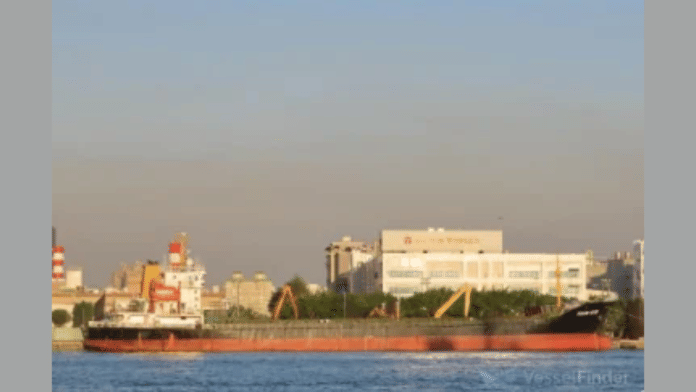
A disturbing maritime incident in Southeast Asia has suddenly placed Bangladesh under an uncomfortable international spotlight. On 7 November 2026, the Indonesian Navy intercepted the Comoros-flagged cargo vessel MV Star Line off Belawan, North Sumatra.
The ship departed from China’s Lianyungang Port on 12 September, and tracking platforms such as VesselFinder listed Mongla Port in Bangladesh as its final destination. What Indonesian naval personnel subsequently discovered was extraordinary: 405 tonnes of sodium perchlorate, distributed across 15 containers, alongside millions of blank 4G LTE SIM cards carried on 54 pallets.
The Indonesian Navy publicly disclosed the seizure on 20 November 2026. The vessel had reportedly attracted attention through suspicious movements detected by the SeaVision maritime surveillance system. Its registration status was suspended, while irregularities in its documentation raised further concerns. The ship was subsequently detained for investigation.
This is no ordinary shipping irregularity. It is a question of national security that demands immediate answers.
Sodium perchlorate is a powerful oxidising chemical with legitimate industrial and laboratory applications. It also has specialised uses in rocket-propellant production and certain explosive formulations. Crucially, it is not itself a missile or an explosive. Its potential military applications, however, make the transportation of such an enormous quantity a matter of legitimate security concern.
According to Indonesian naval assessments, the seized consignment could potentially support the manufacture of materials for as many as 100 missiles. That estimate should be treated as a preliminary military assessment, not an independently established production calculation. Nevertheless, the scale of the shipment demands scrutiny.
The central question is, why was such a strategically sensitive chemical being transported to Bangladesh in this quantity?
Questions abound
Bangladesh has legitimate industrial requirements for specialised chemicals. Sodium perchlorate may have lawful industrial applications, and its presence aboard a commercial vessel does not automatically establish military intent. Yet the government must explain whether the consignment corresponded to any verified industrial demand, who authorised its importation, who financed the transaction, and who was named as its ultimate recipient.
The accompanying discovery of millions of blank 4G LTE SIM cards makes the mystery even more compelling. Telecommunications equipment is not inherently suspicious, and blank SIM cards have legitimate commercial uses. But their simultaneous transportation alongside a massive consignment of strategically sensitive chemicals raises questions about ownership, customs declarations, regulatory compliance, and the relationship, if any, between the two shipments.
Were these unrelated commercial consignments? Was Bangladesh merely the declared destination? Could the country have been considered a transit point for onward transportation elsewhere in the region?
Equally troubling is the nearly two-week interval between the interception on 7 November and the public disclosure on 20 November. Indonesian authorities have not established reasons for this delay publicly.
An investigation involving hazardous chemicals, questionable registration, and potentially sensitive cargo understandably requires operational discretion. Nevertheless, transparency about the timeline and the subsequent investigation is essential.
The historical record offers sobering lessons. In May 1988, the PEPCON disaster in Henderson, Nevada, involving approximately 4,500 tonnes of ammonium perchlorate, killed two people and injured more than 300.
In April 2025, a catastrophic explosion at Iran’s Bandar Abbas port killed and injured hundreds. Investigations and expert assessments raised questions about improperly documented and stored hazardous chemicals, including possible perchlorate involvement. These incidents are not chemically or operationally identical to the present shipment, but they demonstrate the devastating consequences of inadequate oversight.
Also read: If elected people lack integrity, Constitution can’t help the country—Rajendra Prasad’s 1949 warning
Reach out to China, Indonesia
For Bangladesh, the implications extend beyond customs and commercial regulation. The Bay of Bengal occupies an increasingly consequential position in Indo-Pacific geopolitics. Mongla is an important maritime gateway. Any attempt to exploit Bangladeshi ports, shipping networks, or commercial channels for undisclosed strategic purposes could expose the country to diplomatic complications, international suspicion, and serious security vulnerabilities.
Bangladesh must never become an unwitting instrument in someone else’s geopolitical calculations.
The government must immediately establish an independent, transparent investigation involving the National Board of Revenue, Bangladesh Customs, the Department of Explosives, the Ministry of Shipping, intelligence agencies, and relevant maritime authorities. The Import General Manifest, bills of lading, certificates of origin, hazardous-cargo declarations, insurance records, financial transactions, and ultimate beneficial ownership must be examined.
China, too, should be requested through appropriate diplomatic channels to clarify the identity of the exporter, the declared purpose of the shipment, and the commercial parties involved. Above all, the Indonesian investigation must be respected and its findings obtained through formal cooperation.
National security concerns must not be buried beneath bureaucratic silence. The most important question is not simply what was aboard the MV Star Line. It is who was expecting it in Bangladesh, who stood behind the transaction, and what purpose this extraordinary consignment was intended to serve.
A sovereign nation cannot afford to remain ignorant of what enters its ports in its name. Bangladesh must demand the truth.
Anwar A Khan is a Bangladeshi freedom fighter of 1971 and an independent political analyst based in Dhaka. Views are personal.
(Edited by Prasanna Bachchhav)