




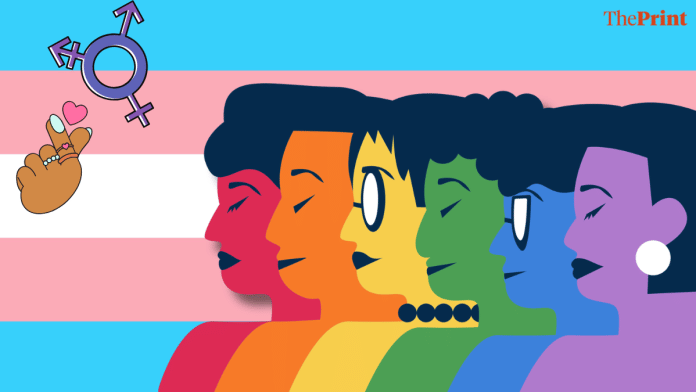

Were the transphobic slogans and placards used at the recently-concluded Cockroach Janta Party-led protest merely an attack on the loud masculinity of those in power? That is the argument from those who think queer people are ‘wokefying’ the matter.
The protest at Jantar Mantar was largely a boys’ club. A colleague remarked that she had never seen such low numbers of women at a protest. While the women who attended declared—with surprise and wonder—that they’ve never felt this safe, a byproduct of the overwhelming testosterone was that femininity and transphobia became a weapon to be deployed against the State.
As for the queer participants, the picture is mixed. Some protesters I talked to said they were met with nothing but open acceptance, while others said they faced jokes and taunts. Trans people were celebrated in the reels, and yet, their identity was a slur belted from the throats of jubilant men.
Am I ‘cancelling’ the CJP protests, then? That’s what a commenter said when a colleague called out the use of saris and bangles to mock former education minister Dharmendra Pradhan and Prime Minister Narendra Modi.
But I read the protesters’ transphobic language as proof that the movement doesn’t quite realise the mismatch between its words and actions. Demonstrators vehemently claim that their fight is not ‘political’, but their actions are the very definition of the word. Within the space of the protest site, men treated women and queer people as what they were: fellow citizens registering dissent. But the words that made it to chants, memes, and online comments were informed by the same old models of oppression that regulate the world outside of Jantar Mantar.
Also read: Indian drag scene is a messy place—and yet full of possibilities
The price of virality
From the very start, the CJP movement had an ambiguous relationship with the queer community. Certified transphobe Vijeta Dahiya was chosen as a spokesperson and was retained even after criticism from the LGBTQ+ community. When three trans persons, who attended the first protest, faced hate and ridicule online, fellow demonstrators were sluggish to rally around them. It was after videos by Ujjwal Singh and Harshit Singh gained traction that the CJP addressed their concern and welcomed them onstage.
Virality was the currency with which trans people bought a ticket to this protest. They were the latest “wild card entry”. Videos of hijra folks marching with calls of “Murdabad, murdabad” were widely shared. Content creators strived to shove their miniature mics in the faces of transpersons for a share of the pie.
On a random night during the protests, three hijra persons were happily watching the narebazi at 1 am, when a group of men (sweetly, politely) asked them if they could shoot a video. They refused, saying their makeup wasn’t at its best. As the men walked off, so did the trans trio—away from the crowd.
Fellow protesters wanted trans women to say the most outrageous, vulgar slurs for those in power—and on camera. It made for great views. They wanted this brand of naked dissent, but wouldn’t dare utter such words themselves. The trans queens were often happy to oblige. But now, they are paying the price for it.
Also read: Queer protesters refuse to be a meme. Armed with painted nails & defiance
Harassment for support
In a reel posted Thursday, creator Junaid Khan asked a queer person if they had been beaten on 20 July. “Why would he beat me? I would skin him if he touches me,” they replied in Hindi. They were referring to Prime Minister Narendra Modi.
The comments declared them a diva, sweet, and “a real rebel”. “Now the resignation will definitely come,” said one commenter.
The person featured in several videos by various content creators that day. More than one went viral. One of their lines even made it to placards. Now, they are requesting everyone to take down the videos as they are facing harassment.
“Modiji sorry, I called you such names. And I would like to add that it’s not my fault. There were many people there, everyone was cursing you,” they said in Hindi.
Vaivab Das, founder of Indradhanu, the lgbtqia+ collective of IIT Delhi, posted in an Instagram story Sunday that queer students are now being singled out by mobs near the Jantar Mantar protest site.
“We are addressing one such instance right now. If there are any other trans/queer persons who have found their video online that was taken without their consent… do let us know,” they wrote.
The student movement benefitted from the reach queer protesters offered. It has succeeded in making the government listen. Now, it is time to stand by the marginalised communities who extended support and solidarity.
The youth must turn their eyes toward the hospitals where injured protesters are being treated and the police stations where the kin of Muslim demonstrators are being targeted.
And the next time trans people protest against the Trans Amendment Act, I’d better see every young man who put Dharmendra Pradhan in a sari for a laugh there. They won’t need to invent any more creative slogans, either. After all, queer people aren’t afraid to ask for “Azadi”.
Views are personal.
(Edited by Theres Sudeep)
ThePrint is indeed an unique media platform.
The journalists are a bunch of triggered woke activists.
Ms. Karanjeet Kaur is obsessed with the tiny state of Goa and keeps cussing all outsiders who enter/stay in Goa. Her name suggests that she herself is not of Goan origin.
Similarly, Mr/Ms Prasanna Bacchchhav is obsessed with trans and queer people. No matter what the topic is, s/he will find a way to insert the trans/queer issue and come up with a list of grievances – at times bordering on anguish.
And the master of all is Mr. Vir Sanghvi – he is just a duplicate of Arnab Goswami. He is to the Left-liberal cabal what Arnab is to the Right-centre cabal..
And so large hearted is Mr. Shekhar Gupta – he is happy to accommodate them all.
Unfortunately, the platform is losing it’s credibility by allowing a bunch of loonies vent their frustrations.