






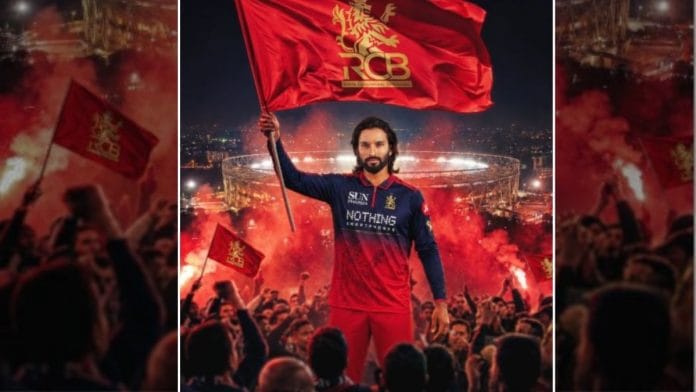


Rajat Patidar is the real ‘Dhurandhar’ of Royal Challengers Bengaluru. From entering the squad as an injury replacement in the 2022 season to becoming a two-time IPL-winning captain, his rise is a cricketing fairytale.
Call it a Midas touch. Call him RCB’s lucky charm. Call it destiny, finally answering the prayers of RCB fans. Whatever the explanation, the Indore right-handed batter has achieved what some of the biggest names in cricket could not.
RCB spent nearly two decades searching for the formula. The franchise had icons, superstars and generational talents. It had the aggression of Virat Kohli, the tactical mind of Anil Kumble, the experience of Daniel Vettori and the unmatched brilliance of Chris Gayle and AB de Villiers. But the trophy cabinet remained empty.
And then came a player who hasn’t played a single T20 international. With his poker face and calm temperament, Patidar first ended RCB’s 18-year wait for a title in 2025 and then defended it.
Even former Indian cricket legend Sunil Gavaskar largely credits Patidar’s captaincy for the back-to-back wins.
“RCB winning the Indian Premier League (IPL) for the second time did not come as a surprise at all…it was the captaincy of Rajat Patidar that got the team to gel in a manner that was befitting of a champion team. They were not dependent on any one player, and the fact that eight different players from their team won the ‘Player of the Match’ award in the tournament shows that,” he said.
Like MS Dhoni and Rohit Sharma
Four years ago, Patidar announced himself to the cricketing world with a century in the IPL playoffs, becoming the first uncapped Indian batter to score a hundred in the knockout stages. On Sunday night, even though his own contribution with the bat, 15 off 13 balls, wasn’t much, he added something far more valuable to his resume: the legacy.
With the victory against the Gujarat Titans, Patidar has now joined an elite list. He has become only the third captain in IPL history to win back-to-back titles, like MS Dhoni for Chennai Super Kings and Rohit Sharma for Mumbai Indians.
But unlike Dhoni and Rohit, Patidar didn’t have the aura of being a cricket giant. The last time Patidar played for India was in early 2024. He was dropped after a disappointing Test stint against England at home and soon disappeared from national-team conversations altogether. Then came IPL 2025. He scored 312 runs with a 143.78 strike rate, followed by 486 runs at a strike rate of nearly 197 this season.
That is what makes RCB’s decision to appoint him captain in 2025 look so visionary in hindsight. It was a big gamble.
Also read: J&K pacer Auqib Nabi deserves to play Afghanistan Test. BCCI has left him out in the cold
The humble boy from MP
Patidar wasn’t a superstar. He didn’t possess the larger-than-life personality usually associated with IPL captains. Most people who don’t follow domestic cricket weren’t even aware of who he is. But RCB bet on him.
When they had asked Patidar to identify the team’s biggest issue, he simply said, “RCB needed a stronger pace attack.” For Mo Bobat, Andy Flower, and the RCB think tank, it was one of the first signs that Patidar possessed the clarity required to lead.
His leadership style has never been loud. Even on the field, he does celebrate but never aggressively. There are no dramatic speeches or headline-grabbing statements. His post-match interviews are also grounded. After winning the IPL title for the second time, all he had to say was: “Ee Sala Cup Namdu!”
Patidar’s greatest strength was and remains his composure.
Teammates often describe him as calm to the point of being unreadable. Venkatesh Iyer, who has known him since their days playing club cricket in Indore and later played under him in domestic cricket, once shared a glimpse of this.
Ahead of the IPL 2026 auction, Iyer repeatedly tried to find out whether RCB planned to bid for him. Patidar refused to give away even the slightest hint.
For years, the franchise carried the weight of expectations, hype and heartbreak. Patidar stripped away the noise. He brought clarity and simplicity to the squad.
RCB spent 18 years looking for their messiah. Ironically, he wasn’t a global superstar or a cricketing icon. He was a quiet batter from Indore with a straight bat and an extraordinary ability to win.
(Edited by Saptak Datta)