







Twenty-nine years after her death, Princess Diana remains one of the most influential women in the world, and especially on the internet. Which is remarkable because she never had an Instagram account, never posted on TikTok, and never launched a beauty or clothing brand. Can you imagine Princess Di requesting people to “like and subscribe”?
In an era before influence came to be measured in social media followers, engagement rate, and viral moments, Diana achieved something far more difficult. She managed virality wherever she went in the pre-internet world.
This was fame in its purest form, or as I like to call it, “real fame”.
Today, fame is manufactured. Celebrities can trend worldwide because our algorithms decide they should. Diana became a global obsession because people couldn’t look away. She wasn’t just the people’s princess; she was the original influencer.
Long before people hired “image architects”, Diana understood something fundamental: people don’t connect to perfection; they connect to stories. She knew how to tell hers.
Take a look at her fashion. Today, influencers communicate through carefully curated outfits and subliminal messages in their social media posts. Diana was doing that decades before social media. Every outfit said something.
Her wedding dress announced the arrival of a fairytale princess. The off-duty sweatshirts and biker shorts made royalty look effortlessly chic and surprisingly approachable.
And the lonely, forlorn princess sitting alone, head tilted against the Taj Mahal. She knew the power of the image and its power to manipulate.
Power of the camera
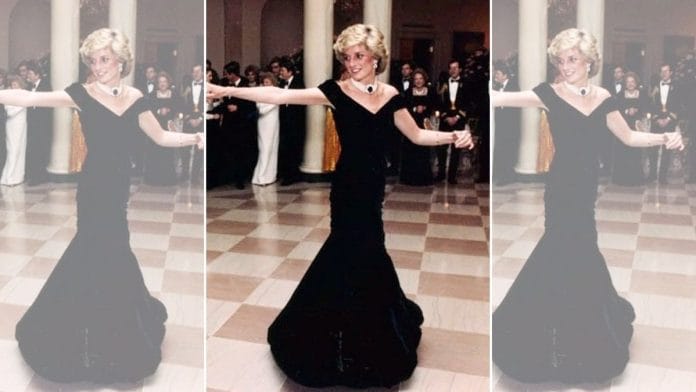
Then there was the dress. The Revenge Dress.
On the very evening Prince Charles publicly admitted to infidelity, Diana stepped out in a daring off-the-shoulder black dress that broke royal protocol and instantly became fashion history.
If that happened today, the internet would have collapsed under the weight of the discourse. There would have been thousands of sponsored videos, think pieces, reaction clips, and people explaining the symbolism. Knock-offs would flood the market. But Diana delivered it without a statement.
Most people remember her as a victim of relentless paparazzi attention. She definitely endured an unimaginable level of intrusion. But she also understood the power of the camera, perhaps more than anyone in her generation.
Diana knew that a photograph could travel farther than any speech. She knew that an image would make people pay attention. Whether she was shaking hands with an AIDS patient, at a time when misinformation and fear were rampant, or walking through active minefields in Angola, Diana used visibility as a tool. Today, we call it “using your platform”.
Diana’s biggest talent was what many influencers today spend years trying to cultivate: a brand.
She was a princess, but somehow still felt real. Glamorous but vulnerable. She walked in palaces and yet talked about her struggles with loneliness, motherhood, and the burden of a failing marriage. She danced with John Travolta but kept it real by taking her kids to eat McDonald’s in carefully constructed casualness.
She spoke about her eating disorder; the crowded marriage she was trapped in; how she wanted to be a queen of people’s hearts; and about how she constantly feared for her life. She knew what stories would go viral and pull at the heartstrings.
Millions of people felt they knew her. They didn’t, of course. But that’s the whole basis of influencer culture: the feeling of intimacy and connection between the audience and a public figure.
Also read: Mamdani and Abdul El-Sayed are alike. They’re making progressivism cool, likeable
What influence could mean
Diana mastered the parasocial relationship before anyone had a name for it. And nowhere was it more evident than in the aftermath of her death. On 31 August 1997, the world lost a dear one, not a princess of a distant country.
The public grief was unprecedented. Flowers flooded the gates of Kensington Palace and other royal residences. Tributes stretched for miles. More than 60 million flowers were reportedly left in her memory, creating a sea of mourning unlike anything Britain had ever witnessed.
People cried for someone they never met. They stood in line for hours, wrote letters, and mourned as they would a family member. The difference between her and other influencers is that her connection felt earned. And maybe that’s why she continues to influence even decades later posthumously.
Gen Z, a generation born a decade after her death, has embraced her as an icon. Hailey Bieber recreated her looks in an entire photoshoot. Fashion brands still reference her style. Designers still cite her as inspiration.
How many people, dead or alive, can claim that influence? That’s not a celebrity, but a legacy. We have diluted the word “influencer” to someone who can convince strangers to buy a skincare serum or do dance trends. Diana reminds us that influence could mean more than earning attention. It could change behaviour, perceptions, and conversations. She used fashion to communicate, vulnerability to connect, and fame to advocate.
But 29 years after her death, people still discuss her style, study her choices, analyse her interviews, and draw inspiration from her compassion. Princess Diana remains the blueprint.
Views are personal.
(Edited by Prasanna Bachchhav)