



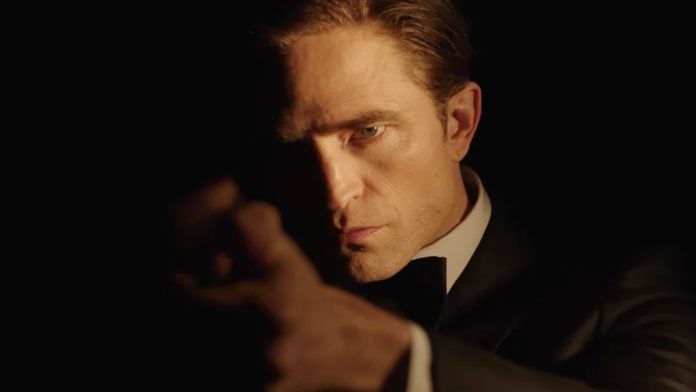
With Robert Pattinson being chosen as the next James Bond, the hope of finally getting a person of colour to play 007 has taken another hit. But it is about time we got one. We need a Bond who can blend into the countries he is sent to on missions, rather than one who looks like he has stepped straight out of a country club.
Ian Fleming wrote Bond based on what he had seen while in the British Naval Intelligence service during the Second World War. But that was a long time ago. The world has changed, and so have the wars and conflicts shaping it. Some of the biggest geopolitical fault lines today run through the Middle East, Israel-Palestine and Afghanistan.
Bond’s world is no longer the one Fleming knew. So why does the face of the world’s most famous spy have to remain stuck in it?
In the films, Bond has travelled across India, Japan, Turkey, Afghanistan and several other countries, but the world has rarely been allowed to travel back with him. These countries have provided the locations, cultures and conflicts for his missions, while the protagonist has remained largely unchanged.
Bond carries the white man’s burden: he is a British man travelling the world and taking charge of unfamiliar territories.
Sean Connery was Scottish, while Pierce Brosnan was Irish, and both became iconic James Bonds who audiences readily accepted. So why shouldn’t an Asian actor, or a British actor of colour, play the character?
The conversation around Idris Elba showed just how uncomfortable the idea of a non-white Bond can make people. When the possibility of him playing the character became a discussion about race, the actor admitted that he was turned off by the idea.
In a podcast, he also spoke about how flattered he had been when his name first came up in the conversation, saying it made him feel as though he had reached the pinnacle of his career.
“Those that weren’t happy about the idea made the whole thing disgusting and off-putting, because it became about race. It became about nonsense, and I got the brunt of it,” he said.
Fleming’s Bond was never meant to be a fixed face
Ian Fleming never gave James Bond a detailed physical identity that ruled out actors of other races. In 1962, he told The New Yorker that Bond was “an extremely dull, uninteresting man to whom things happened”.
His description of Bond as having “dark and cruel good looks,” resembling American musician Hoagy Carmichael, also left room for interpretation. It was cinema that gave Bond the familiar face audiences recognise today.
“When I was casting about for a name for my protagonist, I thought, My God, that’s the dullest name I’ve ever heard, so I appropriated it. Now the dullest name in the world has become an exciting one,” he said.
Cinema evolves by reinterpreting written characters. Christopher Nolan’s casting of Lupita Nyong’o as Helen of Troy is one example of how filmmakers can challenge established visual expectations.
Gil Junger’s 10 Things I Hate About You (1999) reimagined Shakespeare’s The Taming of the Shrew, turning Kate from a woman who is tamed into an independent, outspoken feminist who refuses to conform. Similarly, Vishal Bhardwaj’s Haider (2014) transplanted Shakespeare’s Hamlet to insurgency-hit Kashmir in the 1990s, reshaping its characters through the region’s political trauma.
Literary characters need not be confined to how generations of readers have imagined them. If cinema can reinterpret characters from centuries-old epics, why should James Bond remain untouched?
Also read: James Bond’s Omega legacy faces a challenge from Pattinson’s Jaeger-LeCoultre deal
Who could be the next Bond?
Omar Sy, particularly after his performance in Netflix’s Lupin, has the charm, intelligence, and resourcefulness needed to play a modern-day Bond. Riz Ahmed and Dev Patel are also strong contenders. If the makers insist on casting a British actor, both Ahmed and Patel bring British and South Asian heritage to the table.
Lee Byung-hun, known for Squid Game, has the quiet intensity and composure that could offer a different take on Bond. And for martial arts fans, Donnie Yen’s portrayal of Ip Man showcased his screen presence and fighting skills, qualities that could bring a new level of physicality to the role.
At the very least, I want a Bond who looks like a spy and not a looksmaxxing influencer who has accidentally walked into an intelligence operation. Bond is supposed to be a spy who can disappear into any crowd, yet cinema has spent six decades making sure he looks like the most recognisably British man in it.
And if things continue this way, the next Bond might be hired for his sharp jawline.
(Edited by Maryam Hassan)