




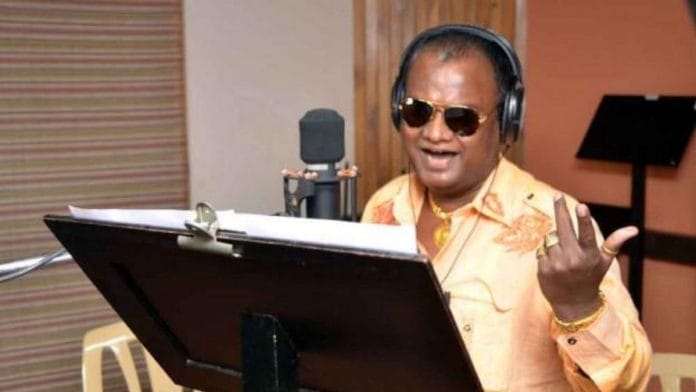

Marathi Gen Z is rediscovering its raunchy roots on Instagram. It started with creator Ayush Jagtap posting reels lip-syncing to old racy hits by singer Anand Shinde. Make no mistake, these are no disgusting rap songs. While the lyrics are always mischievous, they use metaphors and imagery to conjure up a plethora of sexual innuendo.
In one instance, the man politely asks the woman to put her pot under the tap before it spills everywhere. In another, he says that ever since a mynah next door started singing, his parrot has started talking fluently. The horniness comes dressed in art.
“Miss neighbour, please let my two boys watch your TV
At least let Babu in, you can keep Gotya outside.”
These are the lyrics in one of the earliest Anand Shinde reels posted by Jagtap. In the song, the children’s names correspond to Marathi slang for male genitalia.
“Bro, if you want a crazy vibe, I’d suggest you listen peak Anand Shinde bro,” the young creator said in the video.
It got over 24 lakh views, and the comments were filled with skull emojis, laughs, fire icons, and lyrics of other bangers by Shinde. The trend soon picked up, with people posting videos with songs by other artists.
In a recent reel, creator @nustekide_ played ‘Shahir Ektach Bhosaricha’, which plays on the unfortunately named Bhosari suburb in Pimpri-Chinchwad. One creator humorously framed Shinde’s ‘Shejarin Bai Tumcha TV’ as discussing a father’s love for his son. And Jagtap has been posting a non-stop spree of lip-syncs to Shinde bangers.
The fall of Marathi pride
The trend shocked artist Nikky Kapre.
“Bro, the innocent me thought that us Maharashtrians have the most innocent, the most cleanest songs ever. What the hell is this?” she asked in a reel that featured Jagtap’s video on ‘Shejarin Bai Tumcha TV’.
Her question is natural for the section of Marathi people who assumed all they had in the name of culture was the sanitised, upper-caste aesthetics gushing out of Pune. My generation grew up in a time when Dada Kondke, a film star who ruled Marathi cinema on the power of double entendre, had been reduced to a fond memory brought up once a year at award shows. The era of risque jokes in movies led by Bharat Jadhav and Makrand Anaspure was over, and filmmakers were attempting to breathe life into a struggling industry by siphoning stories straight from the glorious tradition of Marathi theatre.
For a long time, people from outside of Pune hesitated to claim regional icons, and Marathi asmita — in the realm of Instagram stories and posts — which was intimately tied to ukdicha modak, Natyasangeet, and Padwa Pahat. Sadly, this version of Marathiness had about as much flavour as varanbhat-ani-metkoot, and as a result, the pop culture space in the state gradually gave way to Bollywood.
To be fair, it wasn’t the Brahminisation of the creative industry alone that resulted in the fall of Marathi pride. In my family, my sister was the last child to attend a Marathi-medium school. Every cousin who came after her attended ‘convent schools’, which at the time simply meant English-medium institutions to Marathis. They grew up learning in English and speaking Hindi with their classmates. The markers of Marathi identity didn’t have much of a fighting chance.
Also read: Kriti Sanon deserves better roles. She is more than just a hot, messy, emotionally bruised woman
An imbalance
If the recent trend is anything to go by, regional Marathi subcultures are beginning to assert themselves. Singers such as Shinde, once relegated to a marginal position on the cultural landscape, are now an undeniable part of the Marathi mainstream. Attend any wedding in Nashik, and you’ll hear Ahirani songs, once abandoned by speakers of the dialect in their pursuit of class.
There is, however, a slight discomfort in me over some of the lyrics. And it’s not the raunchiness; I adore the younger generation’s disregard for modesty, propriety, and respectability. But with every new song picked up by an eager Gen Z come newer descriptors for women’s bodies. While the sexual innuendo is almost always mischievous and never crude — or aggressive as some Hindi-Punjabi-Haryanvi rap songs tend to be — there is an inherent imbalance in the lyrics.
I am all for Marathi boys’ newfound love for Anand Shinde, but it would be quite a waste if the trend became the digital equivalent of drunk uncles dancing to racy numbers at a baraat.
Nisha Bhagat’s ‘Mi Baghat Basle Vaat’ is the lone song by a woman that currently occupies this horny reel space. I hope more are found, and if they don’t exist, they get made. We need a Cardi B(ai) of our own to balance the ecosystem.
Views are personal.
(Edited by Aamaan Alam Khan)