




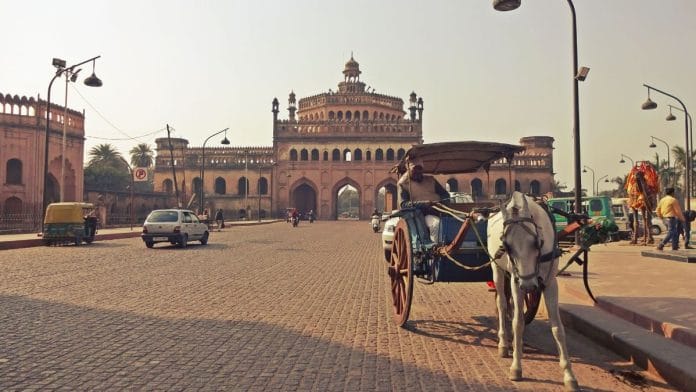

Lucknow is officially clean. Someone should probably tell Chowk. The City of Nawabs has scored 198 out of 200 in the 2026 Swachh Vayu Sarvekshan, edging out Indore by just one point among Indian cities with a population above 10 lakh.
Electric buses, electric waste-collection vehicles, mechanised road sweepers and scientific waste processing have given Lucknow something to celebrate: cleaner air and a civic-cleanliness effort that is clearly working.
But there is another Lucknow that does not appear quite as spotless on paper. It begins where the wide boulevards give way to narrow lanes, where the green belts disappear and the garbage bins overflow, where a pothole can be as much a part of the landscape as a centuries-old building. This is Purana Lucknow: Chowk, Nazirabad, Akbari Gate and the neighbourhoods that give the city much of its character and deserve much of its civic attention.
As someone born and brought up in Lucknow, I am delighted that my city has been recognised. But I cannot help but ask an inconvenient question: which Lucknow are we talking about?
A ranking can only tell you where a city stands. A walk through its lanes will tell you how it lives.
Parts of the city have changed dramatically, Gomti Nagar or Hazratganj in particular, its newer and better planned areas, wider and cleaner roads, regular cleaning drives, green belts, colourful walls and improved civic infrastructure often make it look like a different city altogether. Lucknow has cleaned up nicely. Just not everywhere.
Where the wide roads end
As we move across Hazratganj, crossing the King George Medical College, we enter Chowk, popularly known as ‘Purana Lucknow’. The narrow lanes of Chowk have overflowing garbage bins, littered lanes, clogged drains, and poorly maintained public spaces. Apparently, cleanliness has a preferred postal code.
The irony here is that the areas that form the cultural and historical heart of the city do not receive the same attention as its newer neighbourhoods. As a Lucknowi, cleanliness is not just about cleaning the parts of the city where VIP movements happen or where the well to do people live; it is about the narrow lanes of Chowk or Nazirabad, the streets around the market, the drains, the waste lying beside roads, and whether garbage collection actually reaches every locality where we eat the most mouth-watering food.
If Gomti Nagar looks like Lucknow’s carefully ironed shirt, purana Lucknow is where you find the creases.
For instance, if I am sitting at Tunday Kababi in Nazirabad, I don’t want to step out of the restaurant and put my foot in a pothole. If I am eating Kulcha Nihari at Mubeen’s in Akbari Gate, I want to smell the aroma of the nihari, not a garbage dump.
For a Lucknowi, cleanliness is not just about how a major road looks. It is about the narrow lanes of Chowk, the streets around Gol Market where we stand and eat the creamiest makkhan, the collection of waste lying beside the roads of Nazirabad where we go to shop for our most perfect chikan kurtis.
Also Read: 16 UP cities feature in national clean air rankings; Lucknow tops list
A truly clean city
A city cannot truly call itself clean if cleanliness is concentrated in select areas while other residents continue to live amid litter and inadequate civic infrastructure.
A city famous for its tehzeeb (etiquette) should perhaps extend some of that courtesy to its pedestrians.
Locations like Dalibagh, Purania Road in Aliganj, and Gokaran Nath have stagnant water collection on roads followed by potholes, adding to sanitation concerns. This has led to reduced usable roadside space, forcing pedestrians and cyclists to move around the waste. Lucknow taught the country pehle ‘aap’ (after you). Its drains and garbage seem to have learnt pehle ‘tum’.
The ranking should not be dismissed. Lucknow does have cleaner air to breathe; part of my city surely is very clean, but I would want to see the other part clean too. It should be seen as an achievement, and, perhaps more importantly, as a benchmark.
Lucknow has shown that it can improve. Now the challenge is to make that improvement consistent.
Edited by Maryam Hassan