



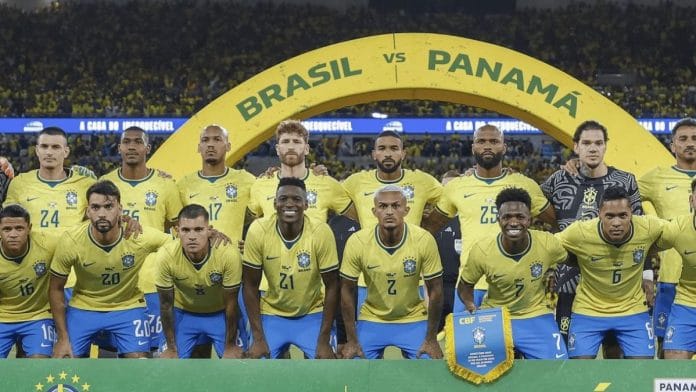
With the FIFA World Cup knocking at the door, Brazil routed Panama 6-2 in the last warm-up match on their home turf. While it didn’t come as a surprise to the world, Brazil’s thumping win tells a different story. It gives hope to the football fans who have been desperately waiting for the team to make a comeback.
Nobody says they miss flawless and technical football. You can only hear, “I miss the old Brazil.”
That is what makes Brazil different from every other national team in world football. Apart from winning games, fans across the world want Brazil to feel like Brazil again. They want the yellow shirts, quick dancing feet, daring lateral passes, the Samba moves, and the feeling that something unexpected can happen till the final whistle is blown.
Arrival of Don Carlo
In the 2026 FIFA World Cup, football is yet again looking at Brazil with hope and fear. The team failed to dominate recently, though it has some of the best stars of modern football. Then arrived Italian coach Carlo Ancelotti. And, suddenly, that hope among fans revived. Football itself becomes more enjoyable when Brazil performs.
Brazil’s problem over the last two decades has been about who they are. It’s about their identity. The country keeps producing stars. And this year too, Vinicius Junior, Rodrygo, Raphinha, Endrick, Alison and others show that talent is still flowing through the system. But, somewhere down the line, these players try to fit into a club football-like system, which Brazil has always denied.
Brazil won its last World Cup in 2002. Since then, there have been flashes of brilliance but no lasting feeling that this is the Brazil the world grew up admiring. There have been quarterfinal exits, disappointing campaigns, and constant changes in playing styles. The team often looked caught between different ideas. They were confused about the kind of football the team should play.
This confusion was best captured in the 7-1 defeat against Germany in the semi finals of the 2014 FIFA World Cup. That loss changed how people saw Brazil. The country that once terrified opponents with confidence suddenly looked fragile under pressure.
More than ten years later, that shadow still exists.
Football has changed since Brazil ruled the world. The modern game rewards structure, pressing systems, and tactical discipline. Players leave South America younger than before. Many players are trained in European youth academies. National teams spend less time together.
Yet this is exactly why people still look toward Brazil.
Modern football is faster and smarter. It is also more controlled. Teams press in similar ways. Coaches study the same patterns. Positional play dominates elite football. Matches are often decided by structure.
Brazil traditionally offered something different. The idea of Brazilian football was about freedom. It was about players expressing personality. Just take a look at Ronaldinho in 2002, the moves, the passes, the sheer dominance in the midfield!
Even people who supported rival countries often enjoyed watching Brazil because the team represented possibility. You watched because you expected a surprise.
That feeling has faded.
Also read: England’s FIFA World Cup squad is missing its stars. Why that’s a good thing
Patience and hope
This is where Don Carlo’s task becomes unusual. He has arrived to rebuild belief in the team and invoke the same in the system.
His biggest advantage is that players and fans trust him. Over decades in club football, Ancelotti has managed superstars with ease. He rarely forces players into rigid systems. He creates balance while allowing talent to breathe. That approach may suit Brazil more than endless tactical experiments.
There is, however, a danger in romanticising the past. The old Brazil is not coming back exactly as people remember it. Football does not work that way. The days of building teams around street football myths and nostalgia are gone. This generation grew up in a different football world.
Brazil now needs its spirit to be recovered. And, Ancelotti might just be the right person to do so.
The typical Brazilian team, where all eleven players were blessed with tricks and skills, will not come back. Fans do not want that either. They want a team that looks confident with the ball. They want players who attack with courage. They want a side that reflects the emotion attached to the crest on the yellow shirt.
Because football needs identities.
Argentina carries emotion. Germany represents efficiency. France combines depth with power. But Brazil’s role has always been different. Brazil reminds people that football is to be enjoyed from the heart. It’s a sport to be loved.
That is why so many neutral fans keep waiting for Brazil’s return.
The World Cup becomes bigger when Brazil starts to perform in the tournament. Rivalries feel larger. Expectations rise. The atmosphere changes. Football gains a sense of theatre that few teams can create.
At this point, Brazil simply needs to become Brazil again.
And football is waiting with patience, hope, and fear.
Views are personal.
(Edited by Aamaan Alam Khan)