




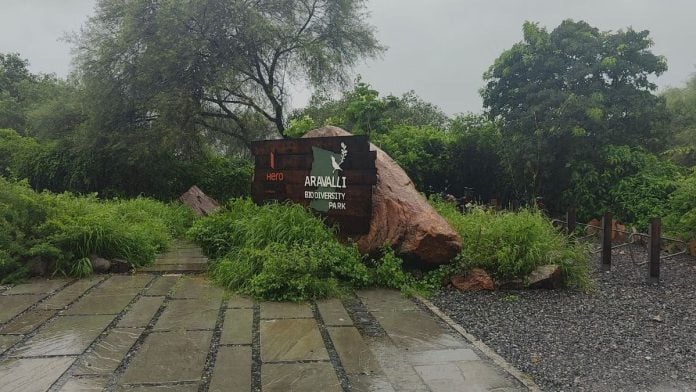

Parks in Delhi are little oases in a city that often feels like a concrete desert.
In the morning, they belong to the elderly—people who come out for their walks, conversations and routines. In the evening, they become a refuge for those who have spent the day working, raising children, managing households or simply trying to keep up with the pace of the city.
But the Delhi Government has now come up with what feels like the worst possible response to rising concerns around women’s safety—after sunset, parks with multiple gates will allow people to enter only through a few of them. This decision does more than simply shut a few gates. It changes a part of the everyday routine of thousands of people who rely on these spaces to walk, breathe, unwind and reclaim a little time for themselves after a long day.
The decision came days after the gang rape of a 17-year-old girl at Aastha Kunj Park earlier this week. By mid-September 2026, at least 13 cases of rape and sexual assault had been reported across Delhi and neighbouring areas according to a report published by ThePrint.
The DDA’s response was announced alongside other safety steps, including increased vigilance, CCTV cameras at the entry gates of parks and a wider safety audit. But the question remains — what happens when the first visible response to an unsafe space is to reduce people’s access to it.
Do the authorities think that such heinous crimes happen only after sunset? The list of such crimes that happen in broad daylight is endless. The Aastha Kunj case itself has brought attention to serious security gaps including poor lighting, inadequate patrolling, limited CCTV coverage, and lapses in security infrastructure inside the large park.
Why not make the park safer?
What exactly are we solving by allowing people to enter a park after sunset only through designated gates?
If a public space becomes unsafe because it is poorly lit, poorly monitored or insufficiently secured, shouldn’t the first question be how to make that space safer? Instead of addressing the conditions that allow crimes to go unchecked, the authorities once again are asking ordinary people—especially women—to adjust to those risks by changing their routines.
And that is where the larger concern begins.
Women already have little freedom over when and where they can go. How much smaller are we willing to make women’s lives in the name of keeping them safe? They already grow up with a never-ending list of instructions—where they can go, when they must return, whom they should be with, what they should wear and what they should avoid.
Now, instead of making public spaces safer, are we simply adding another restriction to that list? Are we really moving forward, only to push women back into an age where their freedom was defined by where they were allowed to go and when they were allowed to step outside?
Families worry about women travelling late. Going to evening colleges to study becomes a source of anxiety. Going to a movie, returning from work, walking through a market or simply being outside after a certain hour can come with warnings and restrictions.
If public authorities also begin suggesting that certain public spaces should not be used after sunset, where does that leave women who want to use those spaces as part of their ordinary life? The elderly woman who wants to sit in a park after her evening walk. The woman who gets home from work and wants to walk for half an hour. The mother who wants to take her children outside. The young woman who simply wants to sit somewhere green after spending the entire day inside an office.
For the government, safety cannot mean shrinking the spaces where women are allowed to exist. Such decisions already show that the authorities just want to avoid dealing with crimes that happen in public spaces instead of finding ways to make spaces safer.
I have seen this before
In 2024, while working on a story about women-only parks in Old Delhi, I saw another version of the same contradiction.
These parks were meant to give women a space where they could walk and sit without the discomfort of being watched, stared at or commented on by men. Yet men could still be seen entering or occupying parts of these spaces—sitting around, smoking, drinking or sleeping.
At the time, some parks had guards and some didn’t. Even in parks that had a guard, he was often nowhere to be found. When I asked some men why they had entered a women-only park they just looked at me and moved to another corner.
Instead of restricting the access of women to such spaces, should the authorities enforce existing rules and improve security measures?
Even in the Delhi Metro, women-only coaches exist alongside rules, guards and penalties, yet overcrowding and unauthorised entry remain recurring concerns. The answer cannot always be to create another restriction on how, when, or where women can travel.
Why are women responsible?
Behind this restriction on how people access parks, my mind still hears a loudest message: “Women are not allowed”. Perhaps it is because this is not the first time that, after a crime against a woman, the conversation has shifted towards questioning and restricting women instead of questioning the systems that were supposed to protect them.
We don’t even have to look too far. We have all heard of the Jamui case in Bihar, where a girl was harassed by a group of men while returning home with her friend “after sunset”. Yet, in the interviews with people around her, the questions were only focused on why she was out with a boy at that time. The conversation once again shifted from questioning the people responsible for the harassment to questioning the girl’s presence, choices, and timing.
Remember when West Bengal Chief Minister Mamata Banerjee faced criticism for remarks advising women to avoid going out at night? From politicians telling women not to step out at night to authorities now restricting access to parks after sunset, the message remains the same: “Change your behaviour, change your routine, stay inside. Nothing’s going to change for the criminals roaming out there.”