








It is fashionable for many to blame Donald Trump for so many of the bizarre developments emanating from the United States. I keep telling my friends that ad hominem attacks on Trump, who is a very peculiar person, ignore the fact that he is a symptom, not the problem. The problem is that the most powerful country in the world has political elites who are prone to dysfunctional actions.
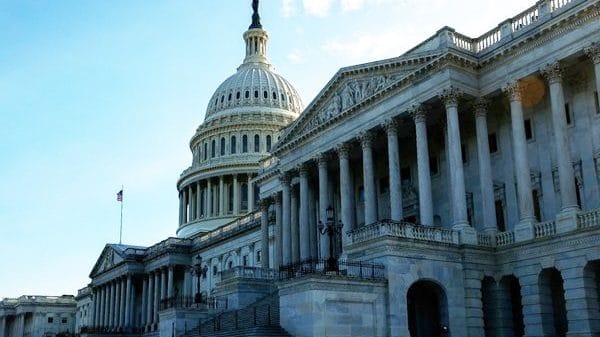
The US Senate—the upper house of parliament in the U.Ss., much more powerful and consequential than the Indian Rajya Sabha—has voted with a two-thirds majority to charge nations that import oil from Russia a tariff of 100 per cent on their exports to the US. But America’s founding fathers were clever. They made it quite difficult for any new law to be passed. So this one is going to have to wind its way through a complex constitutional labyrinth.
The tariff mania and the weaponisation of trade-related matters in unrelated affairs are not just a Trump phenomenon. Some 70 out of 100 US senators think that this is a good idea. What this writer found particularly comical was that the original Bill required a 500 per cent tariff. We are told by the great US media that so-called “moderates” prevailed and reduced the number to 100 per cent.
When Napoleon sanctioned Britain
It might be useful to look at events that happened more than 200 years ago. In October 1805, British Admiral Horatio Nelson defeated the French and the Spanish at the Battle of Trafalgar and decimated the navies of his opponents. Nelson effectively established British naval supremacy over the world’s seas for the next century. In the years preceding Trafalgar, he had defeated the Danish navy, while his colleague Admiral Duncan had defeated the Dutch.
But the story does not end there. Just two months after Trafalgar, Napoleon Bonaparte defeated the combined armies of Austria and Russia at the Battle of Austerlitz. It established that the French under Napoleon were invincible on land—France was the land superpower in Europe. As often happens in these cases, the superpower status went to Napoleon’s head.
The emperor decided that he would use his power on the European mainland to cripple Britain. He announced the “Continental System”. Contemporary observers will recognise Napoleon’s actions as what we now refer to as secondary sanctions. Napoleon imposed “sanctions” on continental countries that had the temerity to trade with Britain. The American senators of today will, of course, understand the term; they’re prone to sanctioning any country they happen to think of when they wake up in the morning.
Napoleon prohibited all his continental European vassals from trading with Britain. And officially, they had no choice but to agree. But official agreement means very little. The fact is that European consumers wanted British goods. And whenever there is a market demand, a supply solution emerges. Smugglers became not just common in Europe but also rich. They were able to bribe their way past dozens of inspectors, including French ones.
The smuggling problem became particularly difficult in Russia. Napoleon grew angry that Tsar Alexander I was not clamping down enough on them. He forgot that while leaders of countries are involved in foreign policy and want to keep powerful hegemons happy, their primary focus is on their domestic constituencies. Russian merchants were adamant that they wanted British goods, and Alexander found it difficult to resist the pressures of this powerful domestic lobby.
Napoleon, imperious emperor as he believed himself to be, got angry with Russia. He got so frustrated that in 1812, he decided to invade the country and teach a lesson not only to Russia but to his other European vassals who were being lax with smugglers. The rest is history. Napoleon was defeated not just by Russian armies, but by Russia’s brutal winter and its endless terrain. In three years, his career ended.
Also read: India has more friends, more choices at 79. Real test is to turn them into power
Beware the workshop of the world
Napoleon did not pay attention to the fact that in 1806, Britain, with its Industrial Revolution, was known as the workshop of the world. Perhaps American senators should think about which country today is the workshop of the world. China of 2026 looks remarkably like Britain of 1806. The worthy senators may be surprised to find out that not only will other countries find a way around tariffs and sanctions, but that even American importers will find ways to smuggle goods into the US itself. They have cleverly not dealt with this issue. The US imports uranium and fertiliser from Russia. But then the country can’t sanction its own importers, can it?
Like Alexander, Xi Jinping is not without power. China will retaliate. And Russia, with its strengths including oil and uranium, is not exactly weak. Let’s not forget that Alexander finally won in 1815 and his soldiers entered Paris. History may not repeat itself, but it can certainly rhyme. Turkey will blackmail the US and seek exemptions.
Poor India. It may not have the power to stand up to the American Senate. But the ahistorical senators may discover that Indians are adept at smuggling. Russian oil may turn up in Mozambique, and then in Mauritius, and finally in Jamnagar in India. The US inspectors will have to spend time and money figuring all this out. They will end up being like Napoleon’s inspectors who failed or were bribed to fail.
By the way, there is no need to commiserate with “poor” India. For all you know, New Delhi may, like Tsar Alexander I, have to be nice to its domestic constituencies even at the cost of ignoring the imperial hegemon. India may stand up to the sanctimonious senators and unexpectedly support its smugglers.
The problem is not just Trump. Sections of the US political elite are not aware of the hubristic Napoleon Bonaparte. This is a serious mistake. In their own interest, they would do well to read up on history, lest they take the US to a metaphorical St Helena.
Jaithirth ‘Jerry’ Rao is a retired entrepreneur who lives in Lonavala. He has published three books: ‘Notes from an Indian Conservative’, ‘The Indian Conservative’, and ‘Economist Gandhi’. Views are personal.
(Edited by Prasanna Bachchhav)