




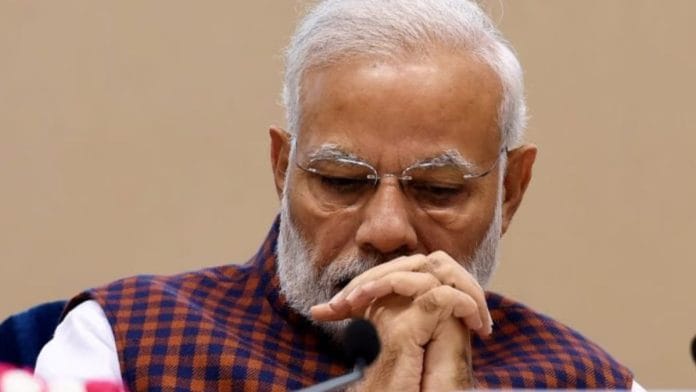

The Narendra Modi government, after 12 years in power, needs a significant (and non-cosmetic) makeover. While it has recovered after the 2024 setback by registering huge wins in West Bengal and Assam, following on the heels of Haryana, Maharashtra, Delhi and Bihar earlier, these political successes are not an end in themselves. Despite a good macroeconomic record so far, there is no guarantee that the government will be able to guide the economy through the current global and technological disruptions unless it has competent people manning the operations. It should work on the assumption that it may take only one major failure for the entire political narrative around its successes to start unravelling.
The NEET paper leaks and the ongoing loss of public confidence in the CBSE exam results (which have been badly managed when new technology needs a prolonged period of testing) show that someone is either sleeping on his watch or not very competent. The needle of accountability points towards Dharmendra Pradhan, who surely is not indispensable to the Modi government, either politically or economically. What should worry us all is that Modi has chosen fairly ordinary talent to head a ministry which oversees one of the most important challenges for India: educating our millions. It is difficult to understand why this important ministry is headed only by people with no real competence in this area.
Even otherwise, the Modi government has too few visible performers, and too many ministers whose only reason for existence is either political loyalty, or because they meet some kind of regional or caste representation criteria.
Ministers who obviously are good at their jobs are a handful (Amit Shah, Ashwini Vaishnaw, Nitin Gadkari, Jyotiraditya Scindia, to name just a few). A few others, thanks to Modi’s own direct interest in their ministries, are doing well in finance, commerce, defence and external affairs. The rest may bear with stronger scrutiny. Finance and defence could also benefit from having younger ministers with the capacity to get things done.
Last Thursday (21 May), the Prime Minister had a marathon four-and-a-half-hour meeting with his cabinet, where he impressed on them the need to focus on governance reforms and administrative efficiency. However, this needs to be followed up with the sacking of non-performing ministers, and their replacement with real go-getting talent. Not all of them need to be politicians or even members of his own party. They could well come from the business sector (provided they don’t have conflicts of interest) or even from Telugu Desam or other allied parties.
The Prime Minister would do well to do a few important things:
One, spend more time with ministers who have to do difficult reforms (for example, Shivraj Chauhan in agriculture), or allies who may have good ideas on how growth can be revived (Chandrababu Naidu comes to mind).
Two, attempt a direct multi-partisan consensus on difficult reforms, by personally dealing with opposition leaders. The PM too often leaves this job to his lieutenants, which reduces their political impact. Opposition leaders can more easily say no to his lieutenants, but may be more amenable if the PM were to be involved personally. Modi has serious political capital, and if he cannot spend some of it to push big reforms, what is the use of this capital?
Three, he must not focus too much on tax collection, which often leads to putting undue pressure on the taxman to collect more from businesses. Instead, the finance minister should be tasked with the goal of achieving deeper reforms in tax administration where the rules are clear to everybody and the scope for arbitrariness far less than now. This is not to suggest the Modi government has not done any tax reforms. It has, but we could do with more. The phrase “tax terrorism” should not exist in India Inc’s vocabulary.
Four, the huge increase in freebie culture needs to be reined in. Once again, this can’t be done without a broad political consensus. The Prime Minister may want to achieve this by legislating his one-nation-one-election proposal, which is prima facie a good idea. But how will this happen without getting most of the big parties on board?
Also read: After Bengal, BJP must secure the Siliguri Corridor, rebuild ties with Tarique Rahman
This is the right time to push for big changes, and this calls for a thorough revamp of the Modi cabinet, and an expanding circle of domain experts to deal with various challenges, from jobs to artificial intelligence to defence modernisation.
We need new faces, new ideas, more accountability. The Prime Minister must remove the deadwood in the cabinet.
R Jagannathan is an editor and the former editorial director at Swarajya magazine. He tweets @TheJaggi. Views are personal.
This article has been republished from the author’s personal blog. Read the original article here.
Issues with being in power for long. It’s not Modi’s problem, the people have created this and Modi enabled it by weakening the opposition. The weakening of the opposition was enabled by the weakening of institutions like the Supreme Court, police, election commission, subservient governors etc. These institutions are headed by sangh sympathisers who have filed various charges against opposition leaders, the last minute implementation of SIR, ED raids and others.
The people of India have to wake up and see through these and assess if the Modi government is genuinely superior to an alternative after eliminating these accusations. It’s a long road and the opposition have a fight on their hands…
In fact Modi and Shah must become minister mentors (without portfolio) like Lee Kuan Yew of Singapore and bring in a lot of young blood.
50+ is too old for the kind of challenges India has.
Otherwise country will go into the hands of Rahul because of TINA factor.
Problems of being in power for a long time! That said, over the last 12 years, this Modi government has systematically used our institutions to jail, threaten and subdue the opposition. With a weakened opposition and a subservient institution including the military, election commission, Supreme Court etc, I can’t see the talents from the opposition ever getting a chance at power.
The economy. Foreign affairs. National security. Could do better. Much, much better.
Modi says just take freebies, subsidies, reservations, third-rate infrastructure and economy—forget about everything else. Ours was, is, and will remain an undeveloped, corrupt, socialist country.