




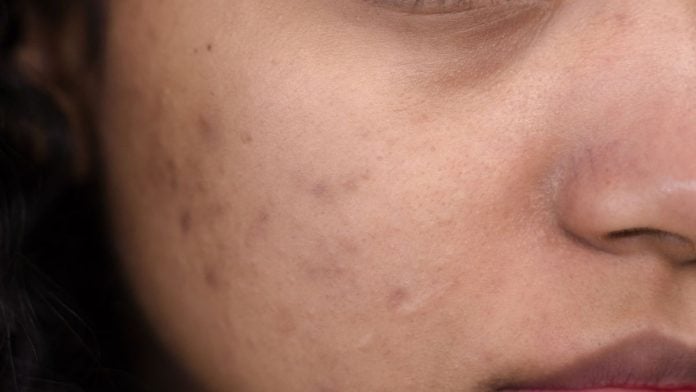

A few years ago, I wrote about why the cream sitting on your bathroom shelf was unlikely to erase a true acne scar. The reason is simple: a scar is not merely a change in skin colour. It is a structural change in the deeper layers of the skin.
But dermatology has moved forward.
Today, we are entering an interesting phase in scar treatment where the objective is no longer simply to “polish” the surface. We are increasingly trying to remodel collagen, release scars tethered beneath the skin, stimulate new tissue formation and, eventually, encourage the skin to behave more like normal skin again.
This is particularly important for Indian skin. A treatment cannot be judged only by how much a scar improves. We also have to consider redness, pigmentation, sensitivity, and the possibility of uneven healing.
Acne scars are three-dimensional. Ice-pick scars are narrow and deep. Boxcar scars have broader, defined edges. Rolling scars often occur because bands of scar tissue underneath the skin pull the surface down.
So why would we expect one cream, one laser, or one machine to treat all of them?
This is why scar treatment is increasingly moving toward combination therapy.
Radiofrequency microneedling
Radiofrequency microneedling combines tiny needles with controlled radiofrequency energy delivered into the deeper layers of the skin.
The needles create controlled micro-injuries, while the energy produces heat within the dermis. This stimulates the skin’s wound-healing response and encourages collagen remodelling.
For patients with darker skin, this can be particularly interesting, because the energy can be delivered deeper while limiting some of the superficial injury associated with aggressive resurfacing.
The procedure is not necessarily better than a laser.
A more aggressive fractional CO2 laser can sometimes produce greater improvement, but it can also mean more downtime, redness, and a greater risk of pigmentation in susceptible patients.
So the question should not be, “Which machine is the best?” The better question is: Which treatment is safest and most appropriate for this particular face?
Also read: Does robotic hair transplant really work for women?
Picosecond lasers
Picosecond lasers are another development that has attracted considerable interest.
They deliver extremely short pulses of energy. Rather than relying only on heat to resurface the skin, they can create mechanical or photoacoustic effects that stimulate remodelling deeper in the skin.
For some patients, particularly those concerned about pigmentation and downtime, this can be an attractive option.
But newer does not automatically mean better.
The treatment has to match the scar, the skin type, and the patient’s expectations.
One of the biggest changes I have seen in scar treatment is the move away from searching for a single “miracle” procedure.
One treatment may improve the surface, while another works deeper in the dermis. A procedure may first release a scar that is being pulled down from underneath, followed by a treatment designed to stimulate collagen.
This is why two people with apparently similar acne scars may receive completely different treatment plans.
There is also increasing interest in treatments that stimulate the patient’s own collagen. Traditional fillers can raise a depressed scar by adding volume. But newer biostimulatory approaches encourage the skin to produce collagen and remodel itself.
This is an exciting area, but it needs a sensible approach. Not everything described as “regenerative” has the same level of scientific evidence. In aesthetic medicine, new terminology can sometimes move faster than science.
That is why patients should always ask what the treatment actually contains, what evidence supports it, how it is administered, and what its safety data show.
PRP, regenerative medicine
Platelet-rich plasma, or PRP, is another treatment that has found a place in combination protocols. Instead of expecting it to erase a scar on its own, we increasingly look at whether it can complement procedures such as lasers or microneedling.
The principle is simple: use different treatments for different biological problems.
PRP is not a miracle cure, either. It is one tool within a larger treatment strategy.
Perhaps the most talked-about development is the use of exosomes and extracellular vesicles.
These are being studied because they contain signalling molecules that may influence inflammation, fibroblast activity, collagen production, and tissue repair.
This is an area where we must be particularly careful not to confuse “promising” with “proven”.
An “exosome” product is not identical to another product carrying the same name. Its source, composition, concentration, purity, stability, and manufacturing process can all matter.
Acne is challenging not because we have no treatments, but because every face responds differently.
Over the years, what I have learned is that the best results often do not come from one procedure. They come from a carefully planned cocktail approach—combining the right procedures, in the right sequence, for the right scar, and the right skin.
The future is personalised scar treatment
The biggest change in acne-scar treatment is not a particular laser or injectable, but personalisation.
A patient with rolling scars may need release of the fibrous bands beneath the skin before collagen stimulation. Someone with deep ice-pick scars may need a highly targeted procedure rather than repeated full-face resurfacing. Another patient may benefit from radiofrequency, fractional laser, or a combination of several approaches.
There is no universal recipe.
The future of scar treatment is likely to be a combination of energy-based treatments, mechanical release, collagen stimulation, and regenerative approaches—used thoughtfully and with a clear understanding of what is established and what is still experimental.
We are moving from simply asking how to remove the damaged surface to asking how we can understand, remodel, and rebuild the skin beneath it.
Dr Deepali Bhardwaj is a Consultant Dermatologist, Max Hospital, Saket. She is also an anti-allergy specialist, laser surgeon and internationally trained aesthetician. She tweets @dermatdoc. Views are personal.
(Edited by Prasanna Bachchhav)