





The war between Israel and Iran could be a defining event in West Asian geopolitics. Tehran is emerging from this conflict strategically weakened, even as its retaliatory ballistic missile strikes have made international headlines.
Iran had already suffered significant setbacks even before the war started. Israeli military actions seriously damaged Hamas in Gaza and Hezbollah in Lebanon, two of its most important regional proxies. These organisations served as the cornerstone of Iran’s strategy against Israel and projected strength without engaging in direct State-to-State conflict.
Their dismantling left Iran exposed, with fewer force multipliers to influence events on the ground. The Islamic Republic found itself isolated, with limited capacity to respond effectively.
Strategic decapitation campaign
Israel started the war with specific objectives—to impair Iran’s nuclear programme—and has pursued them systematically. It hit deep within Iran, targeting nuclear and military sites. Precision strikes have reportedly eliminated top military and intelligence commanders, as well as nuclear scientists. It’s a strategic decapitation campaign.
More revealing is Iran’s reported outreach to US President Donald Trump, urging him to press Israel for a ceasefire. For a regime that has long styled itself as defiant, revolutionary, and committed to the Axis of Resistance, this is a notable crack in the façade.
Iran appears weakened not just in the eyes of Israel and the West but, more importantly, across the Muslim world. This damages its ideological standing, particularly as it has positioned itself as the leader of the Muslim world and as an opponent of the West. Iran appears less like a regional hegemon and more like a battered State struggling to maintain face.
Ayatollah Ali Khamenei’s regime now faces not only international challenges but a deeper, internal crisis—credibility. After years of economic hardship, political repression, and mass protests, the Iranian people may now see their rulers as weak and ineffective. The risk of domestic upheaval rises. Israel’s Prime Minister Benjamin Netanyahu has on more than one occasion called on the people of Iran to rise.
So, what are the possible scenarios if Israel doesn’t directly target Iran’s Supreme Leader and its top clerics? The regime could collapse under pressure. Or it might double down on repression to maintain its grip. It might also survive in a diminished form, forced to make concessions—perhaps even negotiating a new social compact with its citizens, who are weary of clerical rule and global isolation.
Also read: Israel crushed Ayatollah’s regime, but stopping Iran’s nuke programme will need total overthrow
India-Iran friendship
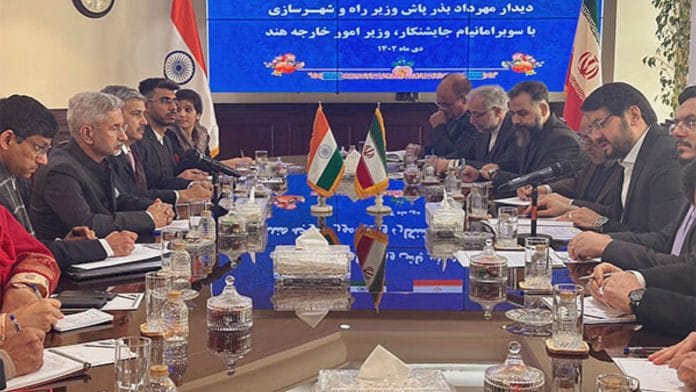
What could the developments mean for India, which has enjoyed warm ties with Iran despite periodic tensions? Tehran is crucial to New Delhi’s plans for regional connectivity, especially the International North-South Transport Corridor (INSTC) and the Chabahar Port, which provides access to Central Asia and Afghanistan, bypassing Pakistan.
However, India has also faced friction with the Iranian regime, particularly on issues like Kashmir. Iran, as an Islamic theocracy, has occasionally parroted the Pakistani line.
The bigger barrier in recent years has been sanctions. To avoid secondary US sanctions, India had cut oil imports from Iran in 2019—one of its top suppliers—and slowed infrastructure and investment projects.
A weakened clerical regime—or a new, more pragmatic dispensation—may serve India’s interests. If post-war Iran, eager to rebuild and re-integrate into the global economy, is willing to negotiate with the West and adopt a more accommodating foreign policy stance, it could lead to a rollback of sanctions.
This would allow India to resume oil imports, invest more confidently in Chabahar, and expand economic and security ties with Tehran without the risk of US sanctions.
Moreover, a secular and reform-oriented regime in Iran could be less prone to aligning with India’s adversaries on ideological grounds. This would open the door to deeper engagement based on mutual economic and strategic interests.
The Israel-Iran conflict is far from over, but the damage to Iran’s regime is becoming evident. The outcome could reshape the balance of power in West Asia and its extended neighbourhood.
For India, Iran could become a valuable partner, economically and strategically. But it will depend on what path Iran chooses: resistance and repression, or reform and reintegration.
The author is an adjunct scholar at the Takshashila Institution. He tweets @YusufDFI. Views are personal.
(Edited by Ratan Priya)