








Higher than the Mountains, Deeper than the Ocean, Sweeter than Honey…Really? This metaphor describes the exceptionally close, “ironclad” strategic partnership between China and Pakistan. Leaders of both nations have frequently used this phrase to emphasise their friendship.
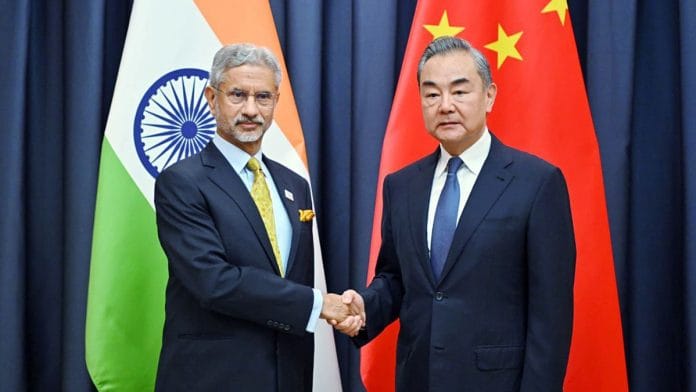
However, the bonhomie is now under deep strain. The development arises not because of any problem between them, but the growing economic and political ties between Beijing and New Delhi. The Dragon and the Elephant now find themselves in a stronger economic embrace than ever before, and their strategic goal alignment in forums like BRICS and G20—of which Pakistan is not a member—has brought them closer.
With an annual GDP of $20 trillion, China is the world’s second-largest economy, and by the end of this decade, India will be third. True, India has a lot of catching up to do at $4.5 trillion—it is still one-fourth of China’s economy—but India is growing at 7.4 per cent per annum, while China’s growth is pegged at 3-4 per cent.
India also enjoys just the right ‘demographic dividend’. The population is growing just above the replacement levels, while it is dipping in China. Together, they will outpace the US’s GDP by 2035, marking a permanent shift in the axis of global power from the West—Europe and the US—to the East—Asia.
It is doubtful whether Pakistan can retain its position as the 42nd-largest economy by then because its 3 per cent annual growth rate is substantially negated by the 2.77 per cent population growth rate, which will aggravate the current food, water, employment and health systems crisis in the country. If the Pakistani economy continues to falter, the fate of the approximately $62 billion investment in the China-Pakistan Economic Corridor (CPEC), culminating in the Gwadar port and airport, will also hang in the balance.
Although both the airport and port are technically fully functional, the latter saw fewer than 30 cargo ships last year, and at this rate, the Chinese can never hope to recover even the operating costs of the port. This state-of-the-art facility garnered less than 1 per cent of Pakistan’s total cargo traffic in 2024-25, and the congested Karachi port continues to add to the logistical nightmare for both exporters and importers. The Gwadar airport’s financials are even more precarious, for commercial flights are yet to take off.
The India factor
In the 1960s, the interests of both Pakistan and China were in absolute alignment. Beijing wooed Islamabad, as it wanted to connect its Xinjiang province with Tibet (which it had occupied by the early 1950s), and Pakistan obliged by ceding 5,180 square kilometres of the Shaksgam Valley (also known as the trans Karokaram tract) in the Gilgit Baltistan region of Pakistan-Occupied Jammu & Kashmir (PoJK). India has not recognised this agreement, and views this as ‘an illegal cession of Indian territory’.
Over the last six decades, the Chinese have strengthened their defence establishment, built their civilian infrastructure and changed the region’s demography. But now that the deed has been done, China does not need Pakistan any longer. Though India continues to claim her ‘de jure’ sovereignty over the area as per Schedule 1 of Article 1, the ground reality is that China is in complete ‘de facto’ control over this area to the exclusion of both Pakistan and India.
Although India had been among the first countries to recognise China, Mao Zedong and Chou Enlai wanted to upstage Jawaharlal Nehru as the leader of the Afro Asian world. Tensions were building after the Bandung conference, and even as the two countries parroted Hindi Chini Bhai Bhai, there were several border skirmishes on the contested McMahon line (recognised by India, but rejected by China), an approximately 890-kilometre border along the Himalayas.
In October 1962, the People’s Liberation Army (PLA) troops crossed into the North-East Frontier Agency (NEFA, now Arunachal) and reached Tezpur, Assam, before withdrawing to the McMahon line a month later. This was a debacle for sure, and Nehru could never recover from this shock, but it gave India some very valuable lessons. The political leadership understood the salience of defence.
The saga of the restructuring of the Indian army—from debacle to resurgence—has been captured by the then Home Secretary of India, RD Pradhan, who credited the then PM Lal Bahadur Shastri and Defence Minister YB Chavan. In 1965, this army not only thwarted Pakistani attempts to infiltrate into J&K, but also marched towards Lahore and Sialkot.
In 1976, this army also stood up to the Chinese Army at Nathu La in August-September, and at Cho La in October in Sikkim. In fact, military historian Probol Dasgupta has documented this in ‘1967: India’s forgotten victory over China’. In 1975, the soldiers clashed in Tulung La, followed by the 1987 standoff at Sumdurong Chu Valley—both in Arunachal.
The 2017 Doklam clashes on the Bhutan border continued for more than 73 days, and then there was the Galwan Valley clash in the Ladakh sector in 2020, where India and China both stood their respective grounds. Of course, this was followed by disengagement and de-escalation and a commitment at the highest political levels to resolve the issue without the use of force.
Also read: Don’t compare India-US trade agreement with UK, EU. It’s a deal with the only superpower
New Delhi far ahead in trade
Meanwhile, over the last decade, India has been strengthening its border infrastructure through all-weather roads, many stretches of which can also function as helipads. The Vibrant Villages Programme—under which 662 border hamlets are being provided 24×7 power and internet connectivity, drinking water, health and education facilities—has also been initiated. The programme ensures that people not only stay in these villages, but the area transforms into hubs of skill development as well as small and micro enterprises.
India and China have also recently unveiled three border posts—Nathu La in Sikkim, Shipki La in Himachal and Lipu Lekh in Uttarakhand—for trading. Besides, both nations have also encouraged the rupee-yuan trade. The volumes transacted through these are small, but now that the rupee-yuan trade has been opened for these border posts, efforts are on to strengthen the banking and logistics infrastructure at these points. The earlier value restriction of Rs 25,000 per transaction lot has also been removed.
While the border trade is a tiny percentage of the $155 billion India-China trade, we must note that at the macro level, it is at least seven times higher than the Beijing-Islamabad trade, which stands at $23 billion. Moreover, while the India-China trade is growing at 12 per cent, the Pakistan-China trade is stuck at 10 per cent. Therefore, the existing gap will continue to grow, because the base for India is also much higher. India’s agriculture exports also become more competitive globally on account of improved logistics and better post-harvest management techniques.
Thus, while India is gradually improving its fractured relationship with China, the fissures in the Pakistan-China relationship are coming to the fore. Apart from the economic losses on the CPEC corridor, China is worried about the increasing attacks on its engineers and staff working on the CPEC and associated projects. As General Shokin Chauhan wrote in the Fair Observer ‘the corridor is actually a monument to Chinese economic overreach and Pakistani mismanagement. Infrastructure projects remain incomplete, Chinese contractors dominate operations and local resentment in Balochistan and Gilgit-Baltistan continues to simmer. He says, ‘China’s modus operandi, in truth, has transformed Pakistan into an economic vassal, eroding its sovereignty under the guise of development’.
Patron-client relationship
Even the much-touted military partnership is actually a patron-client relationship. While Pakistan imports a significant volume of military hardware from China, the quality and nature of that equipment reveal a different story. The JF-17 Thunder, for instance, a symbol of Sino-Pakistani defence cooperation, is based on ageing Chinese designs from the 1980s and lacks the technological finesse of modern fighters. Naval vessels transferred to Pakistan are often second-line platforms or soon-to-be-retired ships, technologically inferior to those China sells to wealthier clients in the Middle East. Beijing’s policy of withholding core technology and embedding proprietary maintenance systems ensures that Islamabad remains perpetually dependent.
While the top leadership and the elite in Pakistan may consider China to be their preferred partner, at the people-to-people level, the disconnect is stark. The contrast in language, religion, scripture, sartorial preference and cuisine is too wide to be bridged.
Disclosure: The columnist is the Honorary Chairman of FEED and held the post of Managing Director NAFED from 2010 to 2013.
Sanjeev Chopra is a former IAS officer and Festival Director of Valley of Words. Until recently, he was director, Lal Bahadur Shastri National Academy of Administration. He tweets @ChopraSanjeev. Views are personal.
(Edited by Saptak Datta)