






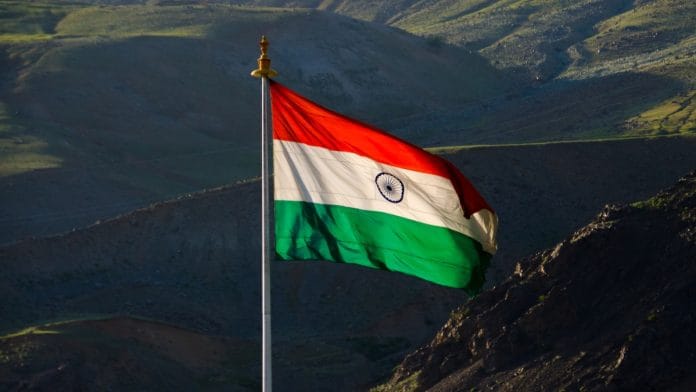


Sare jahan se achha, Hindustan hamara.
This childhood song has an auspicious ring to it, like music to the ears of every Bhartiya who has a passion for their motherland. Their dream is to see Hindustan/India/Bharat at the top of geopolitics, as a powerful developed Nation, as a “Viksit Bharat” by 2047.
Eighty years after Independence, perhaps the greatest tribute we can pay to those who fought for freedom is a simple one: they gave us the right to shape our own future. To build an India that is richer, stronger, more educated, more innovative and more equal – an India that once again becomes the proverbial golden bird the world looks towards. Let us use that freedom well.
India’s long history of wealth and civilisation
The economic historian Angus Maddison, whose work was published through the OECD Development Centre, estimated that India accounted for approximately 32 per cent of world GDP in the year 1 AD. Its share stood at around 28 per cent in 1000 and 24.4 per cent in 1500. Even in 1700, India’s estimated share remained around 24.4 per cent, before falling to 16 per cent by 1820.
These are estimates of economic output, not estimates of prosperity. They do not mean that every Indian lived a wealthy life. But they tell us something important: India was not historically a poor country waiting to be developed by someone else.
Rather, India was a major centre of production, agriculture, textiles, metallurgy, trade, mathematics, astronomy, medicine and learning. Its wealth and capabilities were known across the world.
Over the centuries, that wealth attracted invaders and conquerors from different parts of the world. Raiders such as Mahmud of Ghazni, Muhammad of Ghor, Timur and Nadir Shah invaded parts of India, looted cities and temples, carried away wealth and destroyed cultural and religious institutions.
Later, the great European voyages to the East were, in large part, voyages in search of the wealth and commerce of Asia. When Vasco da Gama reached Calicut in 1498, he was entering an already sophisticated Indian Ocean trading system. India was not “discovered” by Europe. Rather, Europe found a new route to an India that was already deeply connected to the world.
And then history changed.
Over the centuries of colonial rule, India’s share of the world economy declined dramatically. Maddison’s estimates put it at 12.1 per cent in 1870, 7.5 per cent in 1913 and just 4.2 per cent in 1950.
Under British colonial rule, Indian industries, particularly textiles, were disrupted as the colonial economy was reorganised around Britain’s industrial and commercial interests. Indian agriculture, too, became increasingly connected to the requirements of imperial trade.
When an economic system is reorganised without regard for the people who live within it, the consequences eventually reach their homes and dinner tables. The famines of colonial India remain one of the darkest chapters of our history.
A 1901 estimate by The Lancet’s journal in India put the death toll from starvation and starvation-related diseases during the preceding decade at approximately 19 million. The precise number is debated by historians, as are the relative contributions of drought, disease, markets and colonial policy. But there is no dispute over the scale of the human tragedy.
And then, in 1947, history changed.
Freedom at midnight
At the stroke of midnight on 15 August 1947, India awoke to “life and freedom”. It was an India that had, in Jawaharlal Nehru’s words, “stepped out from the old to the new” and whose “soul, long suppressed, finds utterance”. An India that had been plundered and raped by nearly three centuries of colonialisation and before that, five centuries of subjugation and conversion. An India that was split into 3 jagged fragments at the whims of a British Clerk and the uppity aspirations of an incumbent PM, who was more busy playing musical beds than interested in holding together the parts of his motherland. Pakistan was generously given a land share of 20-23% whilst 16-18% of Indians migrated to the newly carved-out countries of West and East Pakistan.
“A nation becomes great and achieves its goals when it moves forward on the strength of its dreams, its resolve and its capabilities,” Prime Minister Narendra Modi has said from the ramparts of the Red Fort this Independence Day.
But Independence brought its own set of challenges. Freedom was not simply about lowering one flag and raising another. It meant recovering the right to decide our own priorities and chart our own course.
Priorities like: what should India produce? How should it educate its children? How should it feed its people? How should it build its infrastructure? How should it engage with the world?
And perhaps most importantly: how should India create prosperity for its people?
Achievements since Independence
From a struggling, colonially depleted country in 1947, India has grown into one of the world’s largest economies—now the fifth-largest by nominal GDP and third-largest by purchasing power parity. It continues to be among the fastest-growing major economies in the world.
The World Bank puts India’s GDP at approximately $3.96 trillion in 2025, with growth of 7.6 per cent that year. India has also continued to climb the rankings of the world’s largest economies.
The transformation is not limited to the size of the economy.
India overcame massive public health hurdles to completely eradicate Smallpox in 1977 and eliminate Polio by 2014. These achievements required monumental nationwide coordination to vaccinate millions of people across remote and difficult terrain.
India also successfully vaccinated its population with indigenously developed vaccines and successfully engaged in Vaccine Maitri during the COVID-19 pandemic.
The country has also sought to strengthen its strategic and technological capabilities. India has moved from being one of the world’s major importers of defence equipment towards developing high-tech indigenous military platforms. INS Arihant, India’s nuclear-powered submarine; INS Vikrant; Tejas fighter jets; and an independent regional satellite navigation system, NavIC, are among the examples. Operation Sindoor witnessed India’s majestic military might on display.
In 1951, only 18.33 per cent of Indians were literate. Female literacy was just 8.86 per cent. Today, India’s literacy rate is approaching 80 per cent, while life expectancy has more than doubled to over 70 years.
India has also shifted heavily towards clean energy, ranking 4th among the world’s leading countries in installed renewable energy capacity. The country has developed some of the world’s largest single-site solar parks, including Bhadla Solar Park, as part of its goal to reach 500 GW of non-fossil fuel electricity capacity by 2030.
India has recently joined a small cohort of countries with their own hydrogen trains, and there is a strong push for Electric Vehicles (EVs) – 30% by 2030.
The Unified Payments Interface, or UPI, has emerged as one of the world’s largest digital payments systems, processing over 10 to 15 billion transactions a month, outperforming most global networks, and is paired with the world’s largest biometric identity system, Aadhaar.
Infrastructure, too, has expanded rapidly. As of July 2026, India had 166 operational airports, compared with 74 in 2014. The national highway network has reached roughly 1.46 lakh kilometres.
Vande Bharat trains are increasing connectivity, while the expansion of railway infrastructure has improved links from Kashmir Valley to Kanyakumari.
But infrastructure is not merely about concrete and steel. A road changes the economics of a village. An airport changes the economics of a city. A bank account can change the economic independence of a woman. A digital identity can change the ability of a citizen to access the State. And a young person with education and connectivity can transform the economic possibilities of an entire family.
That is why India’s transformation cannot be measured only by GDP. It must also be measured by the capabilities it creates for its people.
The change is also visible in agriculture. India has moved from a country once struggling with food shortages to one of the world’s major agricultural producers.
Also Read: Digitalisation taking India closer to its aim of becoming Viksit Bharat by 2047
A long road to Viksit Bharat 2047
“Our country can no longer move forward with small dreams. We need big dreams because big dreams expand our thinking and broaden the horizons of our thoughts,” Prime Minister Modi said from the Red Fort, on August 15.
He has clearly defined the road to this developed nation that will hold its place on the centre stage of geopolitics.
The Saptadhara, or Seven Streams, announced by the Prime Minister is presented as a seven-point framework for comprehensive national development.
The seven pillars include manufacturing power, which focuses on cost, quality, scale and global competitiveness to build end-to-end domestic value chains; agriculture and food processing, aimed at integrating farm-to-export supply chains and expanding natural and chemical-free farming; and technology and innovation, where India seeks leadership in AI, quantum technology, space exploration, robotics and indigenous 6G.
Gati Shakti focuses on building multimodal, high-speed infrastructure connecting ports, railways and highways. Defence Shakti will focus on complete self-reliance in next-generation military technology manufactured in India. Green and Blue Energy focuses on renewable energy, green hydrogen, energy storage and marine resources. Finally, soft power seeks to amplify India’s global footprint through culture, tourism, yoga, gaming and the creative economy.
As Prime Minister Modi has emphasised from the Red Fort, the future of India will be shaped by its ability to harness emerging technologies, particularly Artificial Intelligence, and by the aspirations and capabilities of its young people.
For India’s youth, AI can become a great equaliser, opening doors to knowledge, innovation, entrepreneurship and employment. If India can combine its demographic strength with education, skills, creativity and the responsible use of technology, young Indians can move from being users of AI to becoming its creators and innovators.
That is central to the vision of Viksit Bharat 2047; an India that is not only economically strong and technologically advanced, but confident, self-reliant and capable of shaping the future rather than simply adapting to it.
All eyes on India in 2026
At the G7 Summit in Évian in June, India was invited for the eighth consecutive G7 summit. India participated in discussions on economic growth, technology, artificial intelligence and international cooperation.
The Prime Minister met leaders including U.S. President Donald Trump and Canadian Prime Minister Mark Carney on the margins of the summit. Peter Navarro may keep attacking India with his vitriol, but the fact remains that India is like the proverbial Juggernaut, rolling along to Viksit Bharat 2047.
There will always be commentary and criticism about India’s relationships with other countries and their leaders. There will also always be speculation about personal equations and diplomatic optics.
But countries do not acquire strategic importance because their leaders have good photographs together. They acquire it because the world needs what they have to offer.
The world needs its talent, resources, market, businesses and manufacturing capabilities, as well as its ethics and value systems.
“You have the right to perform your prescribed duty, but you are not entitled to the fruits of action. Never consider yourself the cause of the results of your activities, and never be attached to not doing your duty,” the Bhagavad Gita says.
I may not be around to see Viksit Bharat 2047, but I am humbled that I could be associated with this journey of new India in the smallest ways possible.
Meenakshi Lekhi is a BJP leader and lawyer. Her X handle is @M_Lekhi.
Views are personal.
(Edited by Maryam Hassan)