








The international system is entering one of the most consequential periods of transition since the end of the Second World War. The institutions that shaped the world order after 1945—from the United Nations to the Bretton Woods framework—are under visible strain. At the same time, uncertainty is growing about the future role of the United States as the principal stabilising force in global affairs. And a new equilibrium does not seem to be emerging. Rather, we live amid a prolonged interregnum in which power is more diffuse, competition more fluid, and outcomes less predictable.
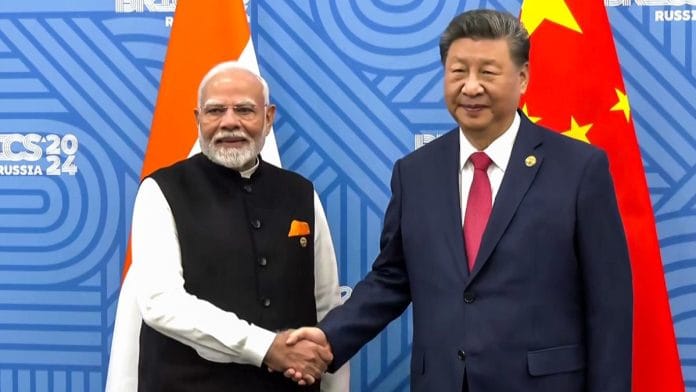
In such a moment, relationships among the world’s major powers will shape the character of the emerging international order. Among them, India and China occupy a unique position. Together, they account for almost 40 per cent of humanity. They are among the world’s oldest continuous civilisations and today stand as two of its largest economies, increasingly central to global production, technological innovation, and scientific advancement. Whether their relationship evolves toward sustained rivalry, managed coexistence, or selective cooperation will significantly influence the course of the 21st century.
Modern history tends to frame India and China primarily through the lens of strategic competition. The unresolved boundary dispute is a serious, sensitive issue, and mistrust has accumulated in recent years. Geography ensures that the two nations are permanent neighbours; history ensures that their interactions will always carry strategic significance.
Yet, a longer historical perspective shows India and China as civilisational partners where ideas, religious traditions, merchants, scholars, and pilgrims moved freely. This exchange shaped philosophy, culture, and intellectual life across Asia. The relationship was dynamic, and it wasn’t defined by confrontation alone.
A realistic approach
A few years ago, a senior Chinese technocrat asked me how I viewed the future trajectories of India-China and China-US relations. I replied that I was cautiously optimistic about the former, but considerably more pessimistic about the latter. My answer was not driven by sentiment but structural logic. Geography makes India and China enduring neighbours and civilisational depth provides them with a broader foundation for engagement than is often acknowledged in contemporary discourse.
As global power becomes more dispersed, it is increasingly useful to view India and China not merely as regional actors but as civilisational states re-emerging into full global significance. This re-emergence carries both opportunity and responsibility. If the countries define their relationship exclusively through unresolved disputes, they risk allowing historical burdens to dominate future possibilities. But if they broaden the relationship beyond a narrow security paradigm, they may contribute meaningfully to stabilising an increasingly turbulent international environment.
This does not imply the absence of competition. Great powers have often competed vigorously in some domains while cooperating constructively in others. Indeed, the ability to manage simultaneous competition and cooperation may become one of the defining characteristics of 21st-century geopolitics. The challenge is to prevent competition from becoming structurally dominant.
Trust between nations cannot be built overnight. It evolves gradually through repeated interaction, practical cooperation, and predictable behaviour. For India and China, a realistic approach may lie not in seeking ambitious grand bargains, but in identifying practical, low-risk pilot projects capable of building confidence incrementally.
Such initiatives could include collaboration in public health, disaster management, climate resilience, environmental protection, heritage conservation, scientific research, education, and emerging technologies. They could also work more closely within multilateral institutions such as UNESCO and the World Health Organization, where cooperation on shared global challenges can proceed even while important strategic differences remain. Expanding tourism, pilgrimages, academic exchanges, and cultural interactions would similarly help reduce mutual misperceptions by reconnecting societies as well as governments.
Dialogue should proceed simultaneously at multiple levels—governmental, parliamentary, business, academic, Track 1.5, and Track 2. More than immediate reconciliation, the objective should be the gradual development of habits of communication, confidence, and practical cooperation.
Also read: India’s growing warship gap with China and Pakistan
Defining question for the Asian century
The international system itself requires renewal. The credibility of the post-war multilateral framework will remain incomplete so long as major powers—including India—are not adequately represented in its principal decision-making structures, particularly the United Nations Security Council. Reform of global institutions will remain difficult, but it is becoming increasingly necessary if they are to retain legitimacy in a rapidly changing world.
A deepening of India-China engagement should not be interpreted as the formation of a bloc against the US, or any other country. Nor should it create insecurity in Japan or other Asian partners. The world does not need additional geopolitical polarisation. It needs greater strategic flexibility, overlapping frameworks of cooperation, and fewer zero-sum interpretations of international politics.
For countries across Asia, including my own Sri Lanka, the evolution of India-China relations is not an abstract geopolitical question. It is directly linked to regional stability, economic prosperity, connectivity, and long-term security. A relationship defined solely by rivalry would increase uncertainty in an already unsettled world. A relationship combining managed competition with selective cooperation would contribute significantly to a more stable Asian century.
The elephant and the dragon are unlikely to move in harmony overnight. The structural obstacles are substantial, and political constraints remain real. Yet, history shows that transformative relationships are seldom built through dramatic breakthroughs. More often, they emerge through patient dialogue, practical cooperation, and the gradual accumulation of trust.
Therefore, the defining question is not whether India and China can eliminate all their differences. It is whether they can construct a framework in which differences do not preclude cooperation, and cooperation does not depend on unrealistic expectations of trust. In an era of global transition, that may prove to be one of the most consequential diplomatic challenges—and opportunities—of our time.
Milinda Moragoda is a former Sri Lankan Cabinet minister, diplomat, and founder of the Pathfinder Foundation, a strategic affairs think tank. He formerly served as the High Commissioner of Sri Lanka to India. Views are personal.
(Edited by Prasanna Bachchhav)
The elephant and the dragon must make ( more ) respectful space for each other’s natural growth and development. It is truly unfortunate that a certain dynamic came into being about sixty years ago, which has persisted to this day. For India, it means a high fiscal cost of remaining always prepared for a two front war.