




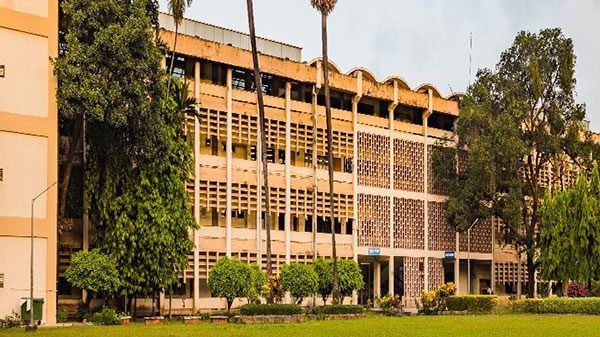

On 18 September, Sahil Wakode, a second-year B.Tech student at IIT Bombay, died hours after he was reportedly found using a mobile phone during an examination, with the question paper allegedly uploaded to ChatGPT. The institute says no disciplinary action was initiated against him. It says faculty counselled Sahil and assured him that his academic career would not suffer. His family has alleged caste-based harassment, which the institute denies.
Further, the institute also apologised, saying it had been inappropriate to characterise those events before the investigation had established them. His death has prompted protests on campus, and the matter is under investigation.
It would be easy to look for a single cause. But suicide rarely allows one. The more useful question is about design. Are our campuses built only to respond to distress once it becomes visible, or can they recognise vulnerability early?
An institution that measures everything except distress
The scale of the problem is itself uncertain. In March 2023, the education ministry told the Rajya Sabha that 33 IIT students had died by suicide since 2018. An alumni network, the Global IIT Alumni Support Group, has recorded at least 65 IIT student suicides between January 2021 and December 2025, including 30 in 2024 and 2025 alone. That is an unofficial count, and no consolidated public record exists across the IIT system’s 75-year history.
The irony is hard to miss. An IIT knows, to the decimal point, who has failed a course or slipped below a CGPA cut-off. But it has no equivalent system for noticing isolation, withdrawal or lost hope. The Supreme Court-appointed National Task Force made a similar diagnosis in its interim report in June 2026. It called student suicide a structural problem as well as a mental-health emergency, and noted that earlier interventions had focused on counselling while neglecting the conditions institutions themselves create.
This is where the tools of organisational behaviour become useful. HR leaders already use them to understand stress, burnout, and failure at work. Applied to a campus, they help at four levels: the individual, the system, the culture, and the community.
The individual: what does the student think he is losing?
Stevan Hobfoll’s Conservation of Resources theory holds that stress stems less from events than from the threatened loss of what we value. For a student, that includes marks, but also standing, family pride, friendships, reputation, and belief in the future. An institution may see one exam incident, to be handled through due process. The student may see a cascade: I have failed, I have shamed my family, my future is gone. Any manager who has delivered a poor appraisal will recognise the gap. The lesson is to assess not only the incident, but what the person believes he has lost.
The system: are demands matched by resources?
The Job Demands-Resources model, widely used to explain workplace burnout, fits campus life closely. Exams, relentless comparison, placement anxiety, and disciplinary proceedings are demands. Approachable faculty, mentors, peers, and professional counselling are resources. On paper, the resources look adequate. In practice, they can be thin. When the Task Force checked 50 people randomly listed as “dedicated counsellors”, it found that 47 were faculty members, placement coordinators or academic advisers rather than trained mental-health professionals. The answer is not to dilute rigour. It is to ensure that a spike in demand automatically brings a spike in support.
The culture: can a student admit a mistake?
Organisational psychologists distinguish between cultures of error prevention, which treat mistakes as personal failings, and cultures of error management, which accept that errors will occur and focus on catching them early and learning from them. German psychologist Michael Frese and his colleagues found that firms with strong error-management cultures perform better because people surface problems instead of burying them. In prevention cultures, the typical responses are shame and concealment.
Elite campuses tend to have prevention cultures, full of students who have rarely been allowed to fail. French sociologist Émile Durkheim warned long ago that anomie, a sense of being cut adrift from one’s community, raises the risk of suicide. Few things isolate a young person faster than a mistake they feel they must hide.
Aviation and healthcare offer a better model in the “just culture” approach. Deliberate violations, such as an integrity breach in an exam, still carry consequences. But the response is proportionate and never humiliating, and it makes clear that one act does not define a person or end their future. The test for any institution is simple: after someone admits “I got this wrong”, what happens in the next 24 hours, and who stays with them?
The community: how a death is talked about matters
In the 18th century, Johann Wolfgang Goethe’s novel The Sorrows of Young Werther was blamed for a wave of imitative deaths. Two centuries later, sociologist David Phillips found that widely publicised suicides were followed by measurable rises in suicides. The effect was most pronounced among people who resembled the deceased in age, occupation, and location. This became known as the Werther effect. It rests on older ideas about imitation and suggestion, and it is thought to affect most strongly those who already feel adrift.
A campus is the densest possible cluster of such similarity: the same age, the same pressures, the same hostels, and group chats where news travels in minutes. No one should claim that one death causes another. But a campus must communicate carefully after a loss. The research also has a hopeful side. Accounts that emphasise coping, recovery, and help-seeking are associated with a protective effect, known as the Papageno effect. So the conversation after a death should answer the next student’s questions. Whom can I call tonight? Can I lighten my course load for a term? Can I report discrimination safely? Can I recover from a mistake?
Communities also fail in a quieter way. John Darley and Bibb Latané’s experiments in 1968 showed that the more people witness an emergency, the less likely any one of them is to act. On a campus, a roommate, a professor, and a warden may all sense that something is wrong, and each may wait for someone else.
From counselling to early warning
The solution is not an algorithm that purports to predict suicide. That would be ethically problematic and scientifically unsound. What is needed is an early-warning system with named human owners. A fall in grades, persistent non-attendance, withdrawal from friends, a serious disciplinary event or a sudden change in behavior should all trigger a confidential sequence of conversation, support, follow-up, and escalation where necessary. The purpose of an independent review after any serious incident should be to identify what signals were missed, not to assign blame.
Better data has to underpin this. The Task Force has recommended that every student suicide be reported to the regulators and state nodal officers wherever it occurs and that the National Crime Records Bureau maintain a separate count of student suicides. A system can’t learn from losses it doesn’t see.
Also read: IIT Bombay tragedy shows how India’s shaming culture makes failure harder to bear
A lesson that doesn’t stop at the campus gate
None of this means lowering standards. Higher education is meant to stretch people. It means making sure failure is never confused with worth, and that a crisis never becomes an experience of isolation.
The same challenge follows these graduates into the workplaces that recruit them, where high performers are also rewarded for never failing, and where distress can also go unnoticed. We spend enormous effort asking whether a student is ready for an IIT. The more important question is whether the institution, and later the employer, is ready for the person who is struggling.
Subhashis Sinha is a Professor of Practice in the Department of HR and Behavioural Sciences at NMIMS, Mumbai. Nikunj Kumar Jain is an Associate Professor and Chairperson Executive MBA (Energy Management) at Indian Institute of Management Nagpur. Views are personal.
(Edited by Aamaan Alam Khan)