






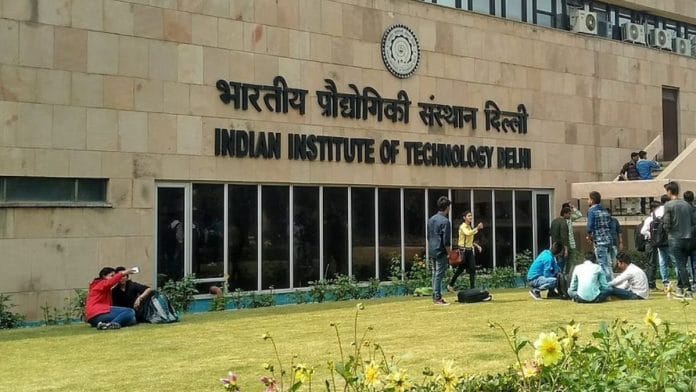


India’s intellectual history contains a large and varied record of inquiry. Some of this material is well-documented. Some survive only in manuscripts, oral traditions or practice. That diversity is precisely why Indian Knowledge Systems, or IKS, deserve serious academic study. In recent years, several IITs have established centres, courses and research initiatives devoted to IKS, rooted in the vision of NEP 2020.
Their studies focus on a range of topics including mathematics, linguistics, logic, metallurgy, architecture, water systems and manuscripts. Some researchers are even examining contested claims involving consciousness, ritual or traditional beliefs. Many see them as a long-overdue effort to recover, document and examine India’s intellectual inheritance. But critics worry that some weakly-tested claims may be presented as science, lending them legitimacy.
These developments have attracted both interest and criticism in recent years, drawing our attention to how IITs can remain open to unconventional questions without compromising the methods that underpin academic research’s credibility. That position raises many questions.
Should IKS be judged primarily by their cultural and historical value, their empirical validity, or by a clearly defined combination of these? What minimum standards of research evidence, ethics review, peer scrutiny and replication should apply before an IKS-related claim is presented as scientifically credible? How can IITs ensure that every testable IKS claim is held to the same standards of modern research? Good IKS scholarship, therefore, requires epistemic clarity, not reverence or ridicule. That is why IITs are building capacity to study IKS by distinguishing among historical significance, philosophical value, practical usefulness, and empirical validity.
IITs advance knowledge by examining unresolved questions, those that are disputed or even unlikely. They do not have to certify every inherited proposition. Instead, they must focus on bringing engineering, computing, linguistics, cognition, design, environmental studies and the humanities into conversation with primary sources and living traditions. Yet, intellectual openness is not a waiver from method.
In modern research, we do not shy away from controversial or unconventional research questions. Instead, we subject it to stricter safeguards. As researchers, we ensure conclusions remain proportionate to the evidence, irrespective of the discipline. It is also not uncommon for conventional research to be affected by confirmation bias, weak controls, publication bias and overstatement. However, science has survived by making its methods open to criticism. IKS should receive neither an exemption from these standards nor a presumption of guilt. The appropriate rule is methodological equality.
This is also where we need a philosophical distinction. How do we address different questions about the natural world? They require different methods. The general practice is to use textual criticism for manuscripts, archaeology for material remains, historical analysis for chronology, ethnography for community practices, philosophical reasoning for concepts, and experimental methods for causal claims. Even if one uses one or more of these legitimate methods, that does not mean every conclusion is equally reliable. We must match the method to the question and be explicit about how the available evidence led to the conclusion.
IITs should therefore develop a research-integrity framework for IKS. Researchers should state the evidence base, method, limitations and status of the claim. Is it documented history, a plausible reconstruction, a community belief, a testable hypothesis, a replicated finding or an unresolved proposition? This research approach is necessary to reduce confusion and doubts. It will also protect both academic freedom and public trust.
Also read: LiverDoc is out to bust cow urine research by IITs. He’s made foreign journals investigate
Criticism is essential
Let us examine a few examples. For experimental work, IITs and other institutions could involve not only domain scientists but historians, language specialists, statisticians and ethicists. Where appropriate, representatives of knowledge-holding communities could be involved. There should be protocols involving extraordinary claims and strong conclusions. Data and code should be made available to the public, subject to privacy and ethical limits. It will then be possible for other institutions to replicate the results. IITs should report both IKS-supportive results and claims that failed testing to ensure that the purpose of IKS research is inquiry, not validation.
One may require different protocols for historical and community knowledge, but they should be equally rigorous. Communities should receive recognition where their knowledge is documented. Questions of consent, attribution, and benefit-sharing must be addressed. The IKS research conducted at IITs should strive to widen the archive, correct neglect, and examine inherited knowledge without lowering the burden of proof.
This approach is consistent with the educational purpose of NEP 2020. The policy calls for building an education system rooted in India that emphasises critical thinking, scientific inquiry, multidisciplinary learning, and high-quality research.
When IITs study and examine IKS, it has another serious knock-on effect. Our students will know that India produced important work in language, logic, mathematics, medicine, metallurgy, arts and philosophy. They will also learn how claims are tested, revised and sometimes rejected. They will understand the importance of tolerating scrutiny for acquiring intellectual confidence. The institutionalisation of IKS should therefore be judged through research outputs, peer review and respect for intellectual freedom to examine unpopular propositions.
Handled well, the study of IKS can strengthen rather than diminish the prestige of IITs. It can generate distinctive research in materials, sustainable design, water management, linguistics, computation, cognition, architecture, and conservation, all of which are required in the modern context. It can bring engineers into collaboration with historians, philosophers and practitioners. It can also show that global academic engagement need not require cultural amnesia.
Equally, criticism has an essential role. It can reveal weak protocols, inflated claims, ambiguous terminology and conflicts between advocacy and inquiry. But criticism is most valuable when it improves research standards. To claim that the entire IKS field is illegitimate runs counter to the principle of scientific inquiry—do not draw a general conclusion from an inadequate sample.
IITs have both a right and a responsibility to study India’s intellectual inheritance by keeping their study open, plural and unsentimental. The aim is not to place tradition above evidence, or evidence above culture, but to make cultural inheritance a subject of disciplined knowledge. IITs can help achieve this goal because they possess scientific capacity, interdisciplinary reach and public credibility. Let criticism be a resource for stronger IKS, making it a credible part of modern Indian higher education.
Mamidala Jagadesh Kumar is Chairman, Review Committee for NEP 2020, Ministry of Education, GoI and Chairman, BoG, IIM Calcutta; and formerly Vice-chancellor, JNU and Chairman, UGC. Views are personal