



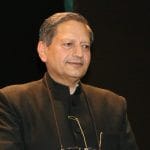
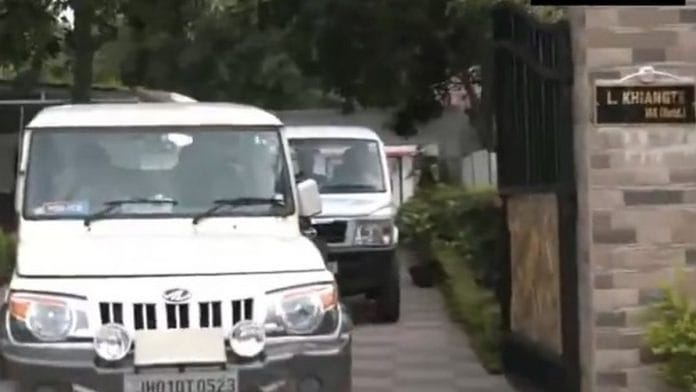

The chairman of the Jharkhand Public Service Commission, former chief secretary L Khiangte was arrested on Monday by the Jharkhand CID over alleged irregularities and corruption surrounding the 14th Civil Services Preliminary Examination. Apparently, the JPSC awarded the examination execution contract to TSR Data Processing Private Limited, or TDPL — a Lucknow-based outsourcing company — despite it having been blacklisted by the Jharkhand Staff Selection Commission in May 2025 over past irregularities.
Unfortunately, he was not an exception to the rule.
Former Chhattisgarh Public Service Commission chairman Taman Singh Sonwani found himself in a similar soup. He had already been in judicial custody since November 2024 in a CBI case regarding the alleged manipulation of State Service Examinations of 2020 and 2021 when the Enforcement Directorate arrested him under the Prevention of Money Laundering Act on 25 July this year. It is alleged that Sonwani cleverly altered the commission’s official notifications, replacing the broader word “relative” with “family” and specifically removing “nephew” from the updated definition of “family”. Thus, during the 2021 State Service Examinations, two of his nephews were appointed to the state services — Nitesh Sonwani as deputy collector and Sahil Sonwani as deputy superintendent of police.
Similarly, in 2014, there was major outrage in Rajasthan when Habib Khan Gauran, the IPS officer who had been chairman of the Rajasthan Public Service Commission since August 2012, allegedly leaked the judicial service examination paper to his daughter, who went on to secure the tenth position. The public outrage led to his resignation in September 2014 and his subsequent arrest in 2015.
Two years earlier, in January 2012, Tamil Nadu Public Service Commission chairman R. Sellamuthu surrendered before a court after his bail application was rejected. The Directorate of Vigilance and Anti-Corruption had registered a criminal case against Sellamuthu and 13 TNPSC members under the Prevention of Corruption Act and the IPC. The case followed allegations of widespread corrupt practices and irregularities in recruitments, including those for Group-I Services, assistant dental surgeons and motor vehicle inspectors. His case has continued for fourteen years over the technical issue of whether the DVAC had jurisdiction over TNPSC members. In 2024, the Madras High Court clarified that the DVAC did have the competence to investigate the case.
In both the Rajasthan and Tamil Nadu cases, the well-connected IPS and IAS officers have so far escaped conviction, with the proceedings dragging on for years.
Punjab had also witnessed the infamous “cash-for-jobs” scandal involving former chairman Ravinder Pal Singh (RPS) Sidhu. He was arrested red-handed by the Vigilance Bureau while taking a bribe in March 2002. He was convicted and sentenced to prison terms—six years by a Rupnagar court and seven years by a Mohali court—under provisions of the Prevention of Corruption Act and the IPC for accepting bribes, criminal conspiracy and cheating in exchange for public service appointments. He was also convicted and sentenced to rigorous imprisonment in separate trials involving disproportionate assets, forgery and corruption.
These examples go to show that even individuals appointed to constitutional positions under Articles 316 and 317 have often succumbed to lucre, greed and temptation, and compromised their positions. More stringent laws haven’t been enough to stop them.
Can exam fraud cases be fast-tracked?
In the aftermath of the Vyapam case, which I wrote about in my previous column, many state governments—including Rajasthan in 2022, Uttarakhand, Gujarat and Jharkhand in 2023, UP in 2024 and Odisha in 2025—enacted legislation to make punishments far more stringent.
Uttarakhand and UP introduced life imprisonment, while UP also made the offence non-bailable. However, all these Acts stopped short of prescribing timelines for investigation (which was entirely within their own competence) and fast-tracking prosecution by establishing special courts with the concurrence of the High Courts.
It is true that the Supreme Court’s 1952 judgment in State of West Bengal v. Anwar Ali Sarkar struck down Section 5(1) of the West Bengal Special Courts Act, 1950, relating to the “speedier trial of certain offences”. However, it also made clear that so long as cases were not arbitrarily singled out for “special treatment”, offences could be placed in a properly defined category for speedier trial. In fact, since 2019, with the exception of Jharkhand and Arunachal Pradesh among states, and Sikkim, Dadra and Nagar Haveli and Daman and Diu, and Ladakh among UTs, the remaining 28 states and UTs have placed POCSO cases under fast-track special courts.
As such, there is no legal constraint on placing offences relating to the use of unfair means in public examinations in a special category for speedier prosecution.
After fast-track courts were initially introduced on the recommendation of the Eleventh Finance Commission, the Supreme Court laid down comprehensive guidelines for their functioning and staffing in the landmark Brij Mohan Lal v. Union of India cases. Apart from ad hoc promotions of eligible regular judicial officers, it also approved the appointment of qualified retired judges and judicial officers to clear the backlog.
The limits of fast-track courts
It was the Eleventh Finance Commission—comprising Prof AM Khusro as chairman, NC Jain, JC Jetly and Dr Amaresh Bagchi as members, and TN Srivastava as member secretary—that recommended the creation of 1,734 fast-track courts across the country to clear the massive backlog of long-pending sessions cases and trials involving undertrial prisoners. The central government approved funding for these courts in the year 2000, and they began functioning progressively between 2000 and 2001. Central funding for these FTCs officially ended on 31 March 2011.
Eight years later, in 2019, the government established fast-track special courts (FTSCs), specifically for rape and POCSO Act cases. These have reported significant operational success. Each FTSC is tasked with an annual disposal target of at least 165 cases, or approximately 41-42 cases per quarter. In 2024 and 2025, these courts resolved 85,595 and 66,500 cases respectively. But despite steady disposals, continuing fresh filings pushed the total pending caseload across operational FTSCs to approximately 245,000 cases by the end of 2025.
Therefore, even as this column recommends that state governments bring the investigation and trial of cases involving unfair means in public examinations within the ambit of fast-track courts, there is also a need for a comprehensive review of what can be done to address the dysfunctions in the investigation and prosecution ecosystem.
This is the second instalment of a series on recruitment scams and why laws and special courts have failed to curb them. Read the other articles here.
Sanjeev Chopra is a Senior Fellow at the Centre for Contemporary Studies, Prime Ministers Museum and Library (PMML), New Delhi, where his Fellowship topic is Borders, Boundaries and Bluewaters of Bharat. Views are personal.
(Edited by Asavari Singh)