






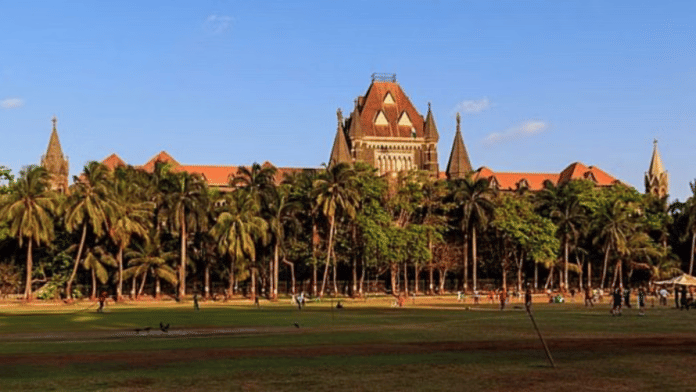


The Bombay High Court’s judgment on the Malegaon blast case has been relegated to oblivion amid the cacophony of state assembly elections and the ongoing West Asia conflict. The development has received minimal coverage in mainstream print and visual media.
On 8 September 2006, four bombs exploded in Malegaon, Nashik district—three inside the premises of Hamidia Masjid and Bada Kabrastan just after Friday prayers, and the fourth in Mushawarat Chowk, killing 31 people and injuring 312.
Two decades later, the Bombay High Court quashed and set aside a special court order framing charges against four men. A division bench comprising Chief Justice of the Bombay High Court Shree Chandrashekhar and Justice Shyam Chandak upheld the appeals filed by the family of the four accused—Rajendra Chaudhary, Dhan Singh, Manohar Ram Singh Narwaria and Lokesh Sharma—against the special court’s order.
The four were charged under various sections of the IPC for murder and criminal conspiracy, as well as under the stringent Unlawful Activities (Prevention) Act (UAPA).
The CBI, which investigated the case, later handed it over to the Maharashtra Anti-Terrorism Squad (ATS), which initially blamed the bombings on the Students Islamic Movement of India (SIMI) and arrested nine persons.
In 2011, the NIA took over the case following an order from the Ministry of Home Affairs, which told a Mumbai court that it had found no evidence to link the Muslim accused arrested in the case, leading to their acquittal. The investigative agency claimed that the blasts were the handiwork of right-wing extremists and then arrested the four men. In September last year, a Special NIA Court framed charges against the accused, following which they moved the high court against the order.
Meanwhile, in 2008, as the town was limping back to normalcy, another bomb blast rocked Malegaon in September, killing six people and injuring more than 100 near a mosque during Ramzan. This case, initially handled by the ATS and later the NIA, involved allegations against far-right persons, including Sadhvi Pragya Singh Thakur and Lt Colonel Shrikant Purohit.
The NIA, after confessions by Swami Aseemanand, an accused in the 2007 Mecca Masjid blast, alleged the role of the Hindu right-wing organisation ‘Abhinav Bharat’ in the blasts in a chargesheet filed in 2013. A July 2025 verdict by the special court in Mumbai acquitted all accused of the Abhinav Bharat group in the Malegaon blast case due to a lack of evidence.
The judgment following chargesheets, accusations of “Saffron Terror”, trial court proceedings, and several appeals, spanning over twenty years, marks one of the most politically sensitive and legally complex terror cases in India, meriting critical appraisal from the prism of legal reasoning, investigative integrity, and broader political implications.
Also read: NLUs are charging outrageous fees. Law schools are too expensive for average Indian families
A lesson for the government
Like many other court cases involving terrorism and violent acts, the Malegaon bomb blast case also heavily depended on confessional statements made under the Maharashtra Control of Organised Crime Act (MCOCA), inconsistent witness testimonies and the investigation agencies’ inability to present proofs beyond a reasonable doubt. If the agencies could not provide credible proof of the accused for the alleged crime, it is clear that there was an attempt to build a conspiracy without sufficient forensic corroboration.
The court’s findings weakened the prosecution’s case, particularly with respect to MCOCA provisions, which require the establishment of an ‘organised crime syndicate. This development undermined the charges against the accused.
The judgment also signifies that courts decide the merit of cases based on evidence and not political narratives like “Saffron Terror”, especially in sensitive issues like terror attacks and organised crimes. The Malegaon bomb blast case should be seen as part of a series of violent acts perpetrated with the sole aim of creating a wedge between communities and disturbing peace and tranquillity.
It is the duty and responsibility of the political leadership to refrain from making irresponsible comments, polarising the society on communal lines and branding the entire Hindu society as radicals, even as the accusations against the people arrested could not be proved. Those in power should draw a lesson that overuse or abuse of special laws and provisions, especially in terror cases, will not solve the issue and also become counterproductive.
Delayed justice and decades-long trials in terrorism-related cases tend to collapse in courts, driving home the hard truth of inherent structural weakness in our counter-terrorism architecture. As in the case of Malegaon, the Samjhauta Express case also suffered the same fate, as both were driven by a political narrative, lack of credible evidence and long and inordinate delay in framing charges which could not be proved.
The February 2007 bomb blast in the Samjhauta Express running between Delhi and Lahore was also linked to a “radical Hindu group”, but failed to stand the test of proof in the court. In March 2019, a special NIA court in Haryana acquitted all four accused who were present—Swami Aseemanand, Lokesh Sharma, Kamal Chauhan, and Rajender Chaudhary—citing a lack of evidence.
It augurs well for the judiciary that courts judge cases based on credible and sustainable evidence and not on the basis of ideological background. Ideally, this principle should apply to all the pillars of governance.
Congress ‘worthies’ who earned the dubious distinction of coining “Hindu/Saffron Terror” and even went to the extent of producing a pulp fiction to substantiate their canards have egg on their faces now after the Malegaon case judgement.
They not only lowered their guard on terror activities but also tried to compromise with the credibility of the judiciary. These judgments, both the Malegaon and the Samjhauta Express cases, should be a lesson to political parties and governments.
Seshadri Chari is the former editor of ‘Organiser’. He tweets @seshadrichari. Views are personal.
(Edited by Saptak Datta)