








Last week marked the 125th birth anniversary of Jana Sangh founder Syama Prasad Mookerjee. A play presented by the Dr Syama Prasad Mookerjee Research Foundation highlighted his key ideologies and philosophies. As Independent India’s first Minister for Industry and Supply, Mookerjee argued that a nation’s destiny would be shaped by how wisely it developed its own resources. The Narmada is a living expression of that vision. Its waters have powered industries, irrigated fields and strengthened India’s journey towards self-reliance.
In keeping with Mookerjee’s vision of harnessing India’s own resources for national progress, the BJP has resolved long-pending hurdles that hampered the Narmada water distribution. It has helped accelerate projects that deliver water, power and thereby opportunities to millions. The Narmada today stands as a symbol of decisive governance and inclusive development, thanks to the dynamic duo of Prime Minister Narendra Modi and Home Minister Amit Shah.
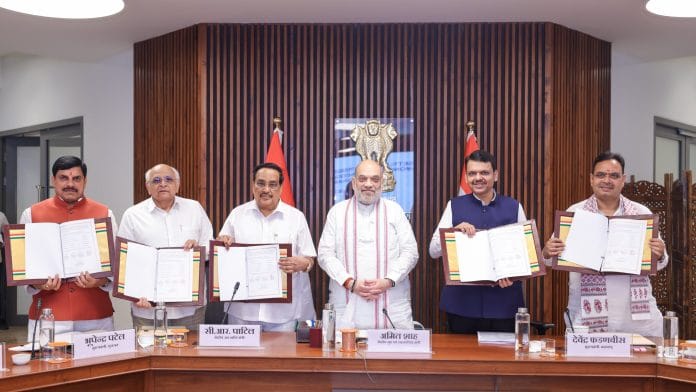
The decades-old inter-state Narmada River dispute has found a collaborative resolution, with Madhya Pradesh, Gujarat, Maharashtra and Rajasthan signing a settlement pact, which reflects the true spirit of cooperative federalism as envisioned by Mookerjee. It is a noteworthy example of good governance that prioritises sustained political engagement over prolonged litigation. This financial settlement resolves decades-old cost-sharing disputes among the states and exemplifies dialogue over discord, consensus over conflict. By finalising outstanding project dues, it strengthens regional development and reflects the vision of Sabka Saath, Sabka Vikas made possible by the double-engine government.
“No matter how the water is utilised, the beneficiary is an Indian,” said Shah, who chaired meetings with the chief ministers of all four states to secure a negotiated settlement. This approach positioned the Centre as a proactive, neutral facilitator rather than a detached arbiter. By drawing inspiration from the timeless values of fairness and trust—symbolised by the ancient Pashupati Seal—the agreement honours the sacred roots of the Narmada, traditionally revered as the daughter of Lord Shiva. Through this spirit of cooperative federalism, a peaceful and compassionate solution has finally emerged, benefitting farmers and millions of residents across the four states.
As a shloka in Padma Purana, attributed to Narada Muni, notes: “By bathing in River Saraswati for three consecutive days, River Yamuna for seven consecutive days and in River Ganga for a day, man is cleansed of his sins but a mere vision of River Narmada cleanses him of his sins.”
‘Narma’ means joy or happiness and ‘Da’ means giver. The Narmada is considered one of the holiest rivers in India, second only to the mighty Ganga. It is often called the Soul of India and also serves as a dividing line between the northern and southern parts of the Indian subcontinent.
Narmada namami
Worshipped since the time of the Markandeya Purana, the Narmada holds immense traditional, historical and spiritual importance in Hindu tradition. The river finds mention in the Mahabharata, which narrates how the divine Goddess Narmada married King Purukutsu. Narmada is universally revered as Lord Shiva’s daughter and the two share a deeply spiritual and parental bond. When Lord Shiva engaged in intense, ascetic penance on top of the Amarkantak plateau, the sheer vigour of his cosmic dance caused rivulets of perspiration to pour from his divine form. This sweat manifested as a beautiful woman, whom Shiva named Narmada because she brought tenderness and joy to his heart; she is also known as Shankari or Jata Shankari, meaning born of Shiva.
It is believed that once a year when the mighty Ganga become over polluted by the millions of devotees that take a holy bath in her divine waters, she takes the form of a black cow and bathes in the Narmada to cleanse herself of the ‘sins’ left behind by the human bathers.
“Narmada ke kankar, utte Shankar’—every pebble found in the Narmada river symbolises Lord Shankar himself and resembles a mini Shivlinga. Called ‘banalingas’, these stones are believed to be naturally consecrated (Swayambhu) and need no sacred rituals. Because of this divine link, the entire Narmada basin becomes a sacred axis. It is the only river in India that pilgrims circumambulate on foot, and undertake the arduous 3,000-km Narmada pilgrimage.
History of the Narmada river dispute
Historically, the Narmada dispute goes back to the years immediately preceding the independence of India. The British left behind a legacy of many unresolved disputes. This dispute has taken three-quarters of a century to finally reach a resolution. Rivers in colonial India were not treated with the sanctity and reverence found in Indian traditions and practices, and hence the disrespect shown towards them by using them as conduits to drain the sewage and garbage of modern city systems. Unfortunately, similar practices continue in independent India.
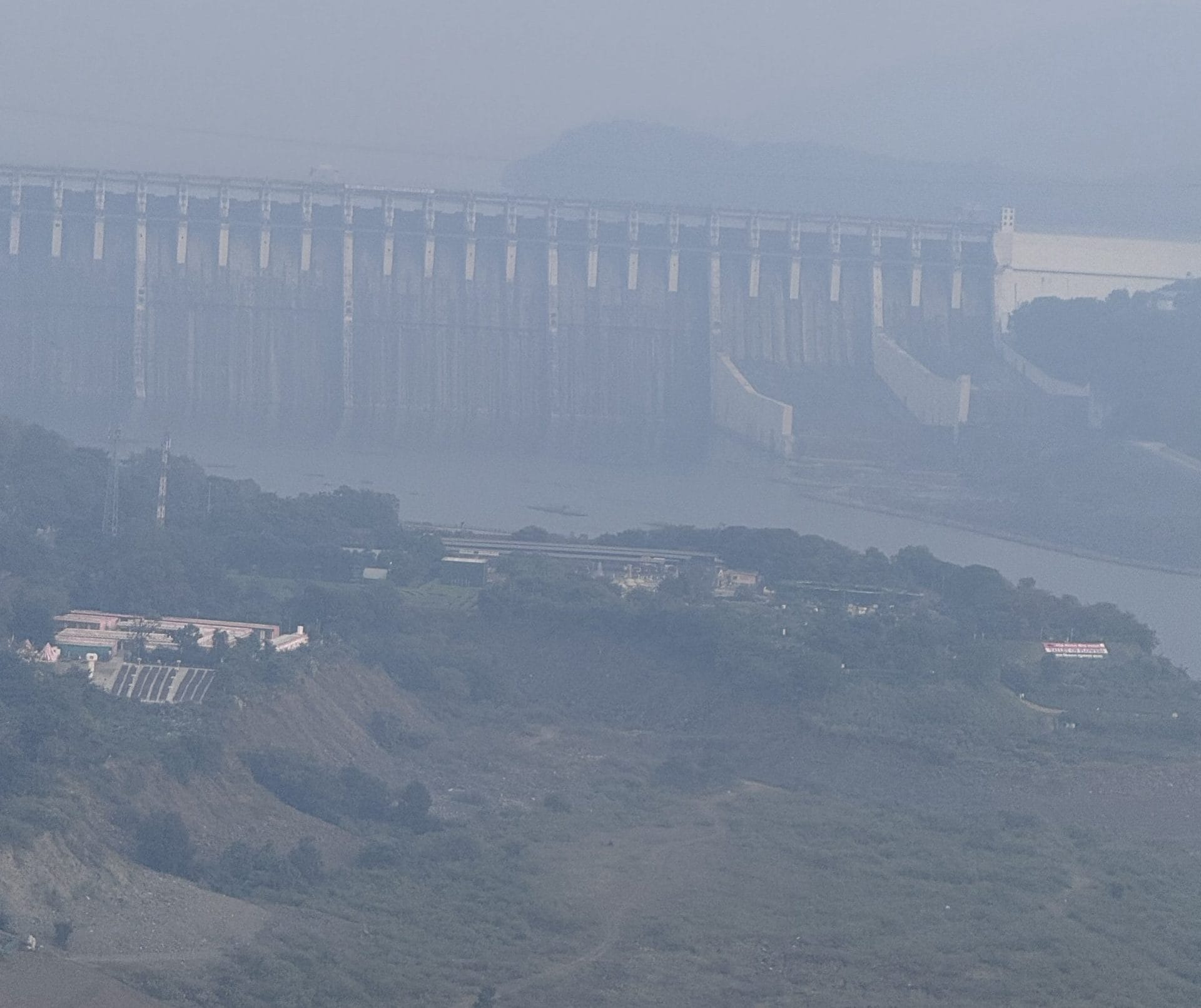
As it flows through Madhya Pradesh, Maharashtra and Gujarat before emptying into the Arabian Sea, the Narmada presents enormous developmental opportunities with its vast potential for irrigation and hydropower. However, difficult questions arose regarding how its water, costs and benefits should be shared among the riparian states. In 1964, the government appointed the Khosla Committee to recommend how the waters should be shared between Gujarat and Madhya Pradesh. However, no agreement could be reached, leading to the constitution of the Narmada Water Disputes Tribunal (NWDT) by the Government of India in 1969 under the Inter-State River Water Disputes Act, 1956. After extensive deliberations, the tribunal delivered its landmark award in 1979, allocating water and power among Madhya Pradesh, Gujarat, Maharashtra and Rajasthan while laying down the framework for the construction of major projects, including the Sardar Sarovar Dam.
Although the tribunal resolved the inter-state sharing dispute, a new phase of controversy emerged over the social and environmental consequences of the dam’s construction. The Narmada Bachao Andolan emerged to challenge the development project, raising concerns over the displacement and rehabilitation of affected communities, as well as the ecological impact of damming the river for hydroelectric power generation. These protests led to the withdrawal of the World Bank’s financial support in 1993, temporarily hampering project implementation. However, the project continued with domestic funding, symbolising the complex balance between development and environmental conservation, and the ultimate goal of social justice and equity that has defined the Narmada debate for decades.
A river is much more than a geographical feature; it is the lifeblood of a civilisation. Flowing through the heart of Bharat, the Narmada has nourished communities, inspired faith and shaped our collective consciousness since the time of the Indus Valley civilisation. The Narmada basin, therefore, carries the echoes of ancient past. The Narmada is not merely a source of water; it is a living testament to India’s civilisational journey, from an ancient culture renowned for its mastery of water management to a modern-day welfare state with its own economic and geopolitical aspirations.
Final solution
The successful resolution of long-standing challenges surrounding the river is, therefore, more than an administrative milestone; it was made possible by the fact that the central government, led by PM Modi and HM Shah, worked in sync with the BJP governments of Maharashtra, Madhya Pradesh, Rajasthan, and Gujarat.
On 7 July, the historic Narmada agreement was officially signed. “The dispute over the financial payments under Narmada award has been resolved consensually by all four states. It is a one-time payment of pending dues,” Shah said. Under the finalised terms of this settlement, Madhya Pradesh and Rajasthan will each pay Rs 550 crore to Gujarat. Madhya Pradesh’s compensation claim of Rs 7,669 crore was not taken up, while Maharashtra would now only have to pay Rs 27 crore. Maharashtra also secured the right to draw 10 TMC of water divided equally through the Narmada-Tapi Diversion and the Ukai project, a development that will benefit the Nandurbar and Maharashtra regions.
I had the privilege to visit the Statue of Unity a couple of times, which towers over Ekta Nagar and is situated 3.2 km downstream from the Sardar Sarovar Dam reservoir. Watching the sun set on this man-made miracle provided peace and spiritual fulfilment. If Sardar Patel forged the political unity of India, Syama Prasad Mookerjee dedicated his life to safeguarding its national unity. The Narmada River, whose waters sustain millions across states, stands as a living Goddess and a tribute to Lord Shiva, proving that India’s strength lies in integrating its people and its natural resources for national development.
Meenakshi Lekhi is a BJP leader and lawyer. Her X handle is @M_Lekhi. Views are personal.
(Edited by Prashant Dixit)