






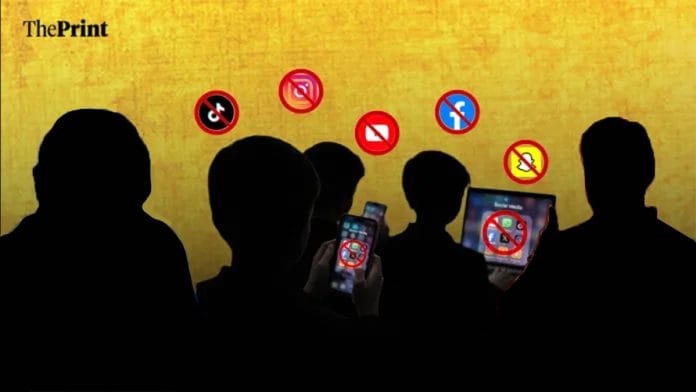


Algorithms engineered by tech giants are quietly deciding the character, identity, and moral boundaries of our children. When an algorithm incentivises vulgarity, hyper-sexualised content, and outrage over decency, it directly erodes the foundational character of a healthy childhood. As parents, we instill ethics and cultural values at home, but profit-driven algorithms rewrite those values the moment a child picks up a screen. From cyberbullying to severe mental health crises, we have seen the warning signs yet we hesitate to act.
In today’s digital age, social media has become an addiction and my oft repeated statement is: if data is the new oil, then social media is the new opium.
Social media platforms are often perceived as free services that enable people to connect and share information. However, behind these platforms are some of the world’s largest and most profitable businesses. Companies such as Meta (Facebook, Instagram, Threads), TikTok, Snap Inc, X Corp, and YouTube generate billions of dollars annually through advertising, subscriptions, data-driven marketing, and digital commerce.
Social media is therefore considered a business because its primary objective is to generate revenue and create value for shareholders while providing digital services to users. For most companies, user data becomes an economic asset through which they collect information such as pages followed, videos watched, search history and engagement with different types of content. These jargonised attention economies are deployed through Artificial Intelligence to attract and push personalised recommendations, notifications, and continuous content feeds designed to encourage addictive engagement. Most large social media companies are commercial enterprises with investors looking only to increase profits and market share, and improve their financial performance often at the expense of our youth’s character and cognitive health.
Several countries have adopted or are introducing strict social media laws for children, although the nature of these laws varies. Some impose minimum age requirements, others require parental consent, while some focus on age verification, privacy protections, or limits on addictive platform features.
Australia, which currently has the world’s most comprehensive national restrictions, has a minimum age of 16 years for accounts on designated social media platforms and says that companies can face substantial penalties for non-compliance. France has moved toward stricter controls for minors, which includes a minimum age of 15 years for opening social media accounts and legislation strengthens age-verification and child-protection requirements. The EU regulates child online safety primarily through the Digital Services Act, which requires large online platforms to protect minors from harmful content. In recent times Norway, Spain, Greece and Denmark have announced plans to strengthen age restrictions and digital protections.
I headed a Joint Parliamentary Committee on the Personal Data Protection Bill in which this aspect was specifically dealt with and social media regulation was proposed much before the EU and Australia took a call on this subject. This report was subsequently presented in Parliament by Prem Prakash Chaudhary, as I had been appointed as a minister and he was appointed as the chairman of the JPC. The world is learning from its past mistakes and making amends. Should we not learn from them instead of going through the painful lessons?
The path before India
It is time that the Indian government amends the laws and applies the regulations firmly. The country must also look at creating indigenous social media platforms with graded exposure to young people. An Indian platform could store and process user data in India, making it easier to comply with Indian laws and data protection requirements. This will result in better control over citizens’ data, greater transparency, self-reliance and easier regulatory oversight. A successful Indian platform could create thousands of jobs, generate tax revenue, support Indian startups, and build domestic AI and cloud capabilities.
UPI and other Indian payment gateways can be incorporated seamlessly, saving us precious foreign exchange. While I do understand that building media platforms requires logistics of massive investments, engineers, AI, data centres, cybersecurity, and content moderation running into billions of dollars, the long-term cascading positive impact of domestically designed social media will benefit the country in every possible way.
Monitoring will also become easier as Indian agencies may be able to respond more quickly to lawful requests, investigate cybercrime efficiently, and protect our national interests while upholding our cultural standards. China has developed platforms such as WeChat, Weibo, and Douyin, alongside strict regulation of foreign services. South Korea has strong domestic internet services such as Kakao and Naver, and Russia has domestic platforms including VK. These countries have taken different approaches, reflecting their own legal systems and policy priorities.
India has the technical talent, digital infrastructure, and market size to build globally competitive social media platforms. However, success depends not only on technology but also on attracting users, fostering innovation, and building trust. An Indian social media ecosystem could strengthen data sovereignty, economic growth, and digital innovation while safeguarding the character, cognitive development, and future of our young citizens.
Also read: The problem isn’t children on social media. It’s how the apps are designed
The cost to children
Social media has transformed the way teenagers communicate, learn, and interact. Teenagers often feel the pressure to remain constantly connected and responsive due to the fear of missing out (FOMO), constant comparison with peers, and concern about likes, comments, and followers. Studies have found associations between heavy social media use and increased symptoms of depression in some adolescents. Body shaming is the newer entrant to these stresses.
There is growing evidence that social media can influence vulnerable individuals’ attitudes toward suicide and self-harm, potentially contributing to suicidal behavior in some cases. Cyberbullying, suicide contagion and algorithmic amplification are a few new terminologies linked to this dangerous phenomenon. One of the most widely discussed cases in recent times is that of 14-year-old Molly Russell in the UK. In 2022, the coroner concluded that exposure to online content relating to suicide and self-harm contributed to her death, while noting other factors were also relevant. The case prompted significant debate about platform responsibility and influenced child online safety discussions in the UK. The Blue Whale Challenge was yet another alleged online “challenge” encouraging participants to complete increasingly harmful tasks. Closer home, we witnessed the tragic death of teenage sisters from Noida.
Social isolation and its impact on mental health and cognitive development must be taken into account. Teenagers are spending less time with family and friends and prefer loneliness despite being constantly connected. It’s shocking to learn that in an international school in Delhi NCR, students in higher classes struggle with cursive writing and even holding pencils properly as their curriculum is delivered through computer tabs. They struggle with basic sentence formation when given a pencil and book. This reliance on digital tools at the expense of basic cognitive motor skills has resulted in weaker communication, reading, and comprehension skills in addition to emotional stress and compromised cognitive growth.
Everyone has a role to play
Speedy adoption of technology cannot come at the cost of our children’s safety, cognitive development, and character. Under the doctrine of parens patriae, a court may intervene to safeguard the welfare of a child. The Supreme Court has held that in matters concerning children, the court acts as parens patriae, with the child’s welfare as the paramount consideration. The doctrine empowers the state and the courts to act as the ultimate guardian of vulnerable individuals when necessary and is firmly established in India in matters concerning custody, guardianship, and child protection.
India’s legal framework already recognises the need for special protection of minors. Statutes such as the Protection of Children from Sexual Offences (POCSO) Act are intended to protect children from abuse and exploitation. Unfettered, unverified access to addictive social media directly contradicts that protective intent by exposing impressionable minds to predatory behaviour, harmful content, and psychological harm without adequate safeguards.
There is also a clear legal distinction between minors and adults. In India, the age of majority is 18 years, and those below 18 are entitled to the protections available under child rights laws, including POCSO.
To protect our youth, we must therefore move towards concrete measures: enforcing strict age limits, such as a minimum age of 16, with robust verification; imposing non-negotiable penalties on platforms that do not comply; actively prohibiting vulgar and harmful content and addictive feeds; implementing graded digital exposure; and holding technology companies legally accountable under child-protection laws when their algorithms push harmful content to minors.
As society continues to embrace an increasingly connected world, one question remains: Is social media becoming a tool that disempowers the next generation and will it quietly erode the very foundations of healthy childhood and adolescence? The answer will depend on the choices made today by families, schools, policymakers and technology companies.
The future well-being of our society and country will depend on creating responsible citizens with strong character and sharp cognitive capabilities. Parents, educators, governments, and technology companies all share responsibility for creating a healthier digital environment. Parents themselves need to be sensitised about the dangers lurking on social media, which in turn can encourage balanced screen habits, and technology companies can improve safeguards for younger users through stronger privacy protections and better content moderation on the internet.
Meenakshi Lekhi is a BJP leader and lawyer. Her X handle is @M_Lekhi. Views are personal.
(Edited by Prashant Dixit)