





The Bharatiya Janata Party has breached Trinamool’s fortress in West Bengal; a new party has toppled the established parties in Tamil Nadu, and Congress has regained Kerala. In two of these three states, no party could secure an outright majority. The Tamilaga Vettri Kazhagam (TVK) took 108 of 234 seats in Tamil Nadu; the Indian National Congress, 63 of 140 in Kerala. In the absence of a clear majority, India has frequently faced an interesting political question: which party should be invited to form the government? In the existing Indian Constitutional design, the answer to that question often lies with Governors, not always with voters.
Both incoming Chief Ministers of Kerala and Tamil Nadu have lost the majority mark by thin margins. However, their minimal dependence on other partners helps them lay a sufficiently strong claim to form the government. In the past, there have been several instances of the single largest political parties and parties with fragile majorities staying out of power owing to a lack of clarity regarding the role of the Governor. Occasionally, this has also served as a reason for invoking the state emergency under Article 356, generally referred to as President’s rule, on the grounds of failure of constitutional machinery in the State.
This is precisely the instance in which the federal form of government in India takes a remarkably unitary approach to resolving political frictions at the state level. The Government in Delhi could just suspend the elected state governments and take over the state. While Ambedkar did fear that Article 356 might be abused for political ends, no one articulated the danger it posed or warned against it more eloquently than Nani Palkhivala.
Article 356 was meant to be a constitutional safeguard, to be used sparingly; in fact, Ambedkar had hoped that it would remain largely a dead letter provision under the Constitution. The framers accepted the risk, as the Indian Union was built with an inherent unitary bias—national unity was one of the prime concerns when the Constitution was being made. Indian provinces never enjoyed the sovereign standing like the American states, which retain residuary powers and have equal representation in the Senate.
By the time Palkhivala devoted some attention to the subject, what Ambedkar feared had come to pass. President’s rule was imposed in all states, except Sikkim, in the first few decades of the republic. In a public lecture delivered in Mumbai in 1972, Palkhivala warned that the constitutional position of the states had been steadily eroded through excessive centralisation. He argued that the powers originally entrusted to the states – including authority over industry, trade, and commerce – had gradually been undermined to such an extent that the states had become less powerful than the second-class princely states under the British Raj.
For Palkhivala, this distortion of federalism was reflected not merely in political practice but also in the language through which Indians imagined the constitutional order. He reminded his audience that the Constitution speaks of a “Union” of states, not of a “Centre” exercising unquestioned dominance over subordinate units. The popular conception of the “Centre,” he argued, was fundamentally inconsistent with the constitutional scheme, which envisaged states as meaningful and autonomous units within the federal structure.
Palkhivala noted that the power of the Union under Article 356 became a tool of political centralisation. The provision enables the Union government to intervene directly in the affairs of states by establishing the President’s rule if the President is satisfied that the government of the state cannot be carried on in accordance with the Constitution. This decision is based on the report of the Governor, a political appointee and the agent of the Union with executive control of the concerned state.
A 2024 study by Christian Bjørnskov, Shruti Rajagopalan, and their co-authors examined every imposition of the President’s rule between 1952 and 2019, a total of 123 instances across 26 states, and found what Nani Palkhivala knew and warned of decades ago. The President’s rule was rarely invoked in the face of riots, natural disasters, or genuine collapse of the constitutional machinery. It was a pointed weapon in the Union’s hands to subjugate the states.
The judiciary eventually blunted this weapon. In SR Bommai v Union of India (1994), the Supreme Court held that it was constitutionally empowered to examine whether the material examined by the President, including the Governor’s report, justified taking over the whole state machinery under the control of the Union. Crucially, the Court ruled that the majority of the government must be tested on the floor of the State Assembly, and not decided by the Governor on behalf of the Union. The misuse of the President’s Rule fell sharply thereafter.
Palkhivala’s concern ran deeper than individual provisions of the Constitution. Federalism, for him, was never merely a matter of designing a system of government; it was a structural check on the concentration of power in Delhi and a necessity for India to survive as a liberal democracy. He famously stated that the states must have “the right to go wrong in freedom rather than go right in the thralldom to the Centre.” In a Union, a state should not experience cancellation of its voters’ mandate.
It was for this reason that Palkhivala regarded the arbitrary and frequent use of the President’s rule with deep suspicion, maintaining that such intervention could be justified only in exceptional situations where law and order had collapsed. The Supreme Court has erected guardrails against the use of a state emergency for political ends; however, the office of the Governor still enjoys wide discretionary powers under the Indian Constitution.
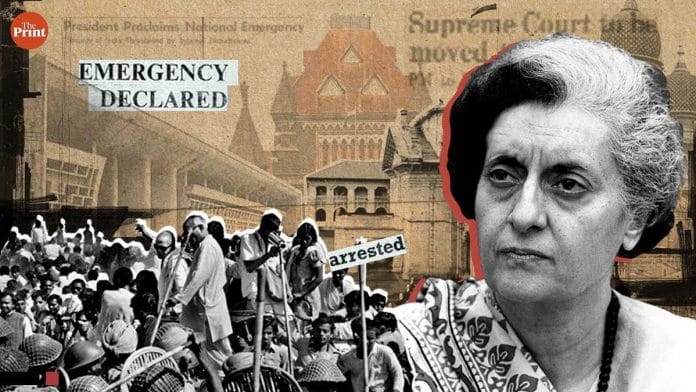
Palkhivala’s observations remain relevant even today. A republic cannot endure solely through legal text or institutional mechanisms. Its survival ultimately depends upon vigilance, public memory, political restraint, and fidelity to the spirit of the Constitution. The Centre in India has been more powerful by design since its inception. A powerful Centre was justified in the nascent days of the Indian state. However, through instances of national emergency and President’s rule, we have witnessed extreme repercussions of this design. The true spirit of the Constitution propels us to strengthen the checks and balances against extreme concentration of power. Therefore, Palkhivala insisted that any talk of federalism must be followed by a genuine treatment of the states as equal partners in the Union, rather than treating them merely as vassals, waiting to be summoned by the Centre.
Vikrant Pande is a consultant at the Centre for Civil Society. Sudhanshu Neema is a Delhi-based lawyer and economist. Views are personal.
(Edited by Prashant Dixit)