





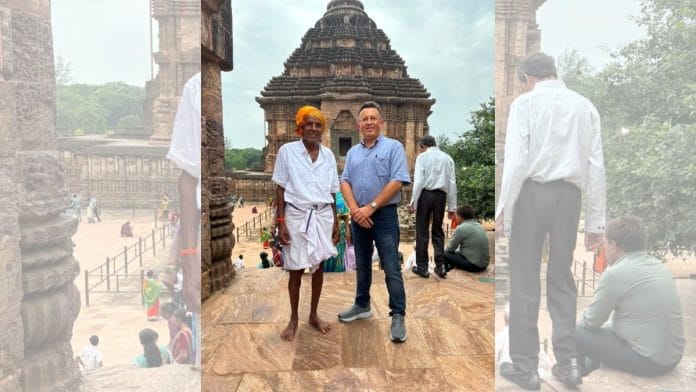

India was not, in the end, a destination I had carefully selected from a list of possibilities. Like many diplomatic careers, mine had other trajectories in mind, other postings that for different reasons did not materialise. India came later —not as an alternative, but as a decision of the authority, and in that sense as a form of diplomatic destiny that only becomes fully legible once one is already living it.
There are countries that one passes through, and others —like India— that pass through you, settle in you, and leave a mark that is difficult to name but unmistakably present. From the beginning, what struck me was not only India’s scale or history, but its way of being in the world: intense, open, and profoundly comfortable with the coexistence of the visible and the invisible. Its hospitality is not ceremonial; it is lived.
I arrived with clear objectives: to strengthen the relationship between Ecuador and India and to establish closer contact with this ancient civilisation in all its contemporary dynamism. I also arrived with the usual diplomatic preparation —briefings, institutional analyses, economic indicators— but with something more personal, shaped by years of reading and reflection.
India is, after all, the land where yoga and meditation were born, where Hinduism, Buddhism and Sikhism took shape, and where some of humanity’s most profound philosophical texts were composed. I had the privilege of reading the Bhagavad Gita here in India, a text that changed the way I see the world because it speaks not only of duty, but of clarity amid uncertainty.
I also encountered the Sikh tradition of service and equality, and the literary world of Vikram Seth, whose A Suitable Boy offers an immersion into India as lived experience rather than abstraction. Seth is not only a writer I admire; he is also a friend I came to know here, in conversations moving between literature, memory and everyday life.
All this prepared me intellectually. None of it prepared me for the immediacy of India.
Collective architecture of joy
India has the curious ability to defeat preparation without making preparation useless. Statistics cannot reproduce the sensation of entering Delhi’s human current. Reading about linguistic diversity does not prepare you for several languages coexisting naturally in one conversation. And studying India’s technological transformation is different from watching a street vendor complete a digital payment in seconds. That stayed with me: it was not merely efficiency; it was trust made visible.
Nor does reading prepare you for Indian cuisine. Its flavours do not ask permission and its spices do not negotiate. There comes a moment when “spicy” ceases to be a description and becomes a physical experience. Even a meal can become a lesson in humility.
Perhaps this is one of the first things India teaches the foreigner: what appears to be a contradiction is often coexistence.
Every day I encounter what one might call the old India and the new India, although the distinction is too simple. They inhabit the same space. There is an India of temples, rituals, family traditions and civilisational memory; beside it —sometimes literally— stands the India of digital infrastructure, artificial intelligence, pharmaceutical research, space exploration and start-ups.
A centuries-old shrine may stand next to a glass office building; a flower seller arranging marigolds according to inherited ritual may receive payment through a QR code.
I have had the privilege of travelling through more than 30 cities across India —from Delhi, Mumbai, Kolkata and Chennai to Jaipur, Varanasi, Hyderabad, Bengaluru, Kochi, Amritsar, Bhubaneswar and many others. Beyond monuments of extraordinary historical depth, I have consistently encountered something more important: remarkable kindness. India is not only a civilisation of stone and memory, but of human warmth.
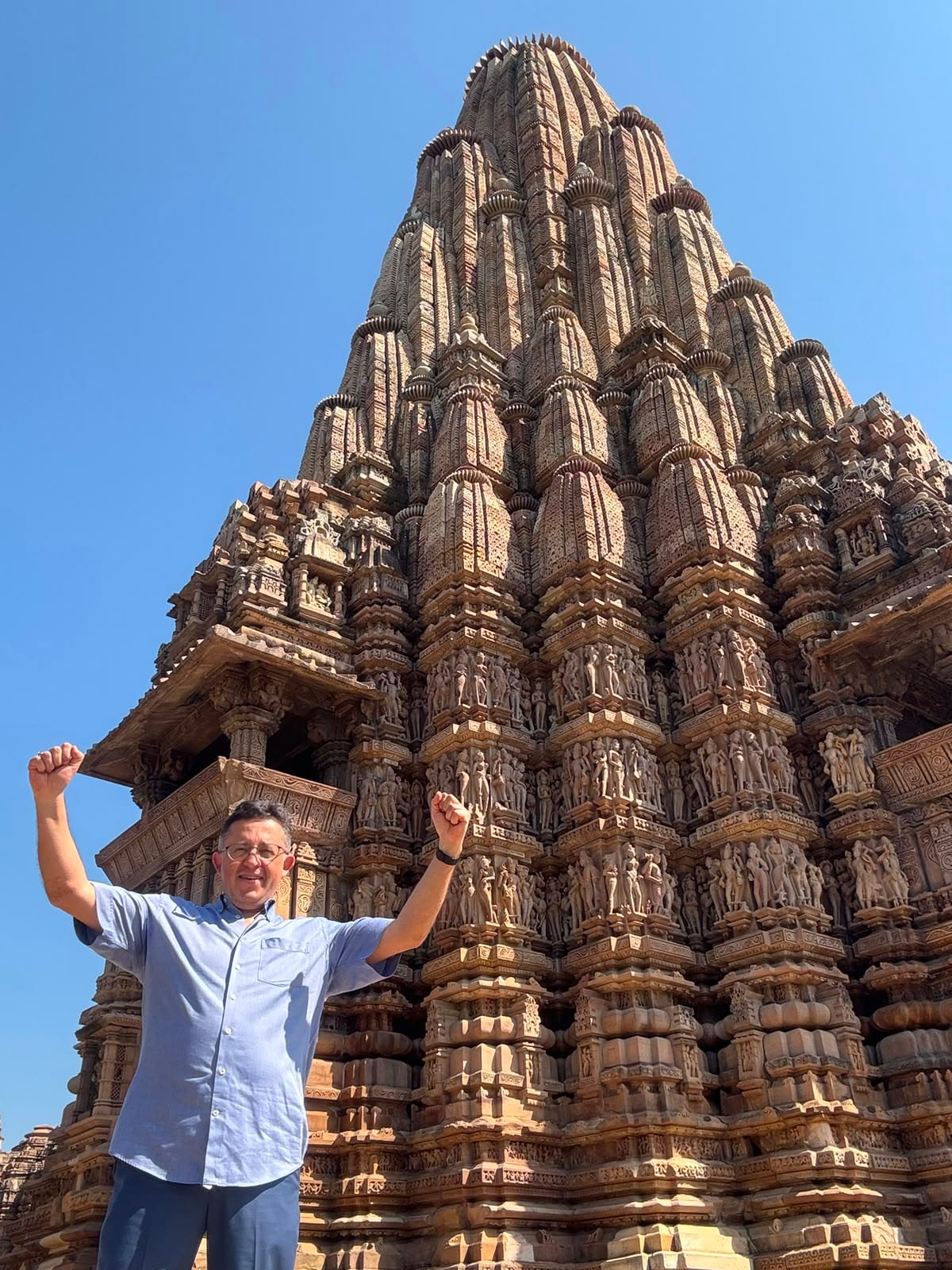
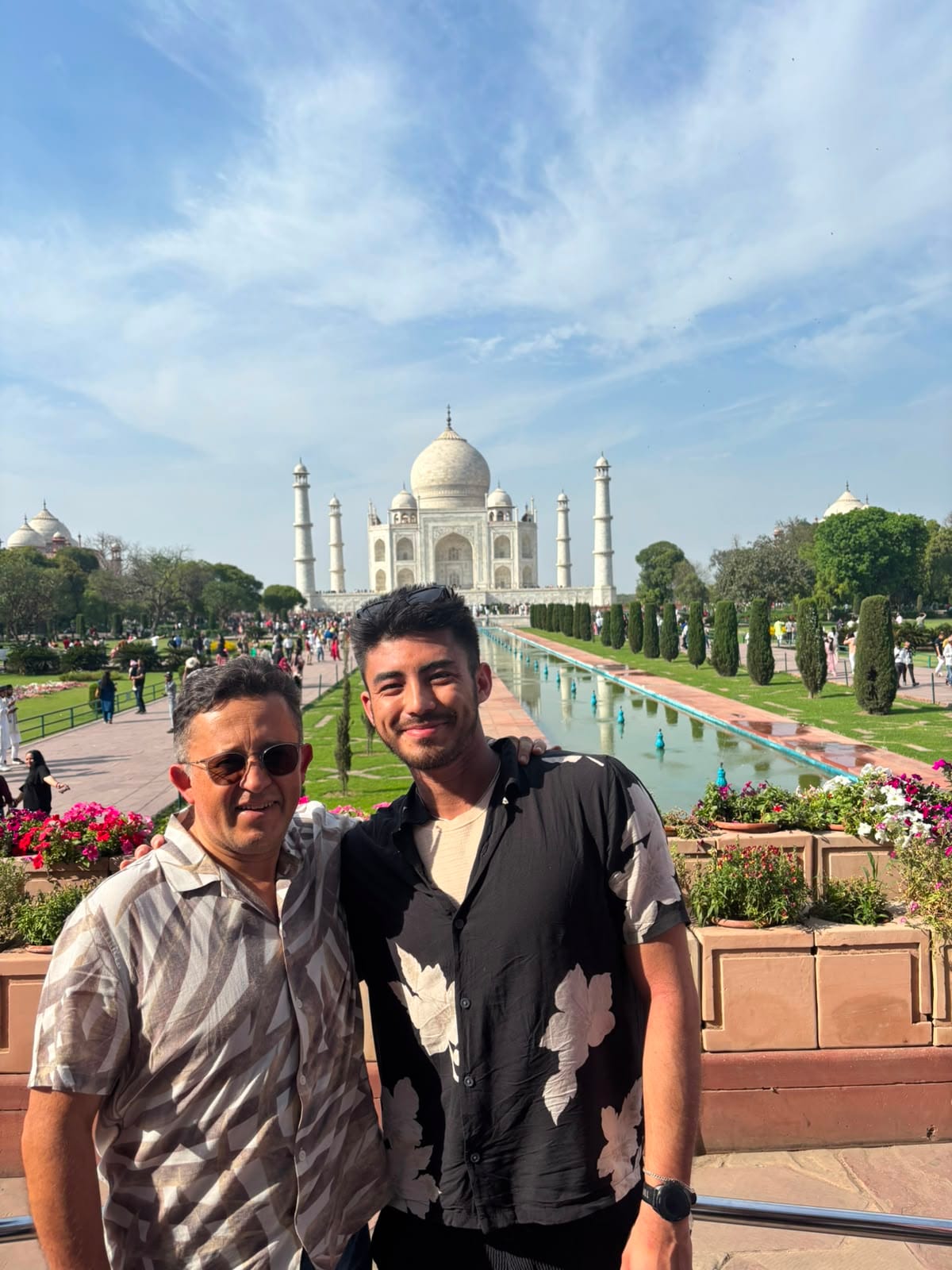
Its monuments nevertheless leave their mark. The Taj Mahal remains one of the most powerful expressions of love translated into architecture. The Qutub Minar rises like a vertical memory of layered dynasties. The temples of Karnataka make stone appear almost alive. And Khajuraho allows art and spirituality to coexist in ways that still provoke reflection.
Then there are Indian weddings—great human spectacles no briefing can prepare you for. Their scale, colour, music and sense of community transform a private event into a social universe. They taught me that joy in India is rarely individual; it is collective architecture.
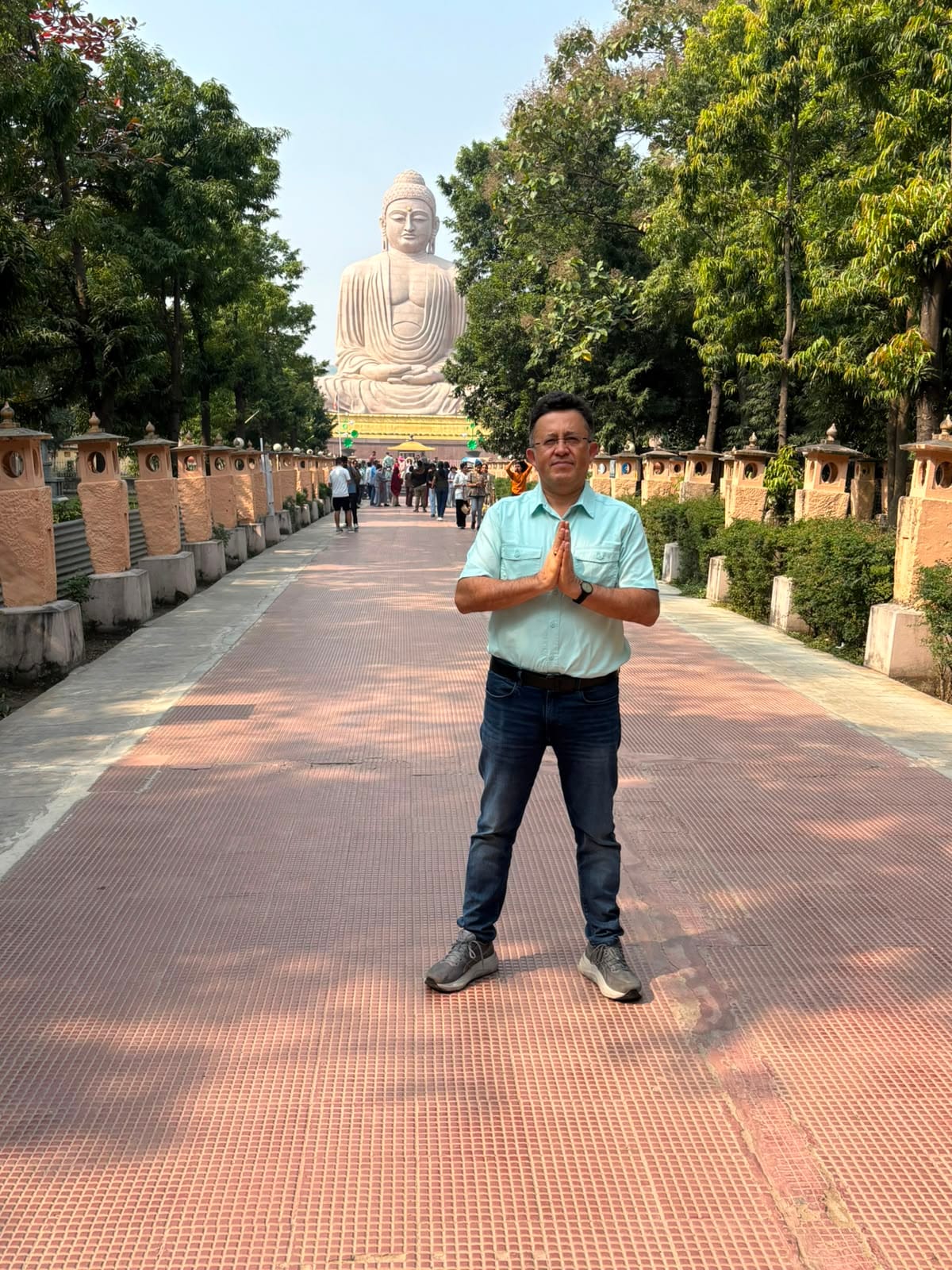
Other places reveal different dimensions of the country. At Kumbh Mela, standing among millions of pilgrims, devotion becomes collective and almost geological in force. Bodh Gaya is quieter: beneath the Bodhi Tree, one feels the memory of an inner transformation that changed human thought. In Rishikesh, yoga and meditation become daily practice rather than abstract ideas.
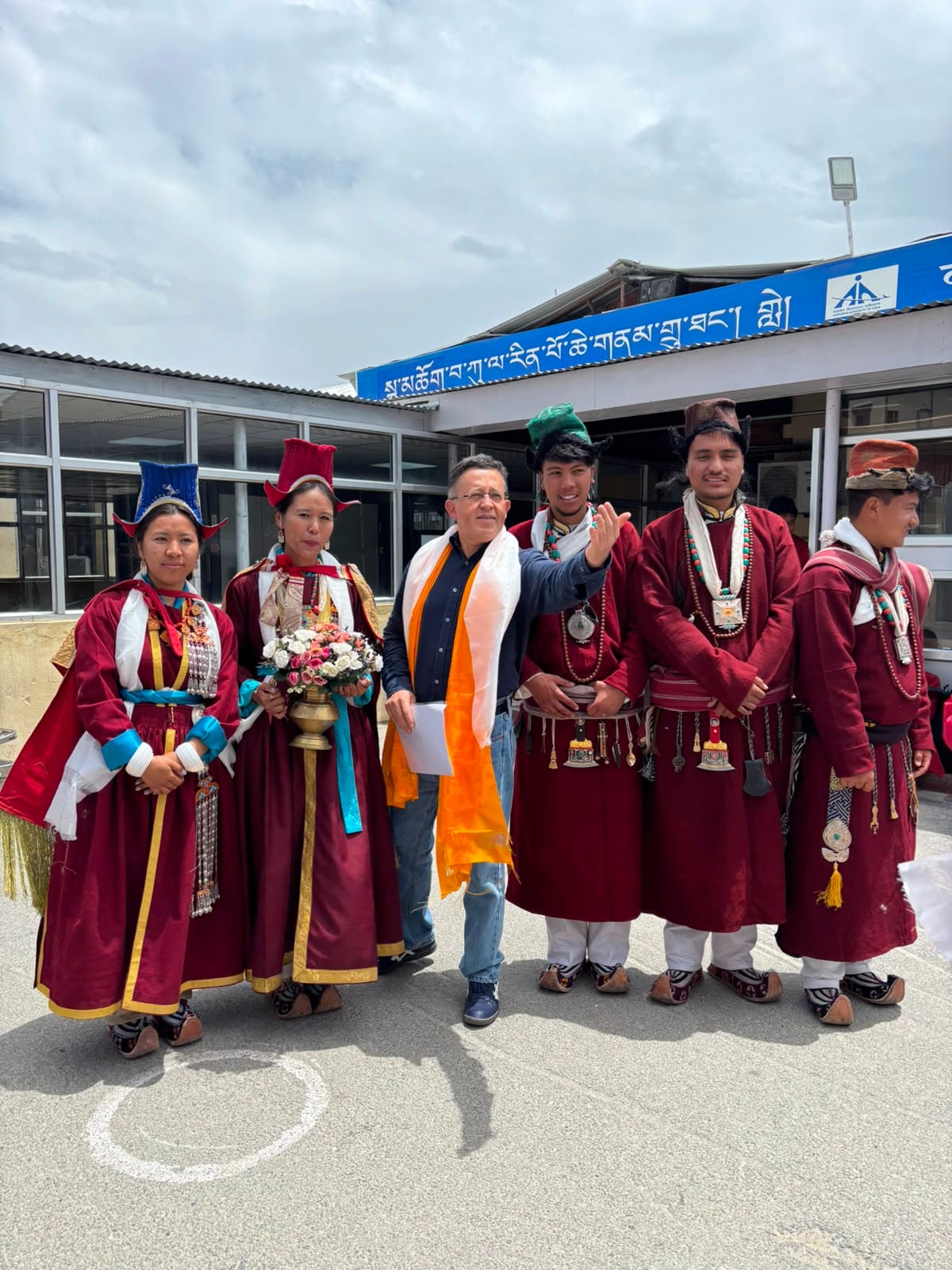
Ladakh offers yet another India. After Delhi’s density and movement, Ladakh’s silence feels monumental. The mountains are austere, almost lunar, with monasteries suspended between rock and sky. The same country contains both Delhi and Ladakh; that fact alone should make anyone cautious about generalising India.
Some of my most lasting impressions, however, come from everyday life: the seriousness with which food is discussed, the depth of hospitality, and the way formal meetings often end in personal conversation. I have also been fortunate to work closely with Indian diplomats, whose professionalism I deeply admire. In recent years, our bilateral relationship has advanced significantly, culminating in the opening of the Embassy of India in Ecuador and important high-level exchanges.
And then there is Indian traffic. At first, it appears to be chaos conducted through horns. With time, however, one begins to perceive an inexplicable choreography. It is not order in the conventional sense, but neither is it disorder.
India also teaches patience with scale. In a country of more than a billion people, almost everything acquires dimensions difficult to translate into smaller national experiences. Digital innovation can reach millions; a pilgrimage can temporarily become a city; an election becomes one of humanity’s largest democratic exercises.
For an Ecuadorian, there is something strangely familiar in all this. Ecuador and India are geographically distant, yet both are countries of layers —mountains, coastlines, forests, ancient cultures, strong regional identities and long historical continuities.
Also read: Indians with their love for pink will really enjoy Vilnius Pink Soup Fest: Lithuanian Ambassador
Perhaps this is why India has never felt entirely foreign to me. Different, certainly. At times overwhelming. But rarely incomprehensible.
Diplomacy is usually described as the management of relations between states. India has reminded me that its deeper purpose is the gradual discovery of human familiarity beneath national differences.
I arrived carrying briefing papers and expectations shaped by philosophy, religion and literature. I will leave carrying something more enduring. India has changed my conception of the world, bringing it closer to the spiritual without detaching it from the practical. It has shown me that modernity and tradition need not be opposing forces, but parallel languages of the same human search.
Perhaps that is the highest compliment I can pay this country: after living here, India has not become easier to summarise. It has become harder to reduce, impossible to exhaust, and therefore endlessly worth returning to —in thought, in memory and in language.
Fernando Xavier Bucheli Vargas is the Ambassador of Ecuador to India. He tweets @fbucheli. Views are personal.
This article is part of Diplomatic Cable, a special series in which ambassadors and high commissioners in New Delhi share their experiences of India and introduce readers to the people, culture and traditions of their home countries. Read all the articles here.
(Edited by Ratan Priya)