








I recently visited Sri Lanka and found its car market quite unique. The transformation of its automotive industry over the past few years offers important lessons for India and its automakers.
Until recently, most cars sold in Sri Lanka were second-hand imports from Japan. This is because Japan uses something called the Shaken system, which imposes escalating costs for older cars. This makes the average Japanese car owner trade-in their vehicle before they turn three years old. These second-hand cars are then exported to multiple right-hand drive markets across the world, Sri Lanka being a particularly favoured destination as there are heavy taxes on new car imports.
The vehicle that I had hired was one such, the Honda Fit Shuttle, which is an estate version of the Honda Jazz, but it was a hybrid variant. In fact, while I noticed some Indian-made vehicles in Sri Lanka, including quite a few Tata Nanos and Maruti-Suzuki Altos, for the large part, most vehicles were Japanese imports, including vehicles we never got in India, such as the Japan-spec WagonR hybrid or Suzuki Spacia. All cars imported to Sri Lanka have to be under three years old, so one sees contemporary Japanese models. And since Sri Lankan’s pay extraordinarily high rates of excise — between 200-300 per cent on car imports — they clearly tend to prefer reconditioned Japanese vehicles over newer Indian cars.
But one interesting thing occurred in 2025, after a near total ban on vehicle imports due to the foreign exchange crisis and Sri Lanka’s default — the government gradually allowed private car imports once again. And suddenly the space of second-hand Japanese imports was replaced by brand-new Chinese vehicles among those who could afford it, particularly from BYD — although others like Aion, Chery (through Jetour), SAIC, and GWM are making inroads as well.
Rise of plug-in hybrids?
But what I found particularly fascinating is that a large majority of these vehicles were not full-electrics but plug-in hybrids (PHEV). Particularly so, given that in the coming months, there will be a flood of new plug-in hybrids launching in India as well. In fact, Mercedes-Benz recently launched the facelift of the S-Class in a plug-in hybrid variant.
A couple of years ago, I had written about the different types of hybrid technology. A plug-in hybrid is essentially like any strong hybrid car that has both an internal combustion engine and a battery pack, such as the Toyota Innova Hycross, but with a larger battery pack that can be charged from a home or public vehicle charger.
However, it does get slightly more complicated because you can have two types of plug-in hybrids as well. Vehicles like BYD Seal U, which uses the Chinese carmaker’s Dual-Mode Intelligent (DM-i) technology, can use both power sources to get the car moving. This is called a ‘Parallel Hybrid’, and because both power sources are used, such vehicles can have incredible amounts of power and performance, although it means that manufacturers can cut down on the size of both the engine and battery. This doesn’t always work, as Mercedes-Benz found out on the last generation C63 AMG.
The other type of plug-in hybrid, one gaining a lot of popularity in China and in several other global markets, is the ‘Series Hybrid’, which is also known as a ‘Range Extender’, or as the Chinese call it a ‘Extended Range EV’ (EREV). In such a vehicle, the internal combustion engine does not run the wheels, it essentially functions as a generator to charge the battery. Thus a smaller engine is required that can run at an optimal fuel-efficient engine speed, charging the battery when it needs to be charged, which comes in handy when one cannot find a charger. A senior bureaucrat once told me that flex-fuel range extenders could be the mythical ‘silver bullet’ for the Indian automotive industry.
Also read: Tata is experimenting with new colours. Luring car buyers with Pangong Pulse, Varanasi Vibrant
Will India follow?
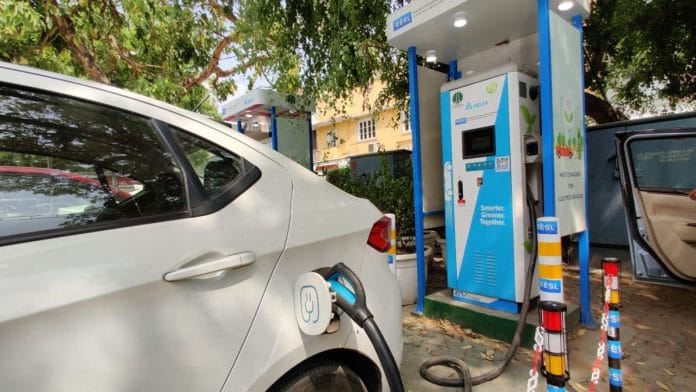
Now, in Sri Lanka, why plug-in hybrids have taken off and not pure battery electric vehicles is simply because the country does not have enough EV charging points as yet. I travelled down to the south of the country and saw very few chargers, while Colombo’s streets were full of such plug-in hybrids. Even my hosts in Colombo owned a BYD Sealion 6 PHEV and while they had a charger at home and charged their vehicle in the city, whenever they travelled elsewhere in the country, they knew that their vehicle can run on petrol as well.
And there is another reason behind the popularity of PHEVs in Sri Lanka. The financial crisis in the country that brought down the Rajapaksa government led to a fuel and electricity crisis. Many PHEVs, both parallel and series, have ranges upwards of 1,000 kilometers, some can even cover 1,500 kilometers on a full tank and charge. And in a country where petrol costs the equivalent of 120 Indian rupees a litre, the extreme efficiency of PHEVs comes into play as well.
While the power and fuel situation in India is nowhere as bad as it was in Sri Lanka, it wasn’t great this summer with power cuts across the country as the electricity grid strained under a record-breaking demand. And the strain on the grid will only increase in the coming years and while much more power comes online, there will be challenges in transmission and distribution. There is no point having an EV if there is no electricity to charge it, and while that is a negligible problem in some urban areas like Delhi, Mumbai, and Ahmedabad, the grid in other cities like Chennai and Gurugram collapsed this summer. And this is something manufacturers bringing PHEVs are counting on.
Will Indians go down the PHEV route? I’m not sure as PHEVs have been attacked by some as being the worst of both worlds as they’re expensive to produce, owners don’t charge them often enough, and the internal combustion engine is forced to carry a heavy battery pack around. But, owners get peace of mind — no charger, no problem, as petrol (for the moment) isn’t as hard to find. Although I would personally choose a battery-electric for urban and short-to-medium distance commuting myself.
Kushan Mitra is an automotive journalist based in New Delhi. He tweets @kushanmitra. Views are personal.
(Edited by Aamaan Alam Khan)